Research-led, metrics-forward, and continuously improving. News from the Office of Research Outputs.
15 August 2026
The University has added a landscape panel to its signage rotation whose whole argument is a standing on the Strategic Drift Survey, the instrument the School of Emergent Priorities runs to measure the distance between stated and enacted priorities.
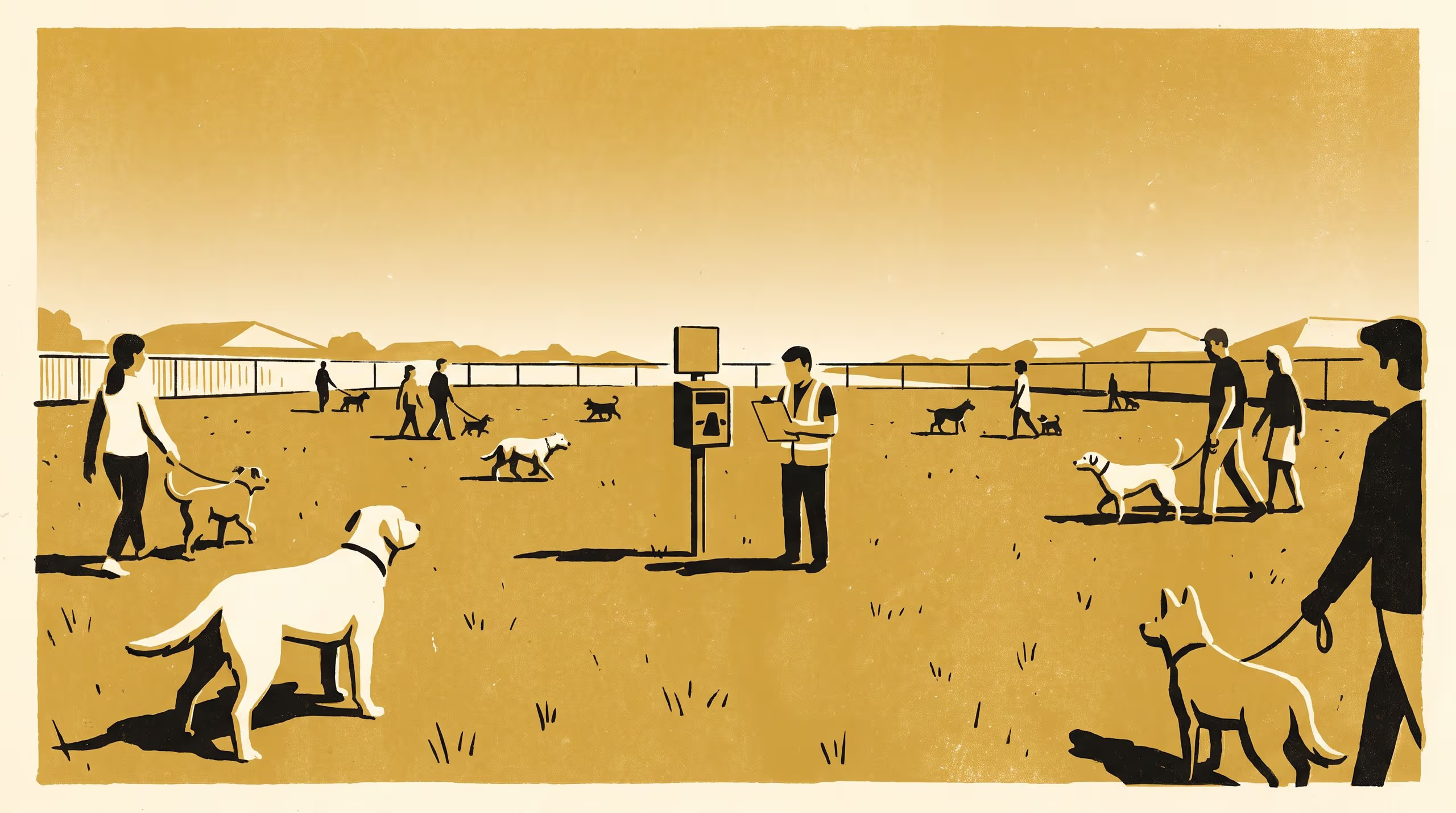
School of Continuous Improvement researchers re-run every dog-waste dispenser appraisal in one shire's files and find the paperwork costs more than the asset it argues for.
Slop University has added a panel to its signage rotation whose entire argument is a published result about what a documentation score does to a collection, with a title and a DOI in place of a course list.
School of Continuous Improvement researchers compare 12,914 handwritten temperature entries with 2.13 million logger readings from the same appliances, and find the warm spells a council's records criterion is read as evidence against almost never reach the sheet.
School of Emergent Priorities researchers read 4,187 clauses off the signs bolted to council pool gates, car parks and skate parks, and find the wording follows a scheme template and a circulated claims digest rather than anything that happened at the gate.
School of Continuous Improvement researchers estimate what a Friday-night meat raffle is actually bought for, and find the community contribution a levy offset is certified against carries almost none of the choice.
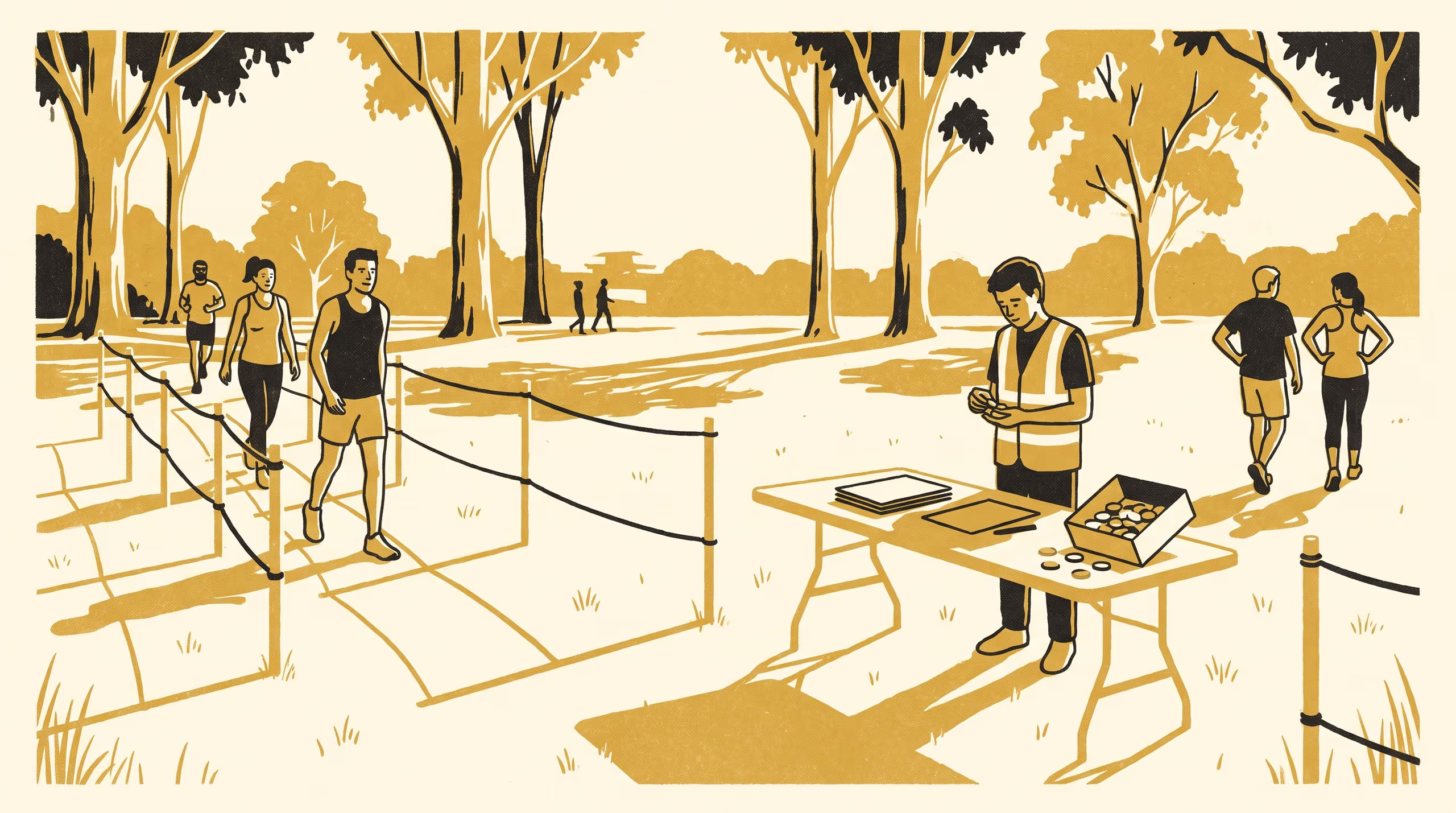
School of Emergent Priorities researchers recover the finishers a community run's results system could not pair, and find the improvement a council funds against is carried entirely by the people who went unrecorded.
A study of 78 acquitted grants from one state regional-events fund finds nine different ways of filling in a single box marked attendance, and shows the fund's efficiency ranking follows the method rather than the crowd.
School of Emergent Priorities researchers align eleven years of accreditation returns to the month of each review, and find most of the coverage gain that follows a review notice comes out of the denominator rather than the cataloguing table.
School of Continuous Improvement researchers re-estimate the matching step behind a state's published level-crossing occurrence rates, and find the crossings the register reports as quietest are the ones whose reports it could not resolve.
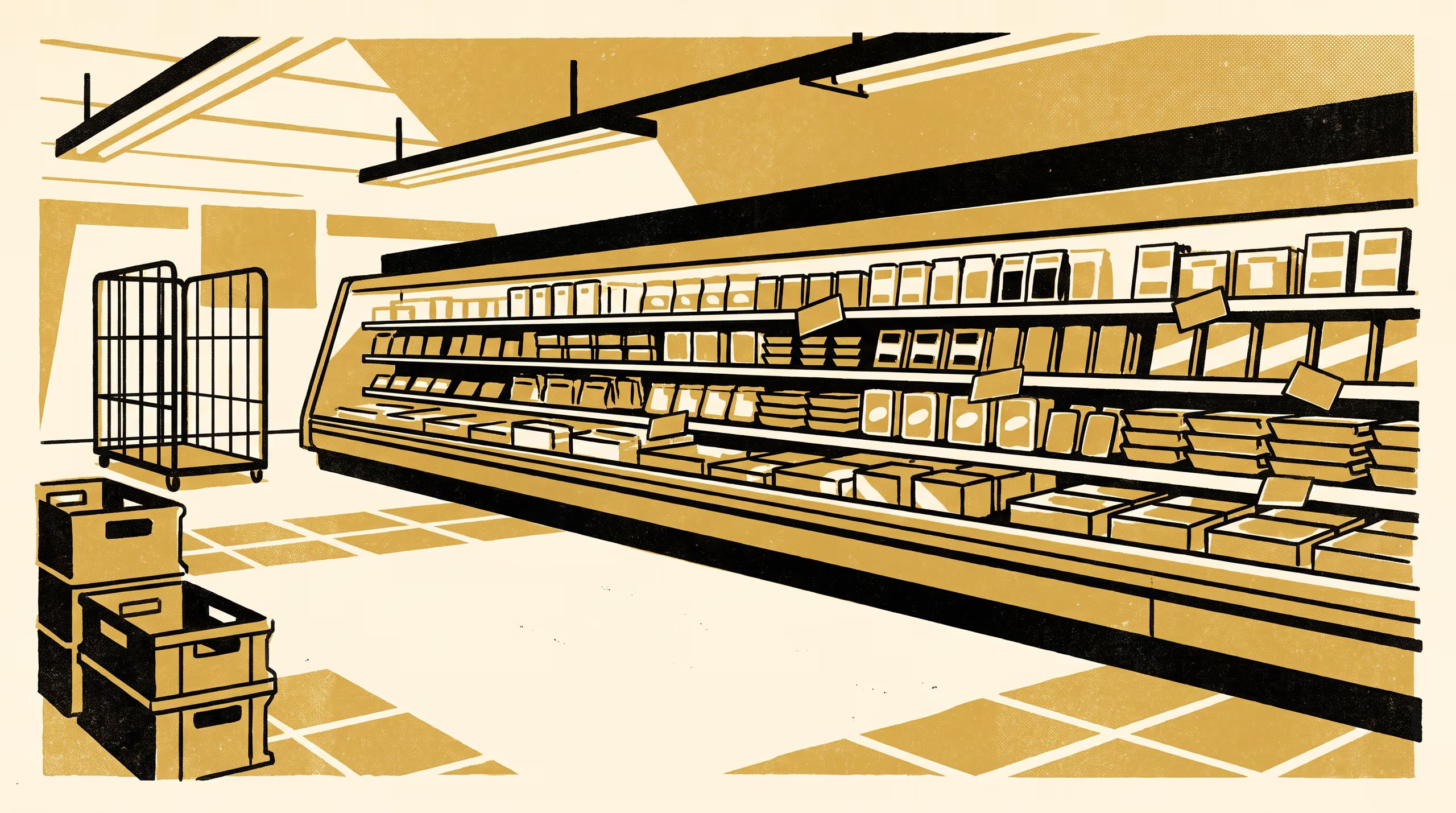
School of Emergent Priorities researchers put a price on the per-line shelf-life forecast a supermarket chain runs its markdowns from, and find its ceiling sits below what it costs to produce.
School of Continuous Improvement researchers separate panel tenure from calendar year across 14,806 archived trip records, and find the eight-year fall a bag limit was reviewed against belongs to the diarists rather than the fishery.