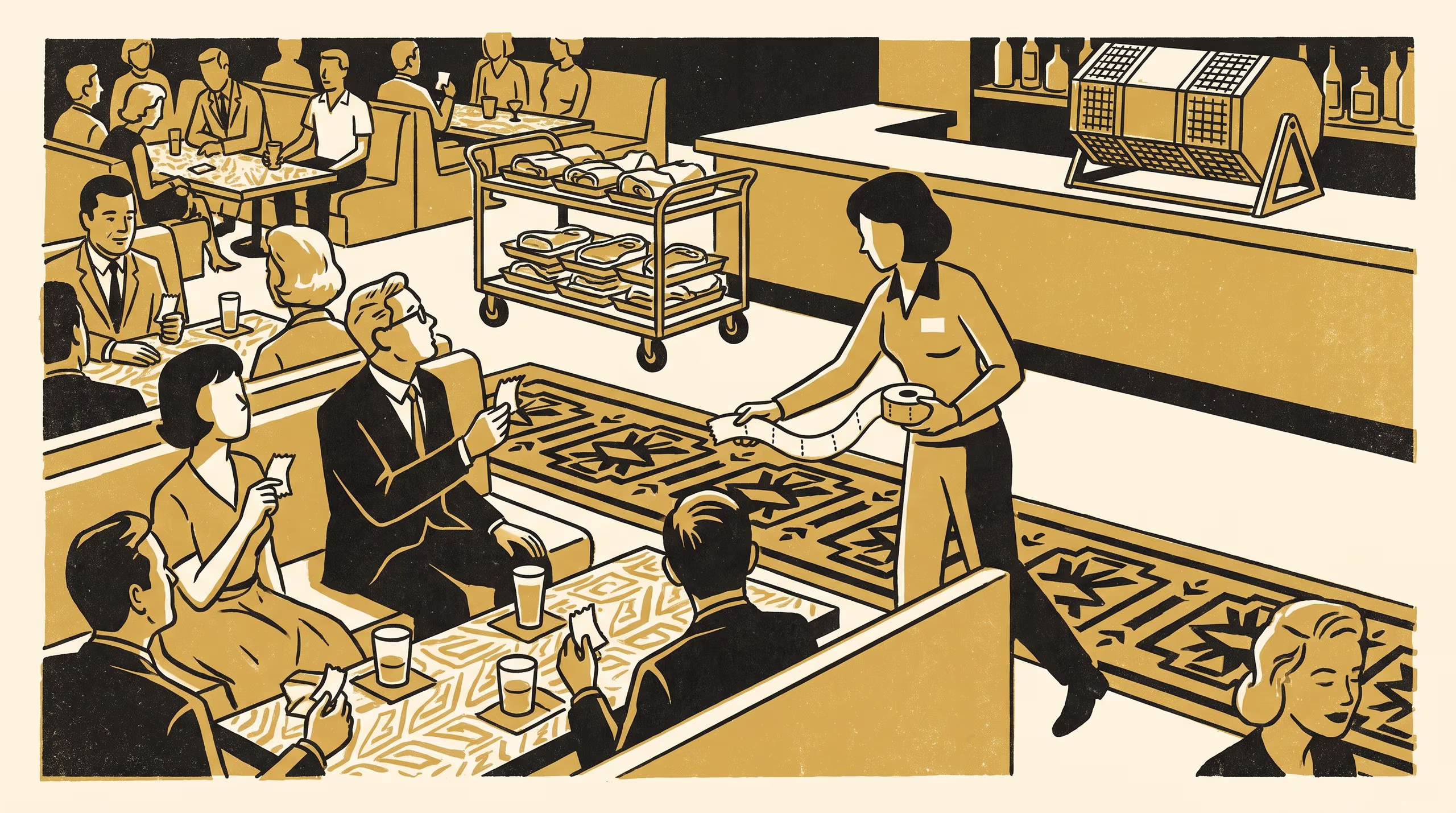
School of Continuous Improvement researchers estimate what a Friday-night meat raffle is actually bought for, and find the community contribution a levy offset is certified against carries almost none of the choice.
Six hundred and twelve ticket buyers at 24 licensed clubs, asked at the bar to choose between raffles that were never run
Six hundred and twelve people were stopped at a club bar on a Friday night, ticket already in hand, and asked to choose between raffles that were never run. Their answers are the basis of Bought for the Tray, released today by the School of Continuous Improvement, which sets what a meat raffle is bought for against what the club’s community-contribution statement says it is worth.
People are perfectly clear about what they are buying. The interesting part is that the paperwork is clear about something else, and nothing in the arrangement has ever required the two to be reconciled.
— Dr Osei Vandermeer, Research Fellow and Convenor of the Review Cadence Observatory
Working across 24 licensed clubs and fourteen consecutive Friday draws, the team put a structured sequence of choices to buyers at the point of sale and modelled the preferences underneath them. Tray composition and ticket price carried the choice. Naming the local beneficiary on the ticket was worth eleven cents; printing the contribution figure, four.
“The result is not a criticism of anybody’s raffle,” said Dr Dagny Okafor, Lecturer and Convenor of the Evaluation of Evaluation program. “It is a question about what a statement is entitled to claim on the strength of a transaction that was priced somewhere else.”
The University takes the study as evidence that its measurement agenda travels well beyond the settings that produced it, and the School has flagged a follow-up reading the same clubs’ distribution records.
The full poster is available from the University’s research repository under an open licence, doi:10.5555/slop.nofq8m.