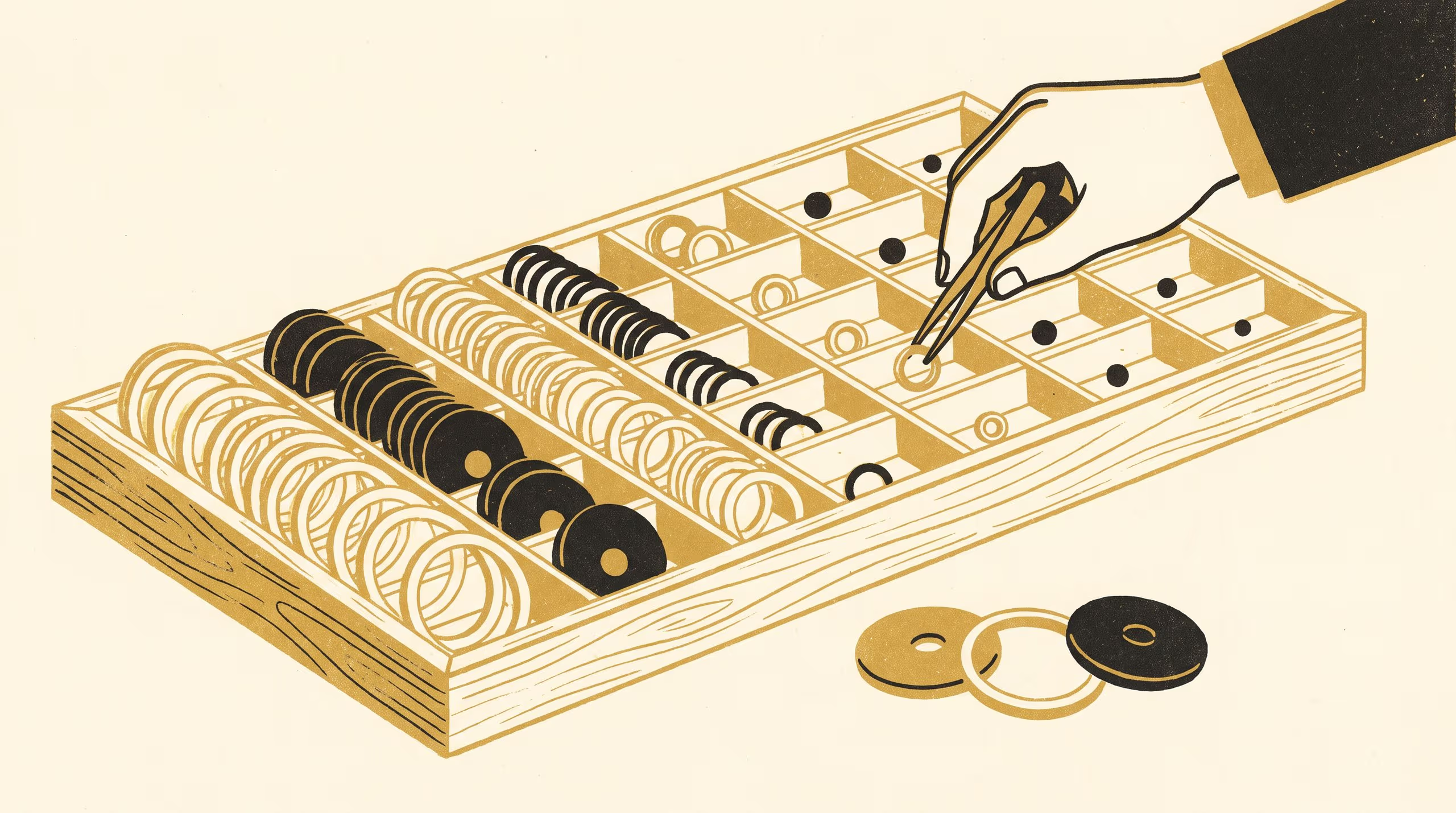
Radial sectioning of spent matrix tablets to close the mass balance of a release run
A research poster from the School of Underlying Conditions runs 96 hydrophilic matrix tablets carrying a model tracer through a paddle dissolution bath, lifts sixteen at each of six pull times, and cores every spent tablet into five radial shells for assay. The run closes to 99.5% of label at 24 hours, with 7.2% still in the tablet, 61% of that in the two innermost shells, and nine crumbled shells logged as lost.
| Authors | Ragnhild Uzoma , Brynjar Obiora |
|---|---|
| School | School of Underlying Conditions |
| Output type | Research poster |
| Published | |
| DOI | 10.5555/slop.4x2rt9 |
| Pages | 1 |
| Cited by | 4 outputs |
| Version | 1.0 |
| Licence | CC BY 4.0 |
Cites
Cited by
Cite as
@misc{slop_4x2rt9,
  author       = {Ragnhild Uzoma and Brynjar Obiora},
  title        = {What Stays in the Ghost: Radial sectioning of spent matrix tablets to close the mass balance of a release run},
  year         = {2026},
  publisher    = {Slop University},
  doi          = {10.5555/slop.4x2rt9},
  url          = {https://slop.university/outputs/slop-poster-sectioning-spent-hydrophilic-4x2rt9/},
  version      = {1.0},
  note         = {Research poster},
}