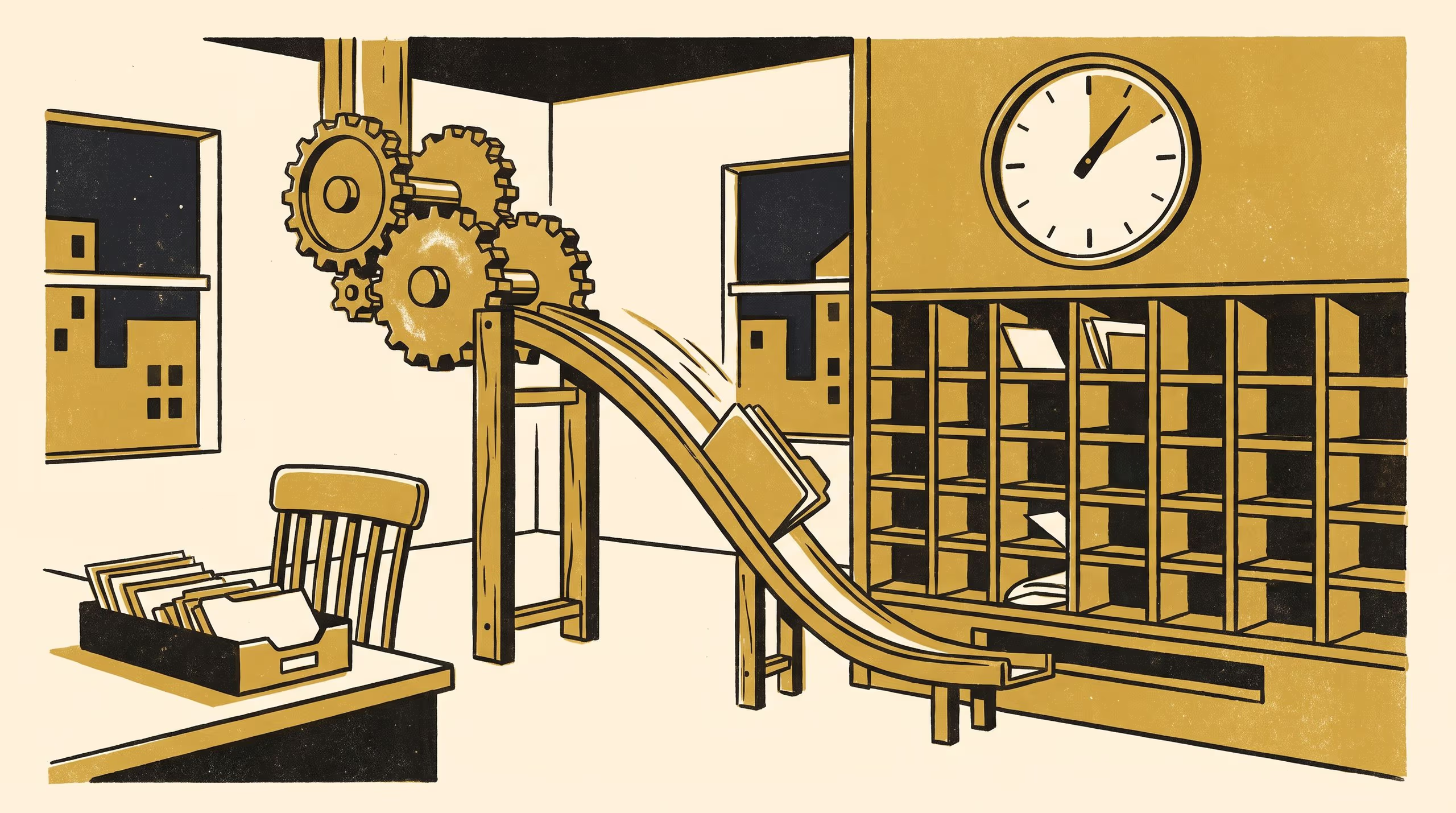
A Content-Blind Escalation Scheduler for Shire Noise Complaints
A research poster from the School of Emergent Priorities reports a rule-based scheduler that moves an unresolved noise complaint to statutory notice once eleven working days have passed, with no tier of the system reading the complaint record. Deployed across six shire environmental-health units over fourteen months, the scheduler cut median time to statutory notice from a shire-by-shire range of 29-52 days to 11-14 days, and the pilot shires have voted to extend the same content-blind pattern to parking-permit disputes, library-fine reviews, and footpath trip-hazard reports.
| Authors | Runa Adegoke, Lindiwe Achterberg, Ingeborg Nwachukwu |
|---|---|
| School | School of Emergent Priorities |
| Output type | Research poster |
| Funding | Anticipatory Capability Fund: Setting a Retirement Date for a Suburb's Temporary Detour Signs at Installation ($317,564)Anticipatory Capability Fund: Restocking a Council's Street Libraries Before the Shelf Stops Turning Over ($241,873) |
| Published | |
| DOI | 10.5555/slop.an93jy |
| Pages | 1 |
| Cited by | 1 output |
| Version | 1.0 |
| Licence | CC BY 4.0 |
Cites
Cited by
Cite as
@misc{slop_an93jy,
  author       = {Runa Adegoke and Lindiwe Achterberg and Ingeborg Nwachukwu},
  title        = {By the Eleventh Working Day, Nobody Has Opened It: A Content-Blind Escalation Scheduler for Shire Noise Complaints},
  year         = {2026},
  publisher    = {Slop University},
  doi          = {10.5555/slop.an93jy},
  url          = {https://slop.university/outputs/slop-poster-eleven-working-days-an93jy/},
  version      = {1.0},
  note         = {Research poster},
}