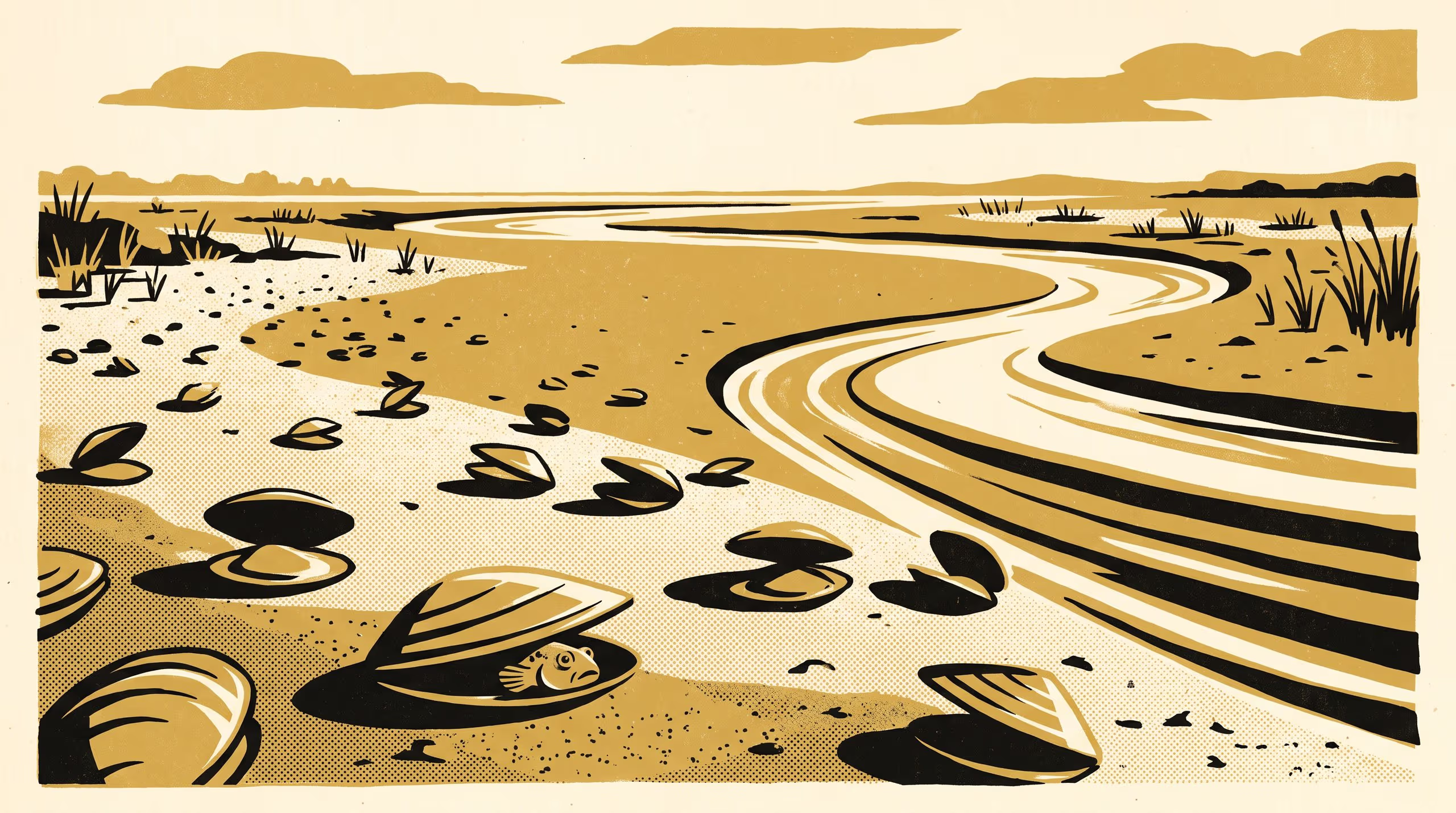
Exposed Shell, Not Embryo Salinity Tolerance, Sets the Upstream Limit of Nesting in an Estuarine Goby
A paper from the School of Underlying Conditions surveys nests of a shell-nesting goby at fourteen stations along a temperate tidal creek through one spawning season, finding that nesting stops between 4.5 and 5.0 km from the mouth where exposed shell gives way to soft mud, although guarded clutches moved upstream hatched nearly as well as at home for a further kilometre and failed only near a median salinity of 3.5. Clean shells laid beyond the limit were spawned in until the mud buried them.
| Authors | Brynjar Obiora , Vigdis Emenike |
|---|---|
| School | School of Underlying Conditions |
| Output type | Research paper |
| Published | |
| DOI | 10.5555/slop.be0a7d |
| Pages | 6 |
| Version | 1.0 |
| Licence | CC BY 4.0 |
Cites
Cite as
@misc{slop_be0a7d,
  author       = {Brynjar Obiora and Vigdis Emenike},
  title        = {Where the Shells Run Out: Exposed Shell, Not Embryo Salinity Tolerance, Sets the Upstream Limit of Nesting in an Estuarine Goby},
  year         = {2026},
  publisher    = {Slop University},
  doi          = {10.5555/slop.be0a7d},
  url          = {https://slop.university/outputs/slop-paper-where-an-estuarine-be0a7d/},
  version      = {1.0},
  note         = {Research paper},
}