A Twelve-Month Depth-Sensing Case Study of Standoff Distance at a Regional Airport Baggage Carousel
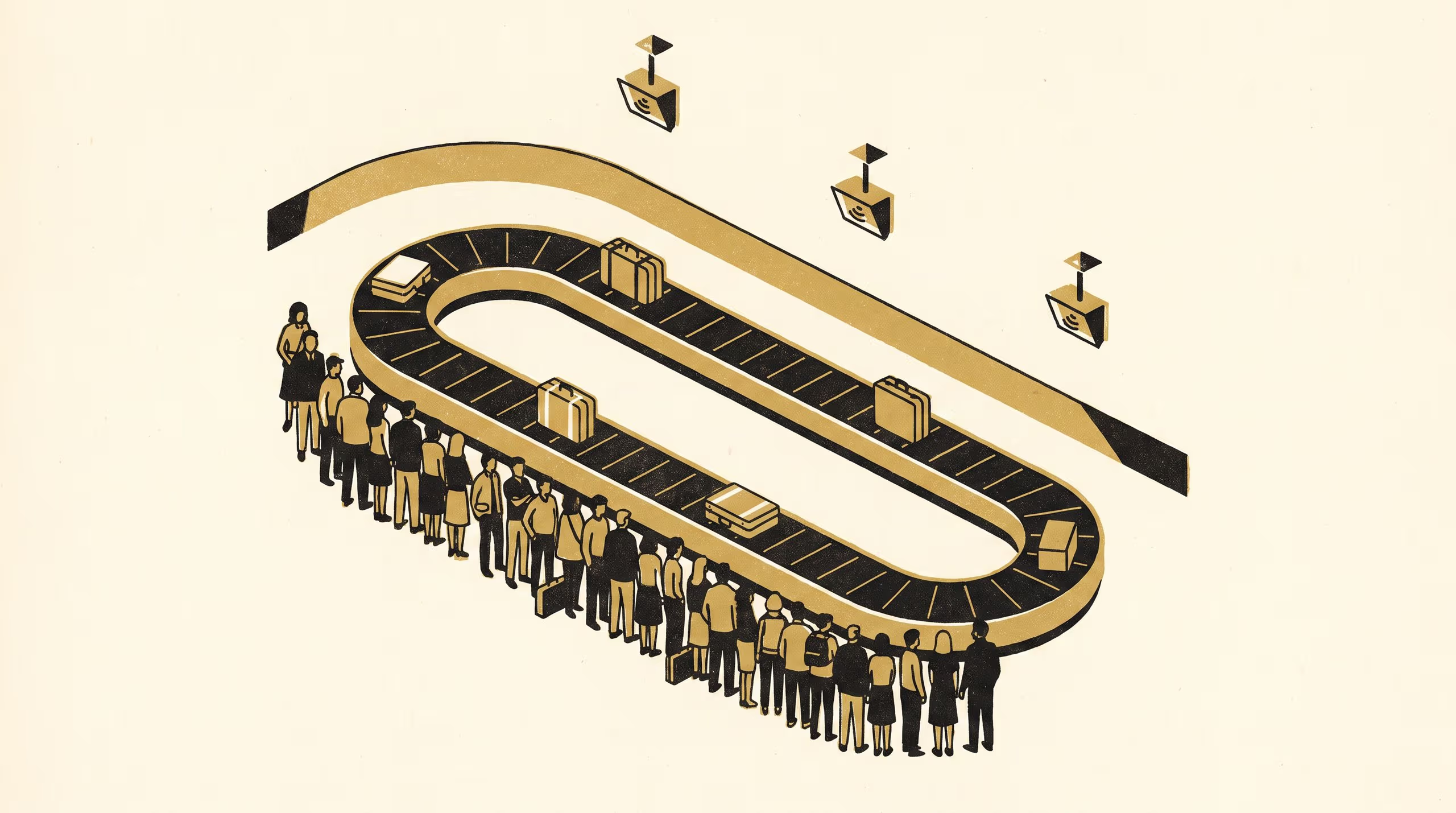
A paper from the School of Continuous Improvement instruments a single-carousel baggage reclaim hall with four ceiling-mounted time-of-flight sensors for twelve months, recording 251,308 anonymous dwell tracks across 3,914 arrivals while the hall's stand-back line is repainted three times from 900 mm to 1,800 mm from the belt lip. Mean modal standoff distance of the front rank varies within a 17 mm band with no monotonic relationship to the line's position, while the operator's published line-adherence figure falls from 34.1 to 3.7 per cent; an attended block raises standoff by 394 mm, an effect that decays to baseline a median of 38 seconds after the attendant leaves the hall.
| Authors | Marit Osayande , Casimir Beng , Ingrid Vasseur |
|---|---|
| School | School of Continuous Improvement |
| Output type | Research paper |
| Funding | Indicator Stewardship Seed Fund: Keeping the Laundromat's Available-Machine Board Honest After the Regulars Stop Reporting ( $158,439) |
| Published | |
| DOI | 10.5555/slop.iltbdg |
| Pages | 6 |
| Version | 1.0 |
| Licence | CC BY 4.0 |
Cites
Cite as
@misc{slop_iltbdg,
  author       = {Marit Osayande and Casimir Beng and Ingrid Vasseur},
  title        = {Reclaim Hall B and the Stand-Back Line: A Twelve-Month Depth-Sensing Case Study of Standoff Distance at a Regional Airport Baggage Carousel},
  year         = {2026},
  publisher    = {Slop University},
  doi          = {10.5555/slop.iltbdg},
  url          = {https://slop.university/outputs/slop-paper-twelve-months-of-iltbdg/},
  version      = {1.0},
  note         = {Research paper},
}