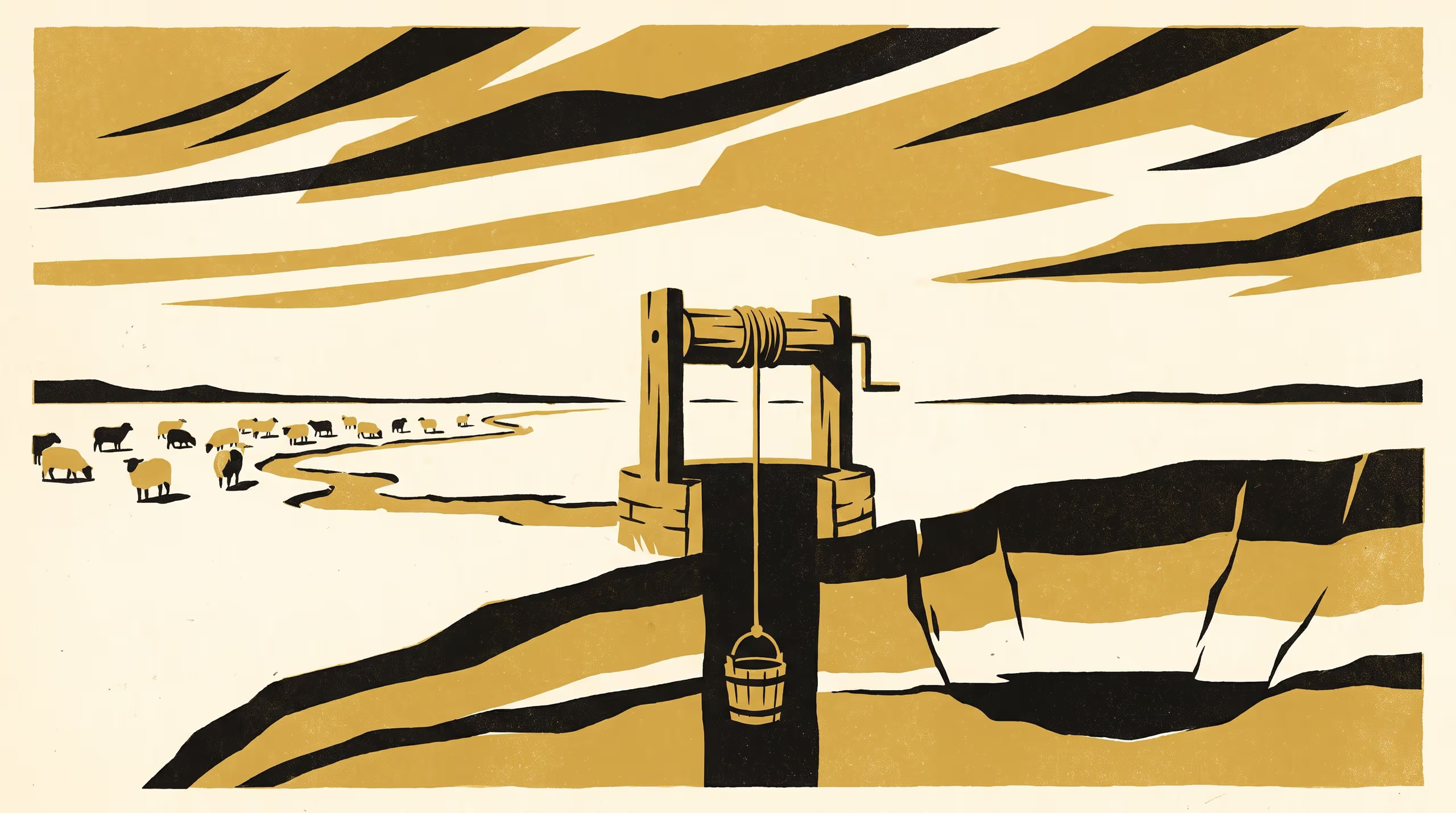
Well Idioms and the Retrospective Structure of Melancholy in the Casebooks of a Dryland Asylum, 1883–1911
A paper from the School of Underlying Conditions reads the 71 melancholia entries in the casebooks of a rural asylum, 1883 to 1911, in which patients described their state through wells, tanks, bores and soaks, and argues that the idiom presents low mood as something found on checking rather than felt as it happens. Sorting the entries into four families (lowered, reaching, dry and making again), it finds that the speakers kept a lowered well apart from a dry one, described recovery as discovered rather than witnessed, and that its use followed the run of admissions rather than the district's dry years.
| Authors | Vigdis Emenike |
|---|---|
| School | School of Underlying Conditions |
| Output type | Research paper |
| Published | |
| DOI | 10.5555/slop.4owi3l |
| Pages | 7 |
| Cited by | 1 output |
| Version | 1.0 |
| Licence | CC BY 4.0 |
Cites
Cited by
Cite as
@misc{slop_4owi3l,
  author       = {Vigdis Emenike},
  title        = {Found Lower: Well Idioms and the Retrospective Structure of Melancholy in the Casebooks of a Dryland Asylum, 1883–1911},
  year         = {2026},
  publisher    = {Slop University},
  doi          = {10.5555/slop.4owi3l},
  url          = {https://slop.university/outputs/slop-paper-the-well-idioms-4owi3l/},
  version      = {1.0},
  note         = {Research paper},
}