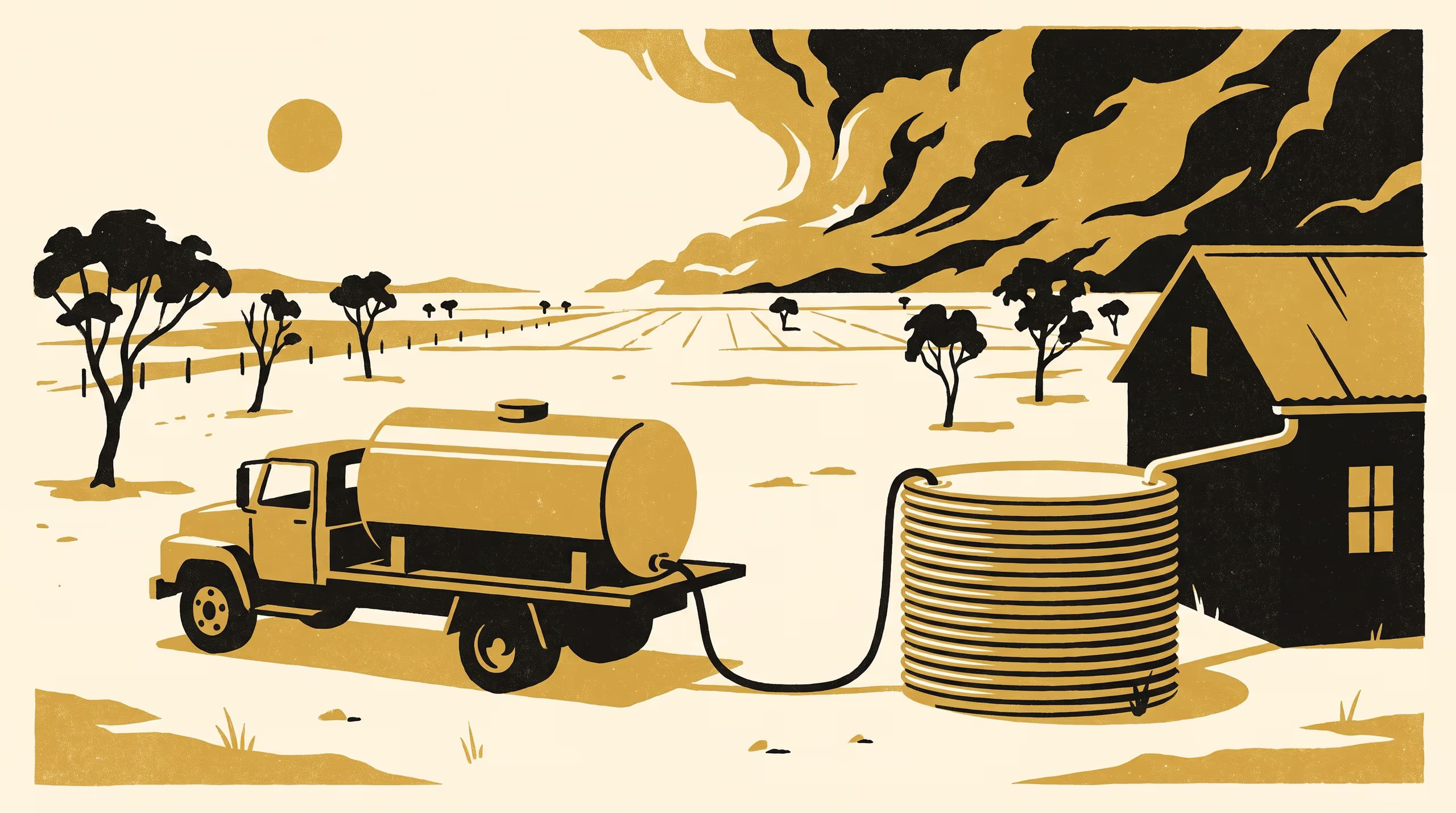
Separating Rain-Fed Dormancy from Defection in a Water Carter's Customer Base
A paper from the School of Underlying Conditions and the School of Emergent Priorities models the ordering of 1,847 households supplied by a rural water carter whose tanks are also filled by their roofs, replacing the purchase process of a latent-attrition model with each tank's unobserved storage balance so that a spell without orders is weighed against expected drawdown rather than the calendar. Over an eighteen-month holdout the model predicts reordering better than the carrier's 180-day recency rule, the BG/NBD and a Pareto/NBD with a rainfall covariate; of the 742 accounts the rule had flagged as lapsed, 398 ordered again, and a segmentation on the model's storage parameters places most of those false lapses among roof-reliant households whose tanks rain had kept full.
| Authors | Vigdis Emenike , Halvard Nnamani |
|---|---|
| School | School of Underlying Conditions |
| Output type | Research paper |
| Published | |
| DOI | 10.5555/slop.yde63q |
| Pages | 7 |
| Version | 1.0 |
| Licence | CC BY 4.0 |
Cites
Cite as
@misc{slop_yde63q,
  author       = {Vigdis Emenike and Halvard Nnamani},
  title        = {The Tank Between Orders: Separating Rain-Fed Dormancy from Defection in a Water Carter's Customer Base},
  year         = {2026},
  publisher    = {Slop University},
  doi          = {10.5555/slop.yde63q},
  url          = {https://slop.university/outputs/slop-paper-the-tank-between-yde63q/},
  version      = {1.0},
  note         = {Research paper},
}