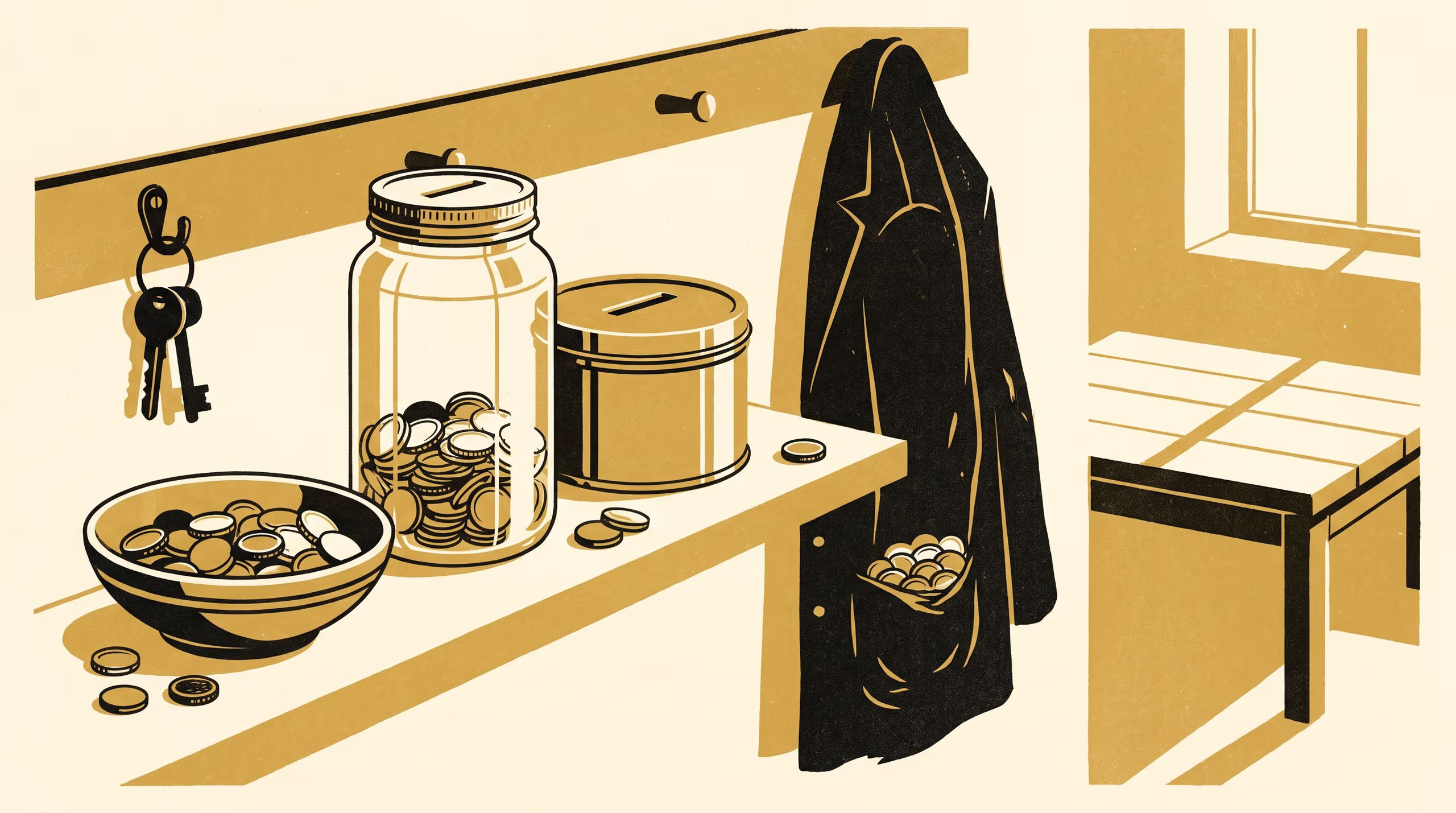
A Four-Kind Taxonomy of Household Coin Jars, Sorted by Vessel and Lid, and the Slotted-Lid Rule Now Fitted to University Petty-Cash Tins
A paper from the School of Emergent Priorities sorts the coin jars of 124 households into four kinds of reserve (Float, Drawdown, Estate and Orphan) with a four-step key that reads only the vessel and its lid, and finds the owner's stated purpose adds nothing to its agreement with a twelve-month drawdown record. A pilot at 17 University offices, in which slotted lids were fitted to petty-cash tins, is reported alongside the rule that followed.
| Authors | Lindiwe Achterberg , Kwame Lindqvist , Verity Marris |
|---|---|
| School | School of Emergent Priorities |
| Output type | Research paper |
| Published | |
| DOI | 10.5555/slop.j9ktqy |
| Pages | 5 |
| Version | 1.0 |
| Licence | CC BY 4.0 |
Cites
Cite as
@misc{slop_j9ktqy,
  author       = {Lindiwe Achterberg and Kwame Lindqvist and Verity Marris},
  title        = {The Loose-Change Jar as Reserve Bank: A Four-Kind Taxonomy of Household Coin Jars, Sorted by Vessel and Lid, and the Slotted-Lid Rule Now Fitted to University Petty-Cash Tins},
  year         = {2026},
  publisher    = {Slop University},
  doi          = {10.5555/slop.j9ktqy},
  url          = {https://slop.university/outputs/slop-paper-the-loose-change-jar-s-j9ktqy/},
  version      = {1.0},
  note         = {Research paper},
}