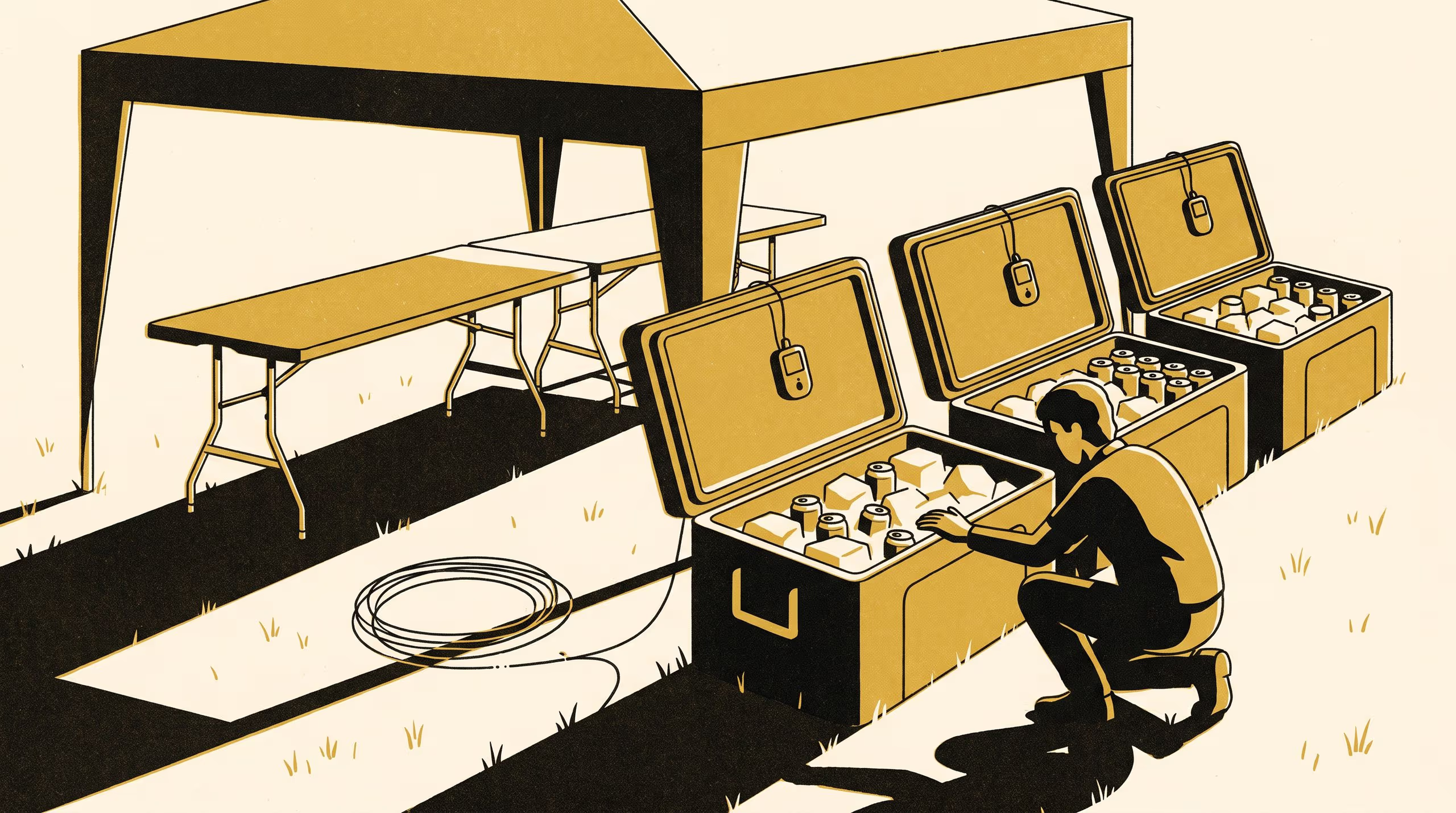
A Propensity-Matched Field Study of 214 Instrumented Eskies at 96 Community Events, and the Set-Up Step Attested Regardless
A paper from the School of Continuous Improvement instruments 214 portable eskies across 96 community events over one summer, logging 1,964 esky-hours of payload temperature, and matches containers chilled overnight against those packed from ambient on heat, shade, ice mass per litre, wall thickness, payload mass, set-up hour and lid traffic. The matched difference in cold-hold duration is +0.18 hours (95% CI -0.38 to +0.74), inside a margin of indifference lodged before data access, and four alternative specifications move it by at most three minutes; ice mass and lid discipline account for 71 per cent of between-esky variance against pre-chill status at 0.4 per cent, and the pre-chill step has since been written into a ratified set-up declaration.
| Authors | Osei Vandermeer , Ingeborg Nwachukwu , Torun Ezeigwe |
|---|---|
| School | School of Continuous Improvement |
| Output type | Research paper |
| Published | |
| DOI | 10.5555/slop.ubvdcc |
| Pages | 5 |
| Cited by | 1 output |
| Version | 1.0 |
| Licence | CC BY 4.0 |
Cites
Cited by
Cite as
@misc{slop_ubvdcc,
  author       = {Osei Vandermeer and Ingeborg Nwachukwu and Torun Ezeigwe},
  title        = {Overnight Pre-Chilling Does Not Extend Cold-Hold in Portable Eskies: A Propensity-Matched Field Study of 214 Instrumented Eskies at 96 Community Events, and the Set-Up Step Attested Regardless},
  year         = {2026},
  publisher    = {Slop University},
  doi          = {10.5555/slop.ubvdcc},
  url          = {https://slop.university/outputs/slop-paper-test-the-received-ubvdcc/},
  version      = {1.0},
  note         = {Research paper},
}