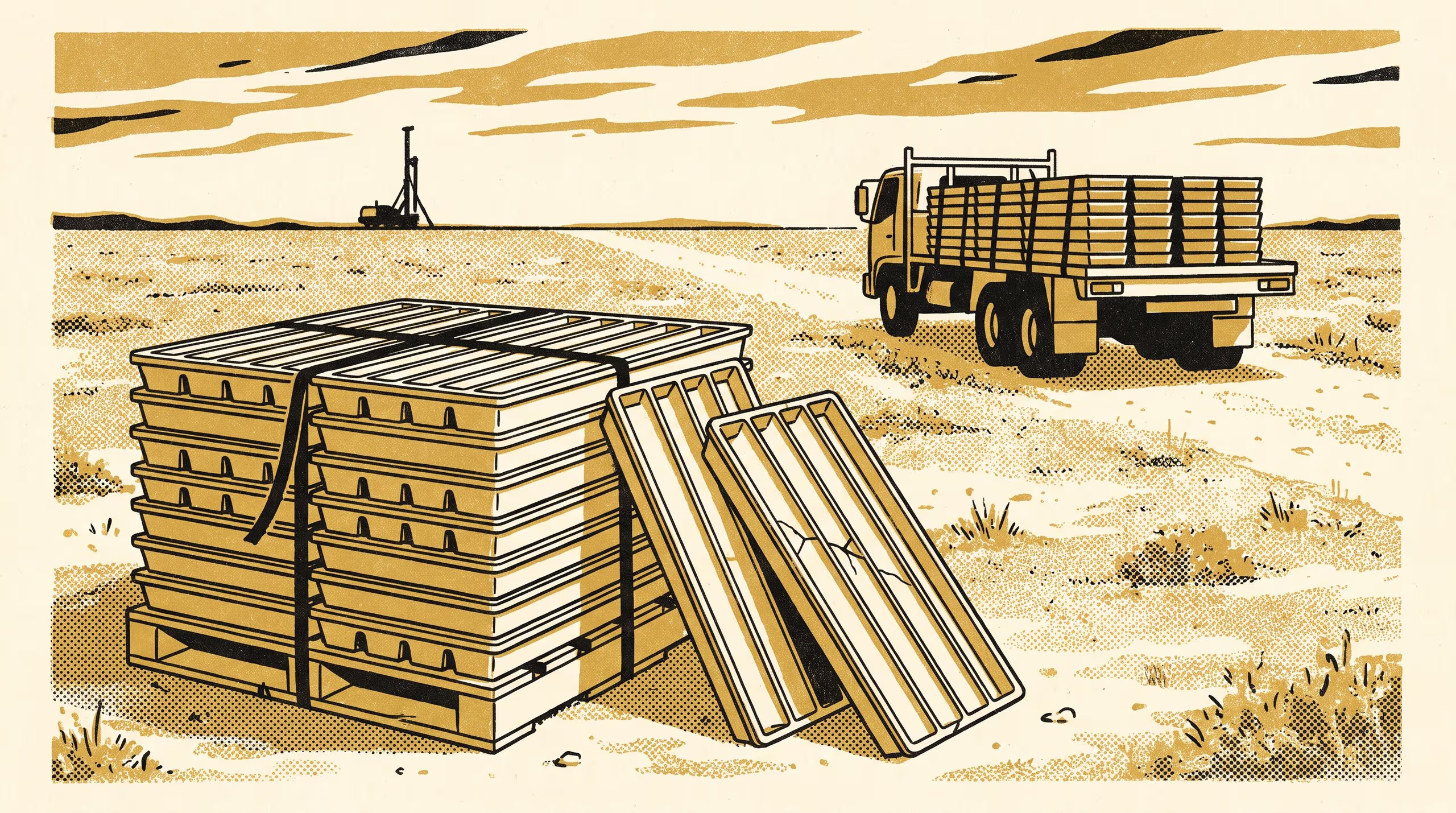
Sizing the Core-Tray Pool Between a Regional Core Shed and Its Remote Drilling Rigs
A paper from the School of Underlying Conditions treats the empty drill-core trays a regional core shed issues to its remote rigs as returnable transport items whose successful use ends their circulation. From three seasons of the shed's issue and return ledger it finds that tray use follows core recovery rather than drilled metres, that the shed's uplift for broken ground provisions the holes that fill the fewest trays, and that topping rigs up from the truck that collects their full trays would cut stranded empties by three quarters with a pool little more than half its present size.
| Authors | Ragnhild Uzoma , Bram Ntuli |
|---|---|
| School | School of Underlying Conditions |
| Output type | Research paper |
| Funding | Anticipatory Capability Fund: Cutting and Shelving a Borehole's Core-Loss Blocks Ahead of the Drill ( $362,417) |
| Published | |
| DOI | 10.5555/slop.2lsie1 |
| Pages | 6 |
| Cited by | 1 output |
| Version | 1.0 |
| Licence | CC BY 4.0 |
Cites
Cited by
Cite as
@misc{slop_2lsie1,
  author       = {Ragnhild Uzoma and Bram Ntuli},
  title        = {Where the Empties Go: Sizing the Core-Tray Pool Between a Regional Core Shed and Its Remote Drilling Rigs},
  year         = {2026},
  publisher    = {Slop University},
  doi          = {10.5555/slop.2lsie1},
  url          = {https://slop.university/outputs/slop-paper-sizing-the-empty-tray-2lsie1/},
  version      = {1.0},
  note         = {Research paper},
}