Placement of Aged Media and the Ripening of a Fresh Sand Bed for the Heterogeneous Oxidation of Ferrous Iron
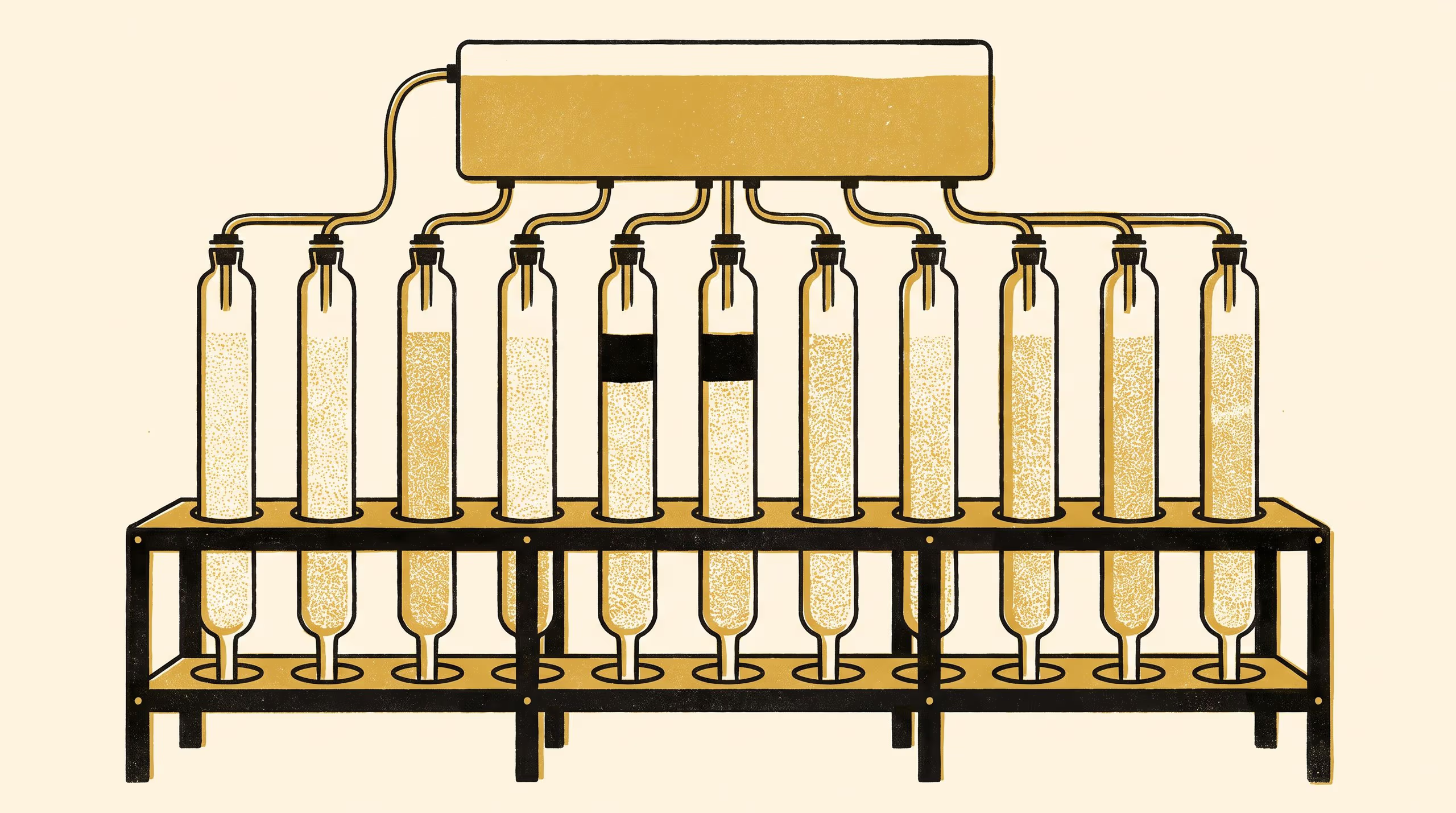
A paper from the School of Underlying Conditions runs six sand columns for 70 days on aerated, iron-bearing water from one monitoring bore and follows the rate constant at which each bed oxidises ferrous iron. Fresh sand took about a month to become catalytic; a tenth of the bed volume in aged, coated media brought the half-ripening time to 12.9 days when laid on top and 18.4 days when mixed through, and made no measurable difference when laid at the bottom, with activity entering every bed from its upstream end.
| Authors | Vigdis Emenike , Brynjar Obiora |
|---|---|
| School | School of Underlying Conditions |
| Output type | Research paper |
| Published | |
| DOI | 10.5555/slop.18w8mq |
| Pages | 5 |
| Cited by | 3 outputs |
| Version | 1.0 |
| Licence | CC BY 4.0 |
Cites
Cited by
Cite as
@misc{slop_18w8mq,
  author       = {Vigdis Emenike and Brynjar Obiora},
  title        = {Seed at the Top: Placement of Aged Media and the Ripening of a Fresh Sand Bed for the Heterogeneous Oxidation of Ferrous Iron},
  year         = {2026},
  publisher    = {Slop University},
  doi          = {10.5555/slop.18w8mq},
  url          = {https://slop.university/outputs/slop-paper-ripening-of-a-18w8mq/},
  version      = {1.0},
  note         = {Research paper},
}