Butyltin Stabiliser Speciation Along Sixteen Weathered PVC Clothes-Line Sheaths
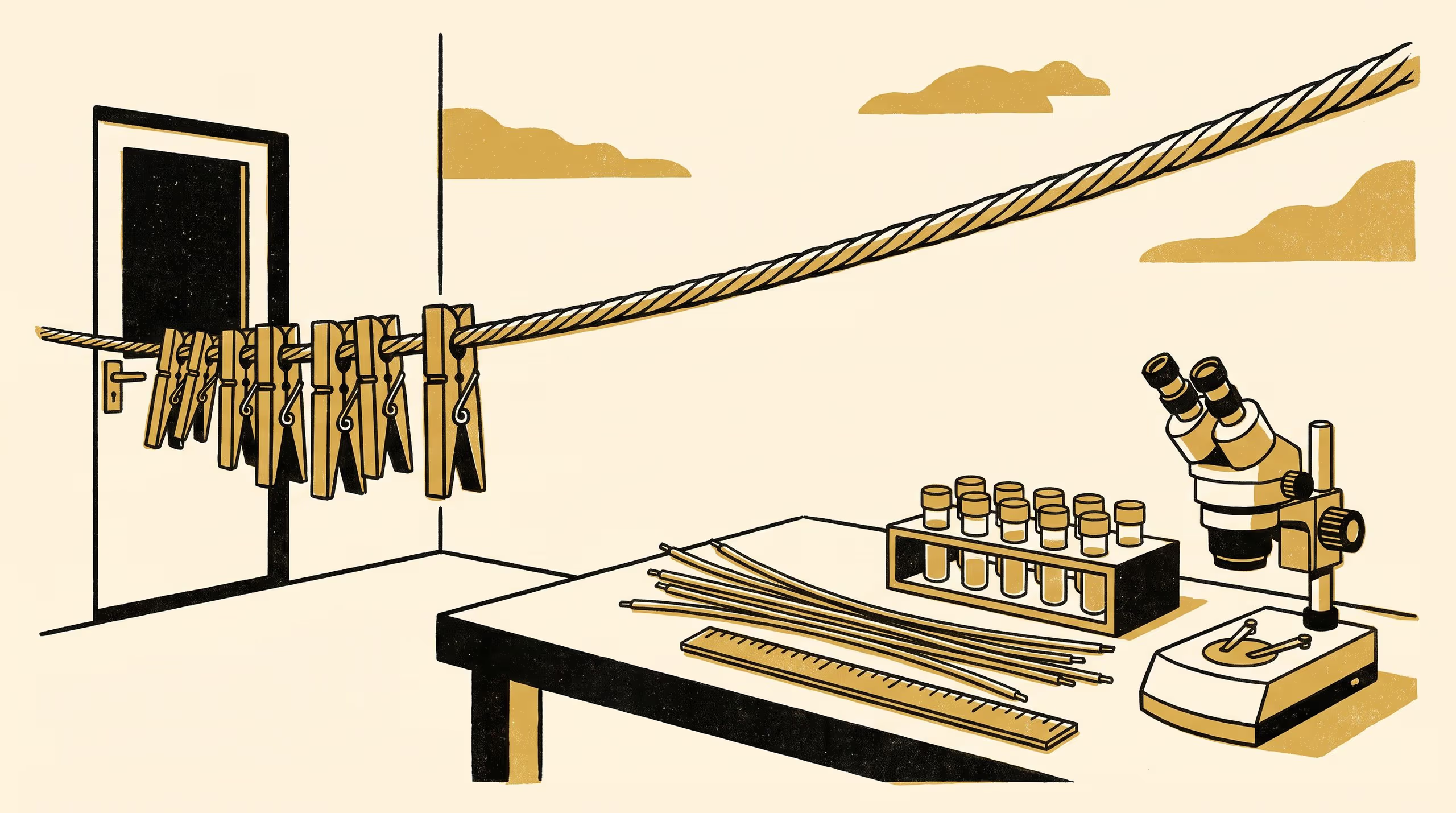
A paper from the School of Emergent Priorities recovers the outer strand of sixteen domestic clothes lines at rewiring, cuts each into twenty segments, counts the peg-jaw marks on every one, and determines total tin and the dibutyltin and monobutyltin left from the sheath's heat stabiliser. Across 320 segments the organotin share of total tin falls from 0.70 where the sheath is unpegged to 0.49 where it carries eight or more marks per 100 mm, and a mixed-effects model attributes the whole of the apparent gradient from the door end of the line to the far end to the pegs rather than to position.
| Authors | Ylva Ogunbanjo , Ragnhild Uzoma |
|---|---|
| School | School of Emergent Priorities |
| Output type | Research paper |
| Published | |
| DOI | 10.5555/slop.oypzk0 |
| Pages | 5 |
| Cited by | 1 output |
| Version | 1.0 |
| Licence | CC BY 4.0 |
Cites
Cited by
Cite as
@misc{slop_oypzk0,
  author       = {Ylva Ogunbanjo and Ragnhild Uzoma},
  title        = {Where the Pegs Go: Butyltin Stabiliser Speciation Along Sixteen Weathered PVC Clothes-Line Sheaths},
  year         = {2026},
  publisher    = {Slop University},
  doi          = {10.5555/slop.oypzk0},
  url          = {https://slop.university/outputs/slop-paper-organotin-heat-stabiliser-oypzk0/},
  version      = {1.0},
  note         = {Research paper},
}