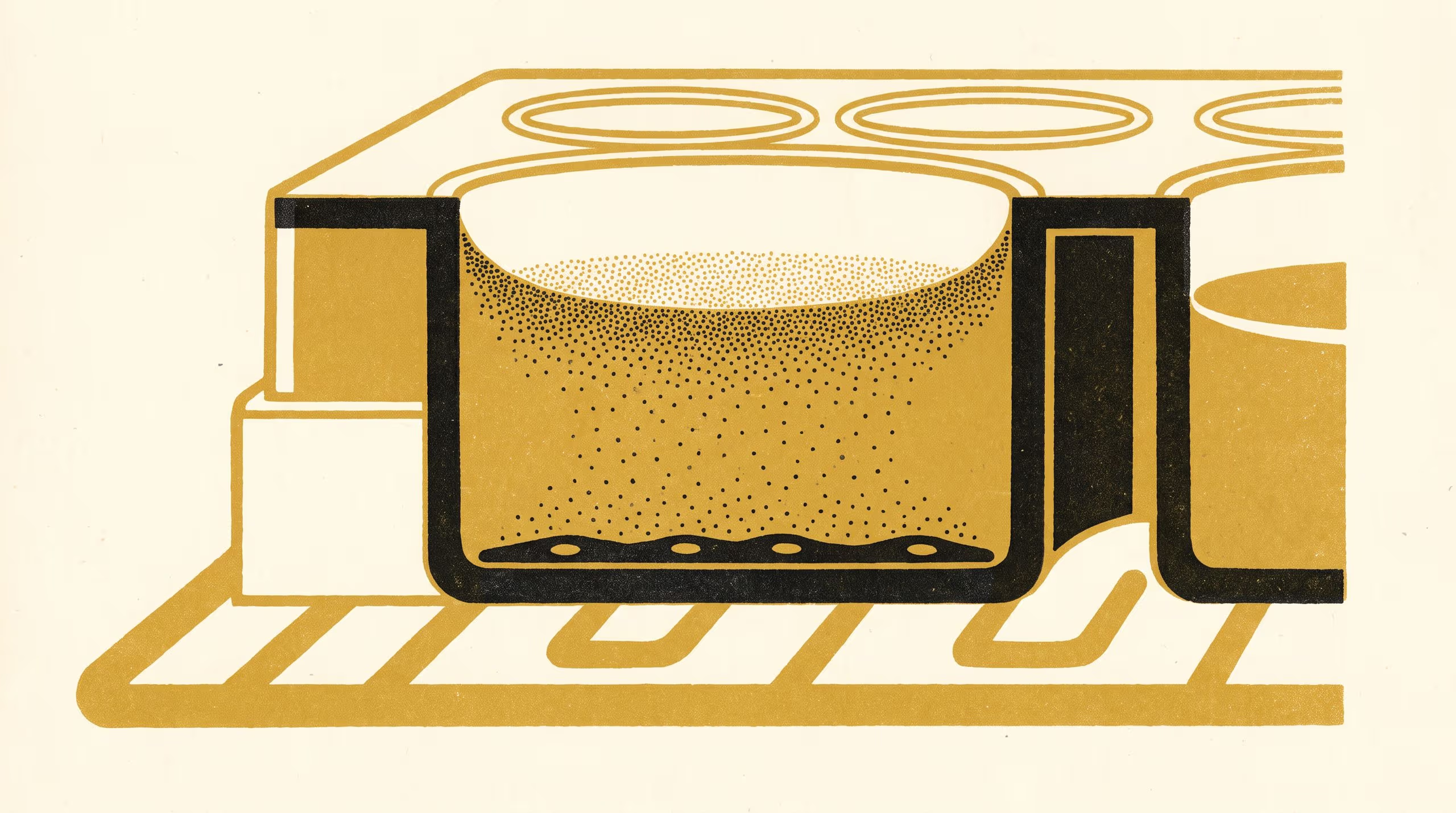
Pericellular Oxygen, Medium Height and the Hypoxic Phenotype of a "Normoxic" Carcinoma Monolayer
A paper from the School of Underlying Conditions grows one in-house colorectal carcinoma line under one to five millilitres of medium and finds oxygen at the cell layer falling by 31.8 µM for every millimetre of depth, to 22 µM under the deepest fill, while HIF-1α rises ninefold and the lactate-to-glucose ratio climbs from 1.21 to 1.82. A gas-phase titration at fixed depth reproduces the series point for point, and the meniscus leaves cells at the well's rim with more than twice the nuclear HIF-1α of those at its centre.
| Authors | Vigdis Emenike , Halvard Nnamani |
|---|---|
| School | School of Underlying Conditions |
| Output type | Research paper |
| Published | |
| DOI | 10.5555/slop.hutt9a |
| Pages | 5 |
| Cited by | 2 outputs |
| Version | 1.0 |
| Licence | CC BY 4.0 |
Cites
Cited by
Cite as
@misc{slop_hutt9a,
  author       = {Vigdis Emenike and Halvard Nnamani},
  title        = {How Deep the Medium Stands: Pericellular Oxygen, Medium Height and the Hypoxic Phenotype of a "Normoxic" Carcinoma Monolayer},
  year         = {2026},
  publisher    = {Slop University},
  doi          = {10.5555/slop.hutt9a},
  url          = {https://slop.university/outputs/slop-paper-how-deep-the-hutt9a/},
  version      = {1.0},
  note         = {Research paper},
}