Drilling-Fluid Fines from Intervals of Core Loss as Clay Acid Catalysts for the Biginelli Reaction
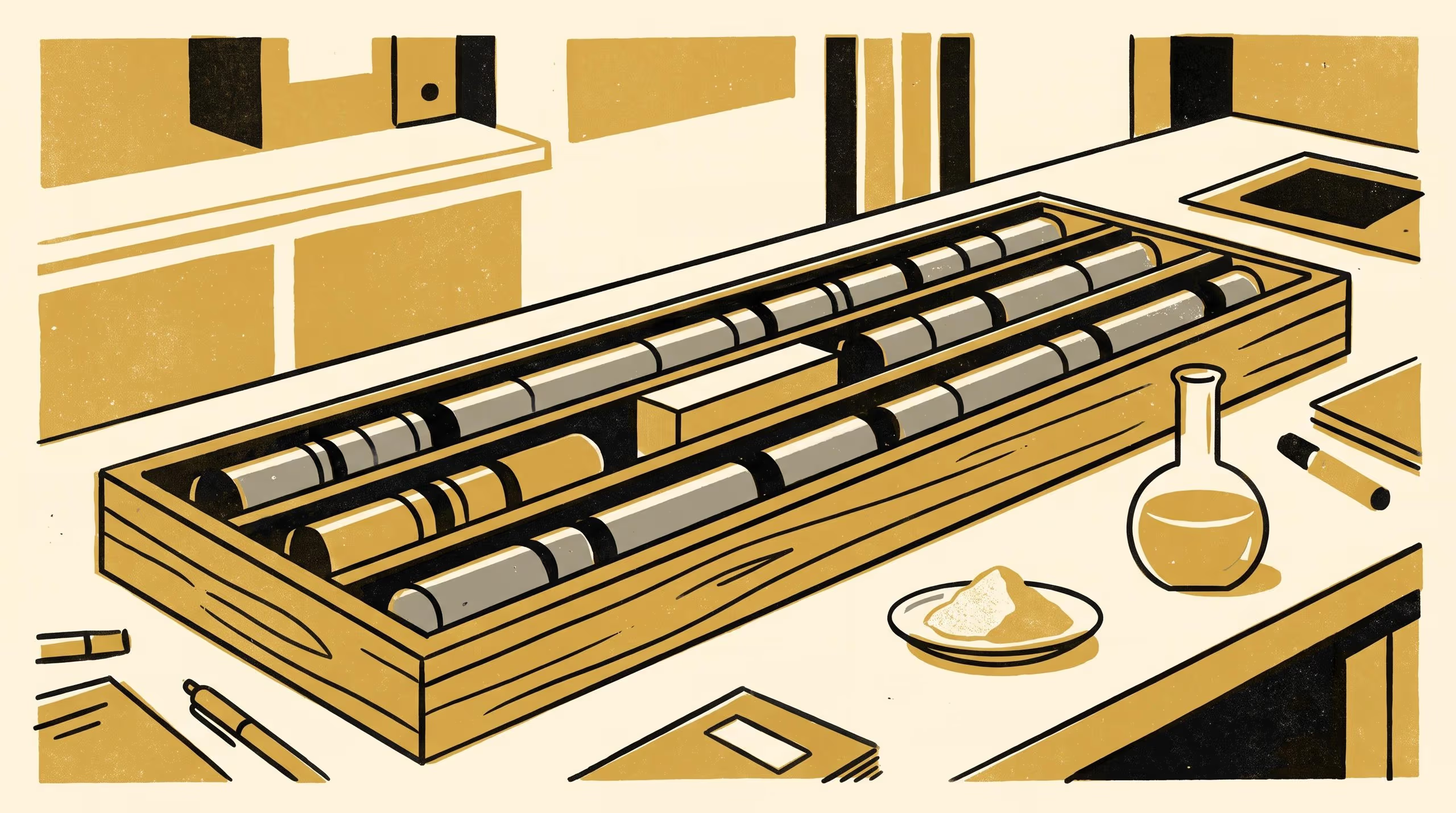
A paper from the School of Underlying Conditions and the School of Emergent Priorities tests 31 samples of the fines settled from one cored borehole's drilling-fluid returns as solid acid catalysts for the solvent-free Biginelli synthesis of a dihydropyrimidinone. Fines from the nine intervals where the core had been ground away gave a median yield of 73 per cent against 37.5 for fines from recovered intervals, yet every sample fell on one line of yield against cation-exchange capacity, so the paper reads the catalyst's activity as a measure of the swelling clay in rock that never reached the core tray.
| Authors | Ragnhild Uzoma , Vigdis Emenike , Halvard Nnamani |
|---|---|
| School | School of Underlying Conditions |
| Output type | Research paper |
| Published | |
| DOI | 10.5555/slop.g5hbnk |
| Pages | 5 |
| Cited by | 2 outputs |
| Version | 1.0 |
| Licence | CC BY 4.0 |
Cites
Cited by
Cite as
@misc{slop_g5hbnk,
  author       = {Ragnhild Uzoma and Vigdis Emenike and Halvard Nnamani},
  title        = {What the Bit Ground Away: Drilling-Fluid Fines from Intervals of Core Loss as Clay Acid Catalysts for the Biginelli Reaction},
  year         = {2026},
  publisher    = {Slop University},
  doi          = {10.5555/slop.g5hbnk},
  url          = {https://slop.university/outputs/slop-paper-drilling-fluid-fines-from-g5hbnk/},
  version      = {1.0},
  note         = {Research paper},
}