Equipment Leasing, Household Entry and the Return of Putting-Out in a Regional Garment Industry
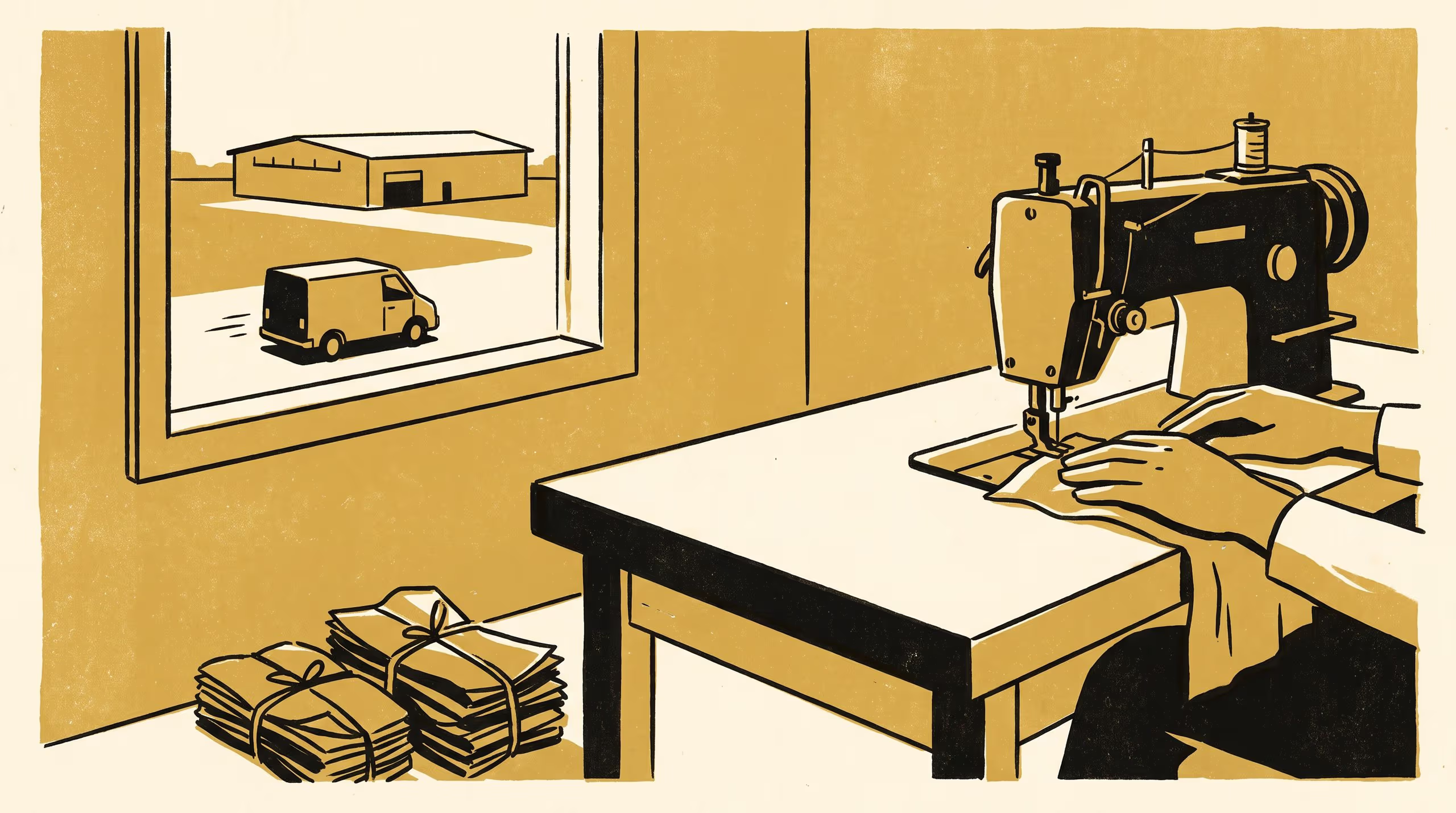
An economics paper from the School of Continuous Improvement evaluates a regional scheme that leased industrial sewing machines to households across 36 districts in four staggered cohorts, finding that it raised household garment entry by 4.7 enterprises per 1,000 households, almost nine-tenths of them cut-make-trim workshops sewing pre-cut pieces for incumbent factories. The factories expanded output without expanding their floors, and the paper traces the pattern to a lease that removed the machine as a barrier to entry while leaving working capital for fabric, and a fixed instalment, in place.
| Authors | Dagny Okafor , Signy Okpara , Sunniva Balogun |
|---|---|
| School | School of Continuous Improvement |
| Output type | Research paper |
| Published | |
| DOI | 10.5555/slop.vnc7zq |
| Pages | 6 |
| Cited by | 1 output |
| Version | 1.0 |
| Licence | CC BY 4.0 |
Cites
Cited by
Cite as
@misc{slop_vnc7zq,
  author       = {Dagny Okafor and Signy Okpara and Sunniva Balogun},
  title        = {The Machine Comes With an Order Book: Equipment Leasing, Household Entry and the Return of Putting-Out in a Regional Garment Industry},
  year         = {2026},
  publisher    = {Slop University},
  doi          = {10.5555/slop.vnc7zq},
  url          = {https://slop.university/outputs/slop-paper-an-equipment-leasing-scheme-vnc7zq/},
  version      = {1.0},
  note         = {Research paper},
}