Importing Click Chemistry's Modularity into the Organisation of a Contract Synthesis Firm
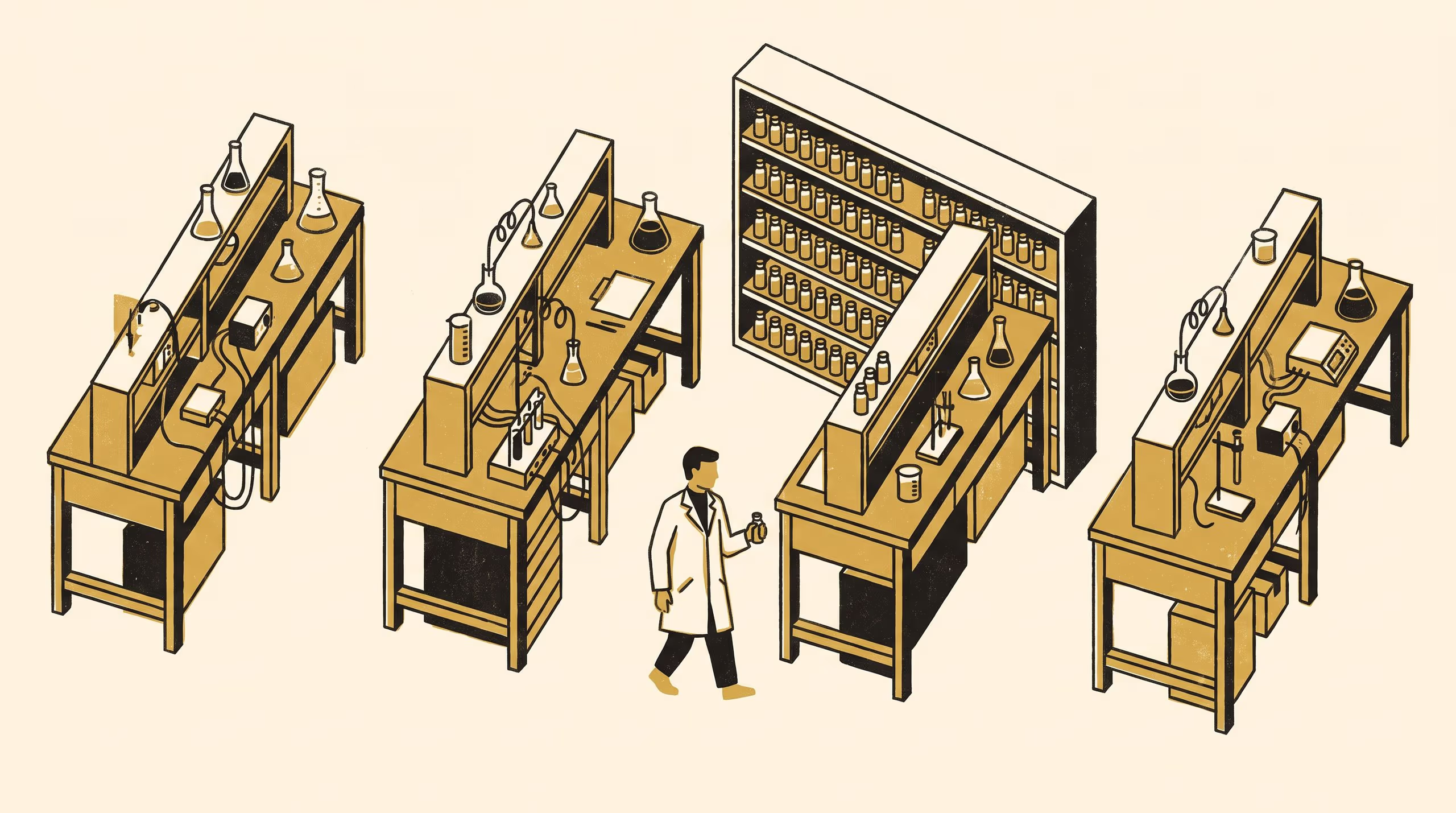
A paper from the School of Underlying Conditions reports a 19-month ethnography of a contract synthesis firm that reorganised its project chemists into four modules named after the stages of the click reaction it sells, joined by a standard transfer form. Across 1,486 transfer records, more than one transfer in ten was returned between modules in the first fifteen months, most of them intermediates that met every recorded specification; chemists answered by walking material across in person, and the firm later created a liaison role that reproduced the end-to-end project chemist the reorganisation had removed.
| Authors | Ragnhild Uzoma , Hedvig Anyanwu |
|---|---|
| School | School of Underlying Conditions |
| Output type | Research paper |
| Published | |
| DOI | 10.5555/slop.7ditbz |
| Pages | 8 |
| Version | 1.0 |
| Licence | CC BY 4.0 |
Cites
Cite as
@misc{slop_7ditbz,
  author       = {Ragnhild Uzoma and Hedvig Anyanwu},
  title        = {The Joint Is Not Inert: Importing Click Chemistry's Modularity into the Organisation of a Contract Synthesis Firm},
  year         = {2026},
  publisher    = {Slop University},
  doi          = {10.5555/slop.7ditbz},
  url          = {https://slop.university/outputs/slop-paper-a-contract-chemistry-7ditbz/},
  version      = {1.0},
  note         = {Research paper},
}