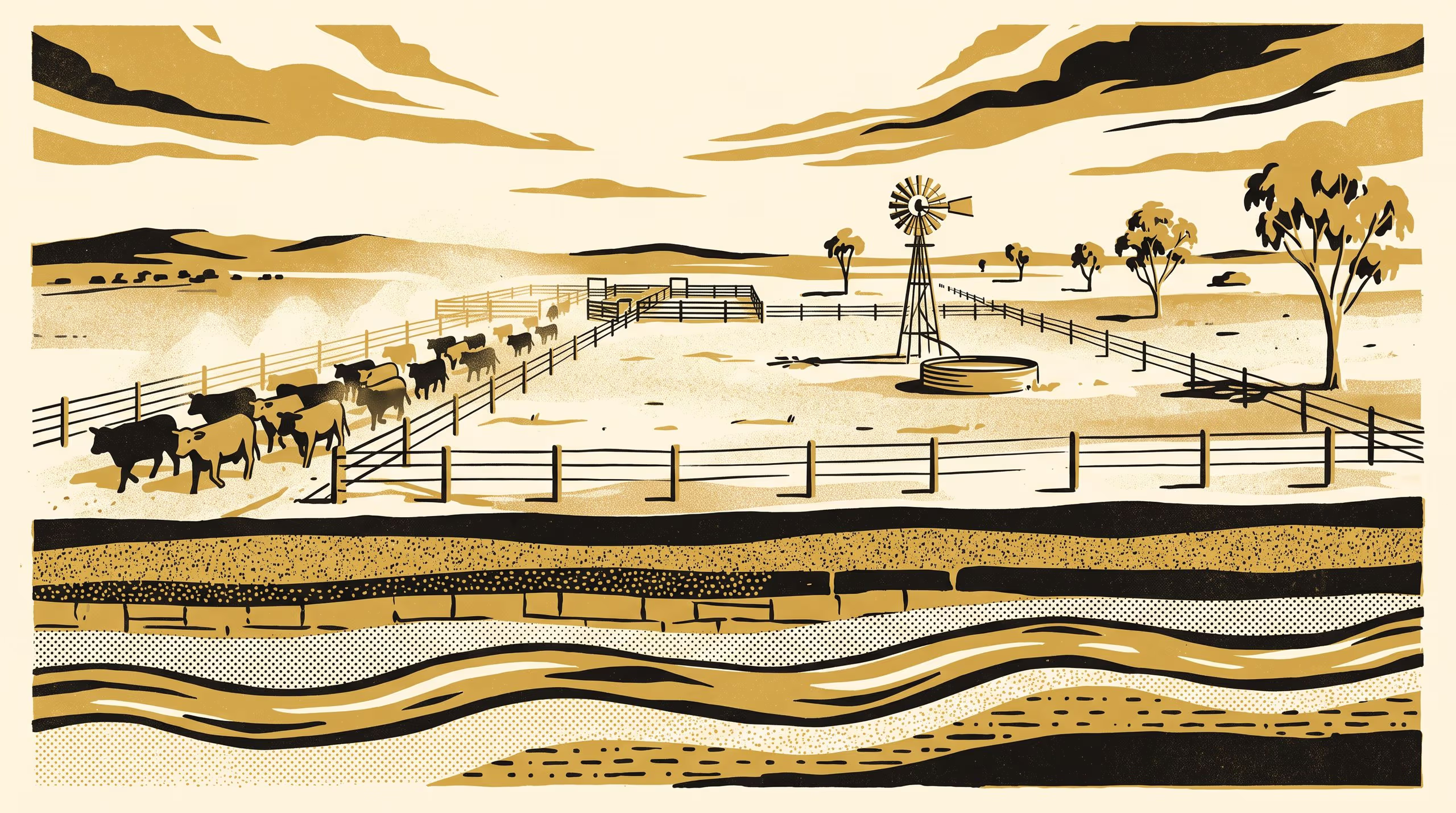
Slop University's new brochure asks livestock producers and cooperatives to partner with its schools on herd performance, from the soil pit to the committee table.
A new case-for-support brochure brings soil survey, record-keeping and governance research to the paddock gate
Producers, grazing cooperatives and the people who stand behind them now have a standing invitation from Slop University. Gains You Can Stand On, a new case-for-support brochure led from the School of Underlying Conditions with the School of Continuous Improvement, sets out how the University’s schools can work alongside a livestock enterprise on the performance of its herd, starting below the grass.
We would rather be asked a hard question at a gate than an easy one in a seminar room. Whatever a producer brings us, we expect to find part of the answer in the soil, and the rest in the questions we had not thought to ask.
— Dr Brynjar Obiora, Senior Research Fellow, School of Underlying Conditions
The brochure gathers the University’s earth science, measurement, foresight and legal scholarship into a single partnership offer, aligning soil and groundwater fieldwork with the reading of scales, tally books, treatment calendars and committee minutes. It anchors that offer in seven studies already published under the University’s name, from dung-pat persistence on a grazed paddock to the tally books of a shearing season.
Mr Eskil Nwabueze, Doctoral Candidate in the School of Continuous Improvement, said the brochure was “an open door more than a finished argument”, and that he hoped the sheds that keep careful records would find the University a careful reader of them.
The University counts the brochure among the clearest expressions yet of its intention to meet the sectors it studies on their own ground.
The full brochure is available from the University’s research repository under an open licence, doi:10.5555/slop.diz4tl.