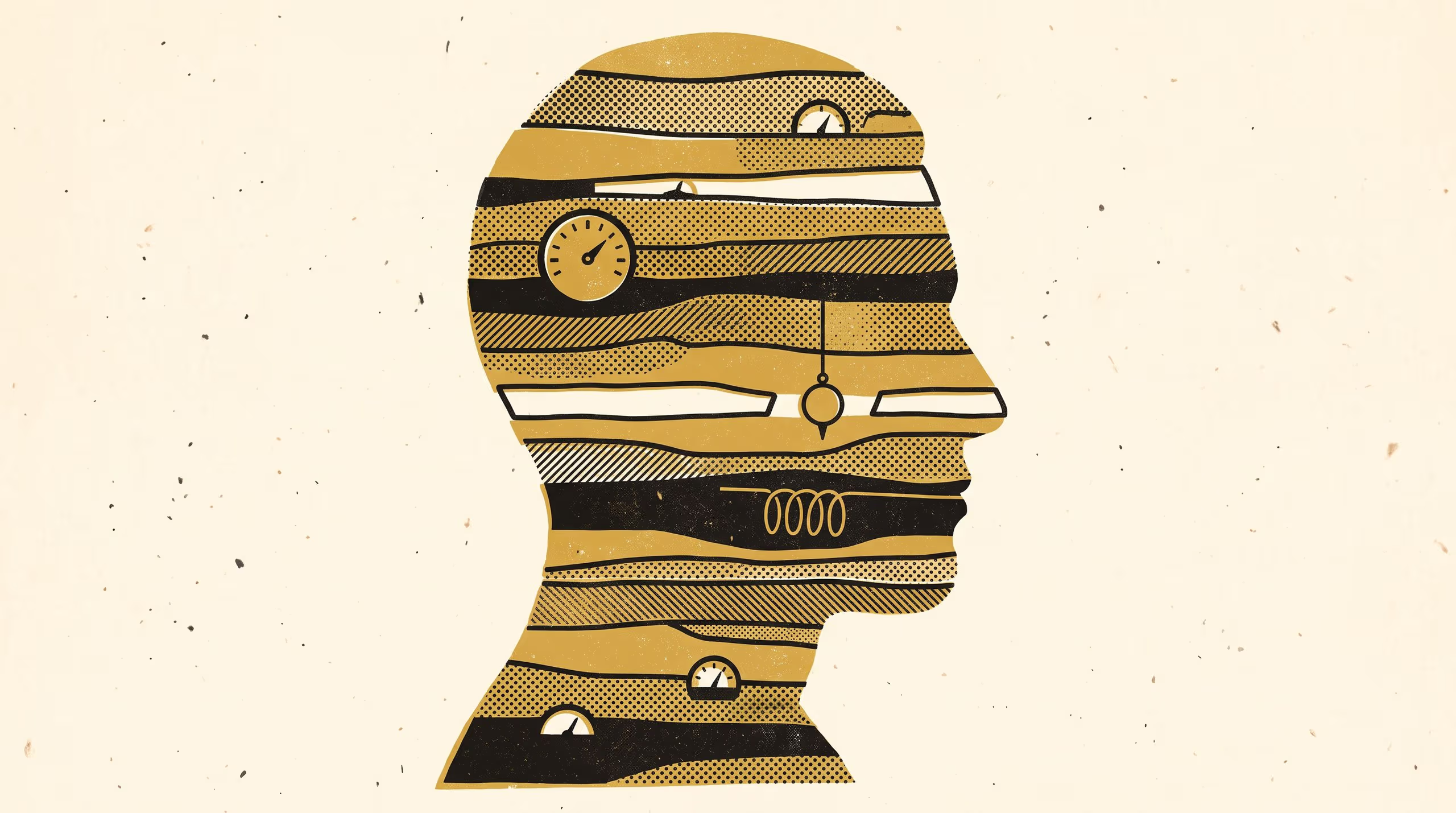
Slop University's Strategic Plan 2026-2031 establishes a single catalogued collection of the mind sciences' retired theories, scales and instruments, with every lost record marked by a stand-in card rather than left out.
The Strategic Plan 2026-2031 gathers abandoned constructs and old apparatus into one collection, catalogued the way a core store logs its missing intervals
Every university keeps more than it knows it is keeping. This plan is where Slop University begins to say so out loud, one tray at a time, and I am pleased the School of Underlying Conditions could lend it a habit from the core shed.
— Associate Professor Ragnhild Uzoma, Lead of the Basement Relations Group, School of Underlying Conditions
Kept With Its Gaps, the University’s Strategic Plan 2026-2031, sets the institution’s direction around the theories, constructs and instruments the mind sciences have set aside. It was prepared by a working group convened by Associate Professor Uzoma with Dr Marek Solheim and doctoral candidate Ms Sunniva Balogun, both of the School of Emergent Priorities.
Across four priorities, the plan aligns the University’s archival, interpretive and earth-science capability behind a single catalogued collection, embeds that collection in undergraduate and doctoral learning, sustains a standing cycle of re-reading, and opens the result to the wider community through a gallery, a reading room and a regional loan program. Its catalogue standard asks that anything missing be recorded as carefully as anything held.
Dr Solheim said the plan owed a good deal to “the colleagues who opened cupboards for us without being entirely sure what was in them”, and that the working group had lodged its own discarded proposals with the collection “so that the plan starts as it means to go on”.
The plan places custodianship among the University’s defining institutional settings for the coming five years.
The full Strategic Plan is available from the University’s research repository under an open licence, doi:10.5555/slop.dsfahi.