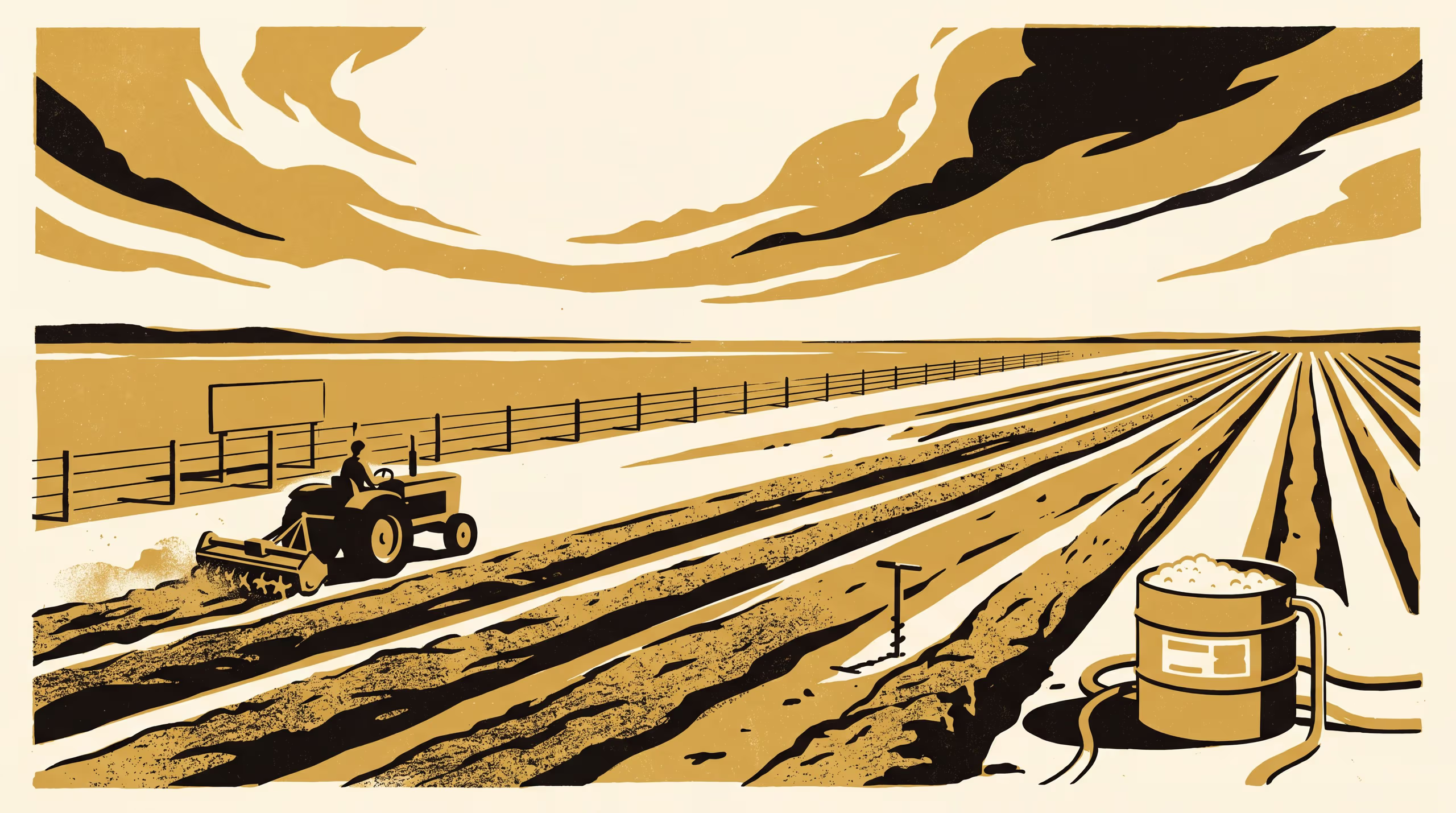
A new research poster from the School of Underlying Conditions studies the photographs that land-farming remediation sites send to their regulator and their neighbours, and what those pictures put forward as evidence of work done underground.
A School of Underlying Conditions poster reads 1,146 photographs from the progress reports of land-farming sites, and finds the soil itself hard to tell apart
The School of Underlying Conditions has spent much of its history below the surface. Its newest poster, The Ground Looks the Same, stays above it, with the cameras that record a contaminated site’s progress as it is slowly returned to use.
The poster is the work of Dr Brynjar Obiora, Dr Thandiwe Solberg and Ms Ylva Ogunbanjo. Together they bring media and communication scholarship to the reports a remediation site issues over its working life, setting each photograph alongside the claim it is asked to carry. The study finds that early reports favour machinery and late ones favour new grass, and that the organisms carrying out the remediation seldom appear at all. Viewers shown matched pictures of the soil, before and after, found the two difficult to tell apart.
Every one of these reports was put together by someone who wanted the neighbours to understand what was happening over the fence. We owe the study to their care, and to the people who opened the envelope and looked.
— Dr Thandiwe Solberg, Senior Lecturer and Convenor, Demo Quarter
The work sits within the University’s continuing attention to the forms evidence takes when it leaves the laboratory for the letterbox. Ms Ogunbanjo, a doctoral candidate in the School of Emergent Priorities, described the project as “a study of who holds the camera, and of what they hope the picture will say”.
The full poster is available from the University’s research repository under an open licence, doi:10.5555/slop.mijo9q.