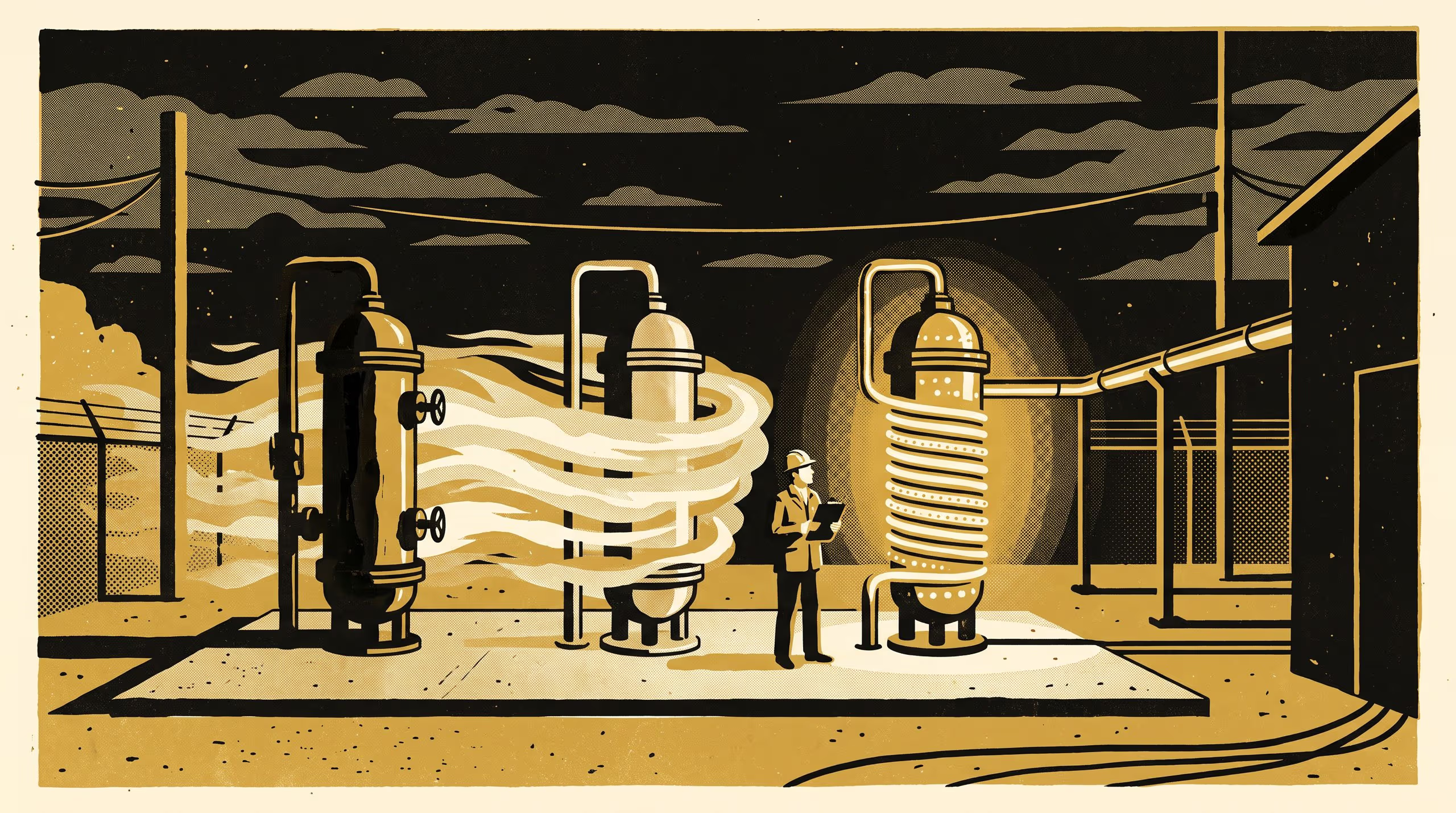
A new research poster from the School of Underlying Conditions follows three identical methanation reactors through 41 unplanned hydrogen outages and proposes a simple rule for what to do with a reactor while its hydrogen is away.
A pilot methanation study weighs holding, purging and keeping warm across 41 unplanned outages
The School of Underlying Conditions has turned its attention from the ground to the plant that stands on it. Hold, Purge or Keep It Warm, a new research poster by Associate Professor Ragnhild Uzoma and Dr Bram Ntuli, asks what a reactor that turns carbon dioxide into methane should do in the minutes and hours after its hydrogen stops arriving.
Every operation has a plan for when things are running and a plan for when they stop. What held the team’s interest was the plan for the stretch in between, which is where a surprising share of any operation’s life is spent.
— Dr Bram Ntuli, Lecturer and Convenor, Improvement Grand Rounds
By pairing three identical reactor tubes with one shared supply, the study let every interruption across a full campaign serve as its own side-by-side comparison, setting outage length, recovery and restart behaviour against one another in an evidence-informed account of standby practice. The poster reports 41 outages, and closes on a standby rule that can be chosen before anyone knows how long an outage will last.
Associate Professor Uzoma described the rule as “a starting point the Group is happy to be held to, and to revise when the next campaign gives it reason”.
The University counts the poster among the clearest signs yet of the School carrying its field practice indoors, to the reactors, valves and supply lines on which a lower-carbon future is likely to depend.
The full poster is available from the University’s research repository under an open licence, doi:10.5555/slop.20xlw4.