A new display advertisement from the School of Underlying Conditions invites the public to bring their questions about natural evil to the Basement Relations Group's core store at Open Day.
A portrait signage advertisement from the School of Underlying Conditions, set in its core store among the intervals a drill run leaves behind
Philosophers have long separated the harm people do from the harm the world does on its own account. The School of Underlying Conditions has now chosen, in public, to stand on the second side of that line. The Problem of Evil, from Underneath, a display advertisement by Associate Professor Ragnhild Uzoma, asks Open Day visitors in Semester 1 to carry their questions about natural evil down to the Basement Relations Group’s core store.
Visitors to a core store ask why the ground moved long before they ask what it is made of. We would like the Group to be the place they bring that question, and to show them the trays where the record stops.
— Associate Professor Ragnhild Uzoma, Lead, Basement Relations Group
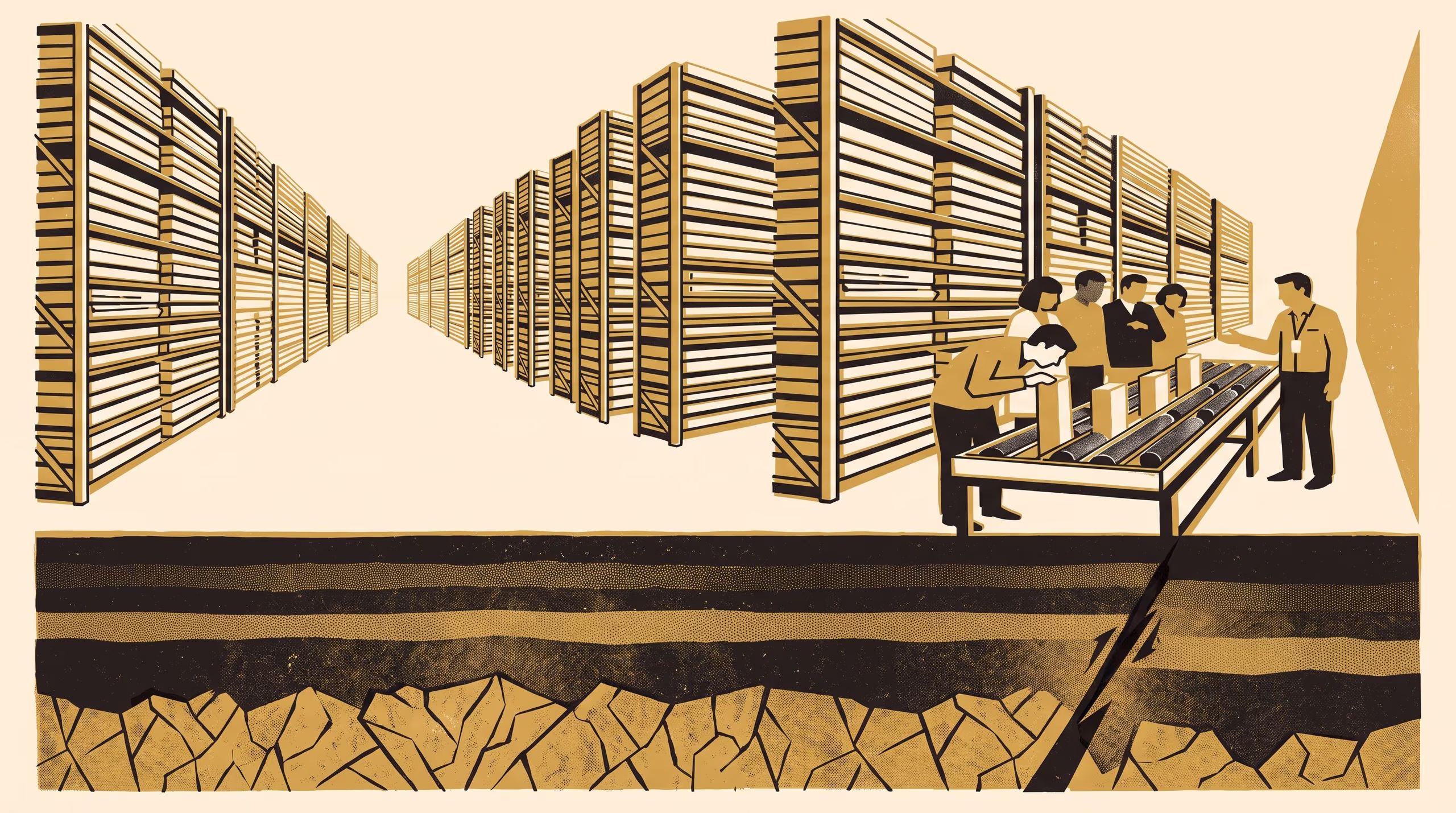
The advertisement sets its campaign line over a cutaway of layered ground and faulted basement, beneath a tray of recovered core in which plain wooden blocks hold the place of the lengths the drill did not return. It recasts the Group’s established attention to what a borehole log may claim about unseen rock as a public-facing offer, aligning the working vocabulary of the earth sciences with a conversation that theology and philosophy have convened for some centuries.
Reading for the visit is supplied in the advertisement’s small print, which points passers-by to the School’s schools brochure for religious education teachers, Questions as old as the ground, among other works on the record.
The University sees in the campaign a School confident enough in its instruments to be asked questions they were never built to answer.
The full advertisement is available from the University’s research repository under an open licence, doi:10.5555/slop.hb5f7y.