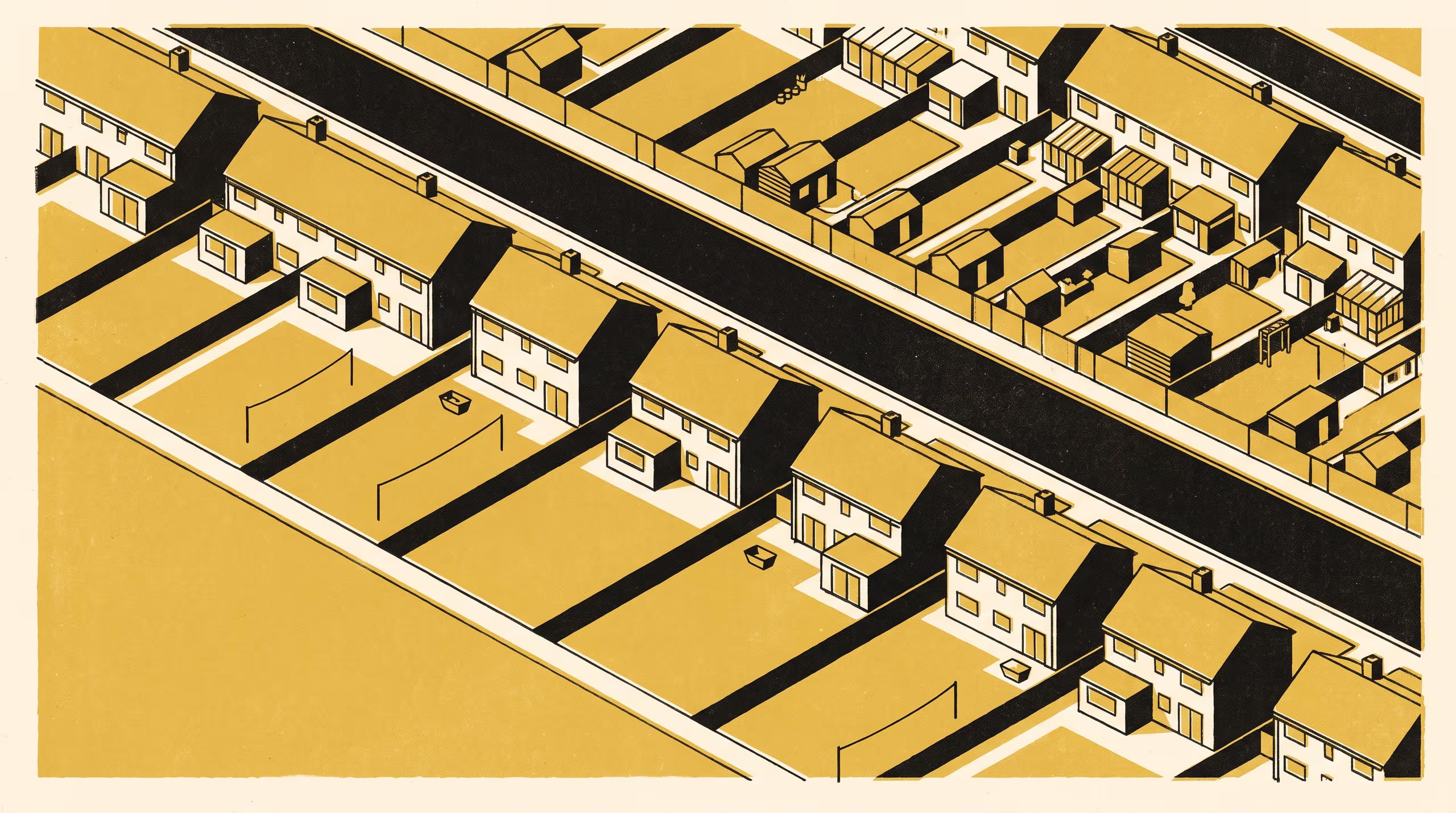
A paper from the School of Settled Matters and the School of Emergent Priorities finds that a seventy-year-old restrictive covenant leaves house prices untouched on one estate while making a lender's valuation shortfall more likely.
Buyers on a mid-century estate pay nothing for a burden on their back gardens, but their lenders' valuers take note of it
Buyers on one mid-century housing estate pay nothing for a covenant that has barred building along the back of their gardens since the 1950s, according to a new paper from Slop University. Their lenders, it turns out, are another matter.
Noted on Title, by Dr Clemency Tredinnick, Lecturer in the School of Settled Matters, and Associate Professor Kwame Lindqvist, Director of the Master of Priority Studies in the School of Emergent Priorities, brings the School’s long attention to the burdens that ride with land into conversation with the economics of housing finance. Setting close to two thousand sales on either side of a suburban road alongside the settlement files that followed them, the authors trace how a single registered instrument travels from the title office into the lending decision. Sale prices on the burdened side show no trace of the covenant. Security values do: on burdened lots, a lender’s valuation fell short of the price paid about nine percentage points more often, and only where the valuer had written the covenant down.
A title is the one document every party to a sale is entitled to read. It has been instructive to find out which of them actually does, and the School is glad to have its collection of superseded certificates put to work.
— Dr Clemency Tredinnick, Lecturer, School of Settled Matters
“Law and finance usually meet at settlement and part company by the afternoon,” said Associate Professor Lindqvist. “This paper is an invitation for them to stay a while longer.”
The work adds a further strand to the University’s growing engagement with how property, credit and the written record shape one another.
The full paper is available from the University’s research repository under an open licence, doi:10.5555/slop.fnpeur.