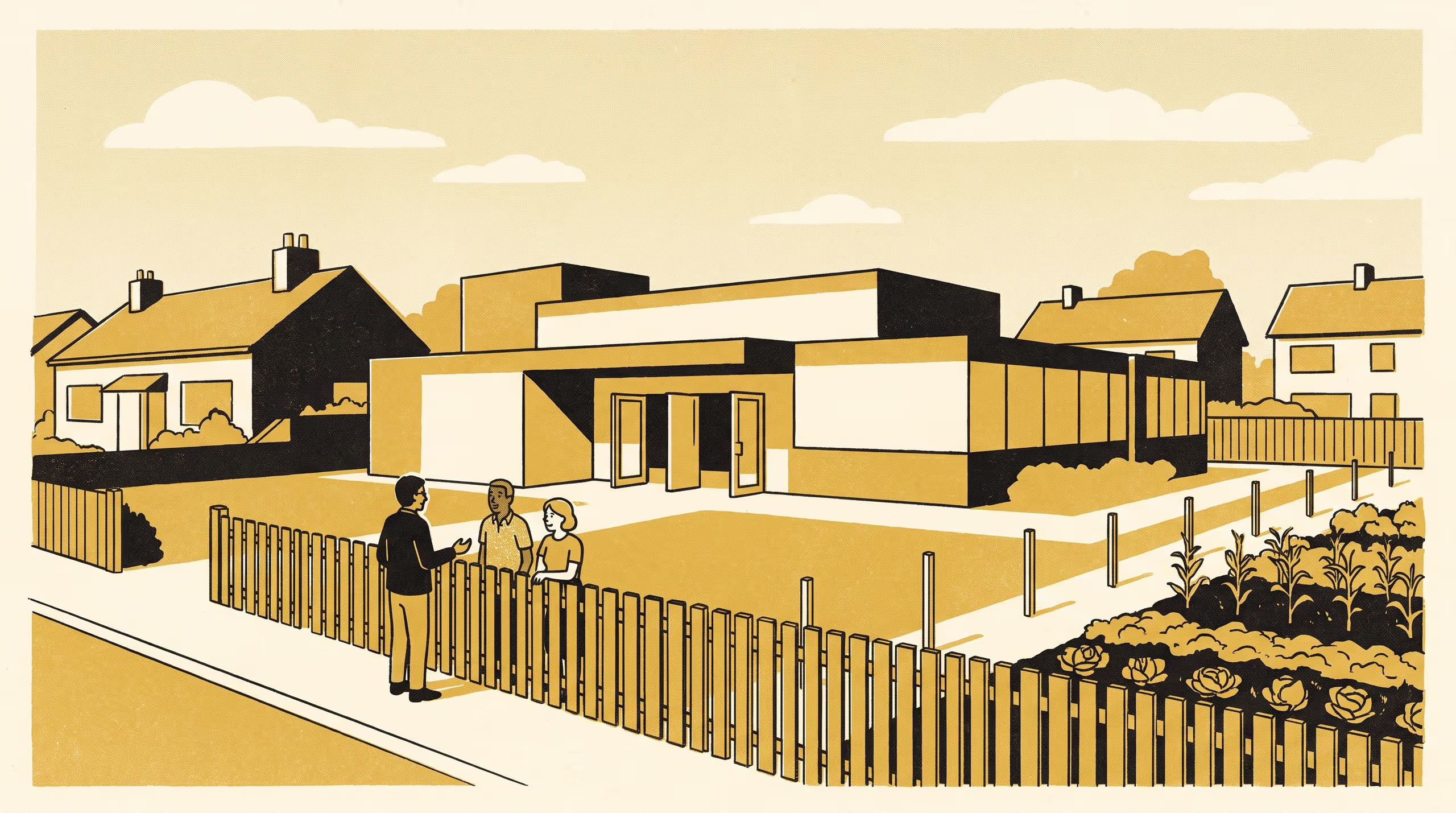
A civic brochure from the School of Underlying Conditions sets out the University's place in its town through the immunologist's idea of tolerance, from a soil survey that crosses the campus fence to six published studies of how a community recognises its own.
A civic brochure borrows immunology's idea of tolerance to describe the University's place among its neighbours
Slop University has long asked to be judged by its neighbours as well as its peers, and a new civic brochure from the School of Underlying Conditions takes that request at its word.
Not a Foreign Body, by Dr Brynjar Obiora, Senior Research Fellow, with Ms Ylva Ogunbanjo, Doctoral Candidate in the School of Emergent Priorities, borrows a single idea from immunology. Tolerance, in the immunologist’s sense, is the slow education by which a body comes to recognise its own tissue and leave it alone. The brochure proposes that a university settling into a town is asking for exactly that recognition.
Every survey teaches a School where its own edges are. This one taught us that ours sit a good deal further out than the fence.
— Dr Brynjar Obiora, Senior Research Fellow, School of Underlying Conditions
Across three strands, the brochure carries the School’s soil survey from campus lawns into back gardens and verges, sets the University’s modelling of thymic screening alongside the civic question of who belongs, and gathers its studies of everyday misrecognition at the school-run kerb, the market queue and the quarry-town main street. Six published studies from two Schools anchor the account.
“A town and a university are both, in their way, deciding what counts as their own,” said Ms Ogunbanjo. “We would be glad to hear where readers think we have drawn the line.”
The University is pleased to count the brochure among the ways it introduces itself to the street it shares.
The full brochure is available from the University’s research repository under an open licence, doi:10.5555/slop.lbqega.