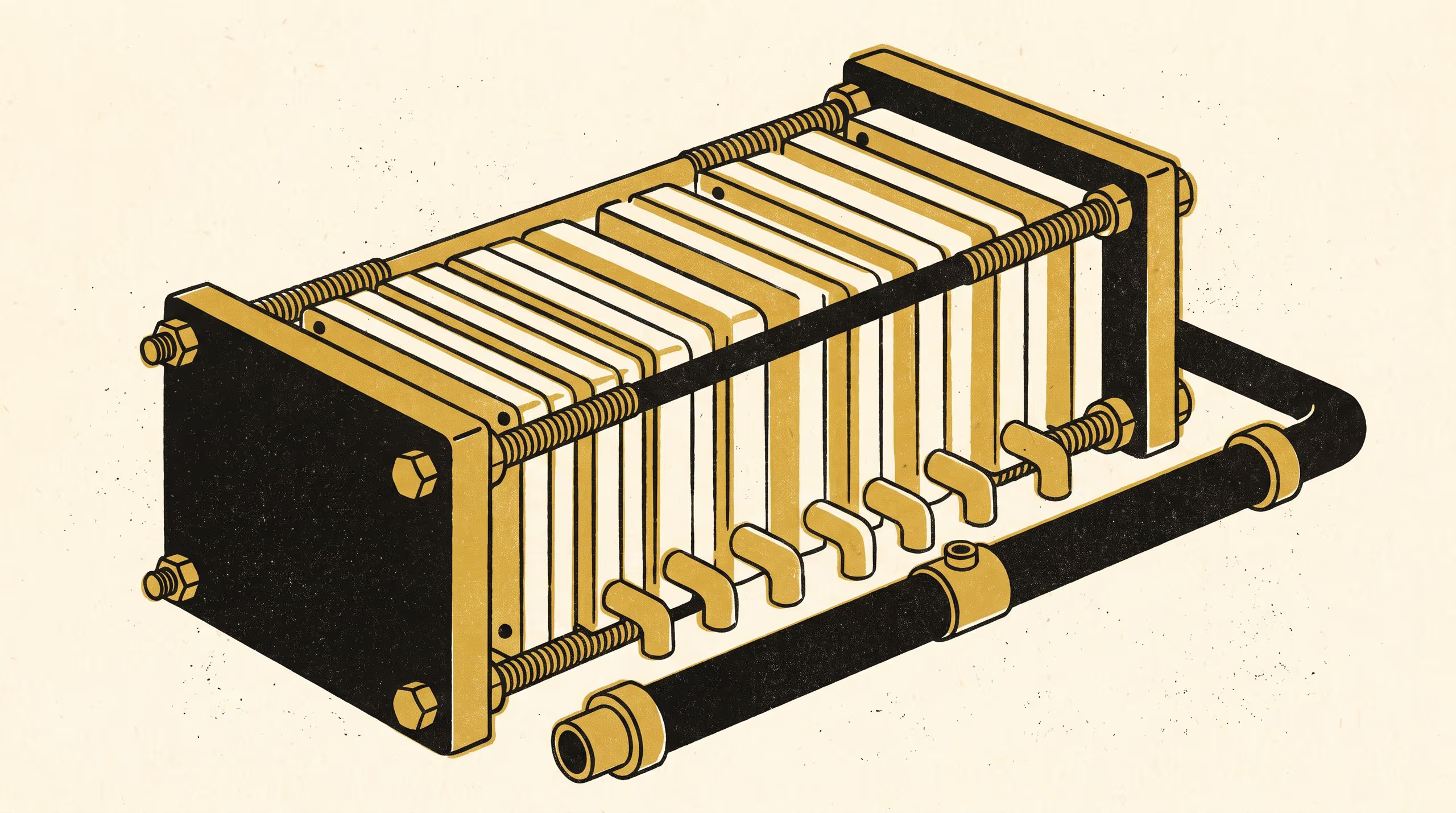
A new research poster from the School of Settled Matters follows carbon dioxide cell by cell along a ten-cell electrolyser stack and finds the cells furthest from the inlet turning more of their share of the current to hydrogen.
A School of Settled Matters poster measures how one shared inlet pipe divides its gas along a ten-cell electrolyser, and what the far cells make instead
In a stack of electrolyser cells drawing carbon dioxide from one shared pipe, the cell at the far end is asked for exactly the same work as the cell at the front. A new research poster from Slop University finds that it is not always given the same means of doing it.
Last in the Manifold, by Dr Clemency Tredinnick of the School of Settled Matters with Dr Vigdis Emenike and Dr Brynjar Obiora of the School of Underlying Conditions, samples each cell of a ten-cell stack on its own rather than the stack as a whole. Where the feed runs lean, the poster reports, ethylene gives way to hydrogen from the seventh cell onward, falling from 43 to 18 per cent at the tenth; a more generous feed, or a wider inlet, brings much of it back.
Carbon dioxide is a subject the University has been approaching from several directions at once, through its geology, its water and now its law school. This poster is one of the places where those approaches begin to share a bench.
— Dr Vigdis Emenike, Senior Lecturer, School of Underlying Conditions
The work brings a position-aware, supply-sensitive lens to electrolyser performance, aligning catalyst-level understanding with the stack-level settings in which conversion capability is ultimately realised. It situates selectivity not in the material alone but in the arrangements that deliver a shared resource to each participant in a system.
“A stack invites questions that a single cell never does, and the School is glad to have been asked a few of them,” said Dr Tredinnick.
The University counts the poster among a widening body of cross-School work in which habits of close attention, wherever they were first learned, are lent to the energy transition.
The full poster is available from the University’s research repository under an open licence, doi:10.5555/slop.h1v6fg.