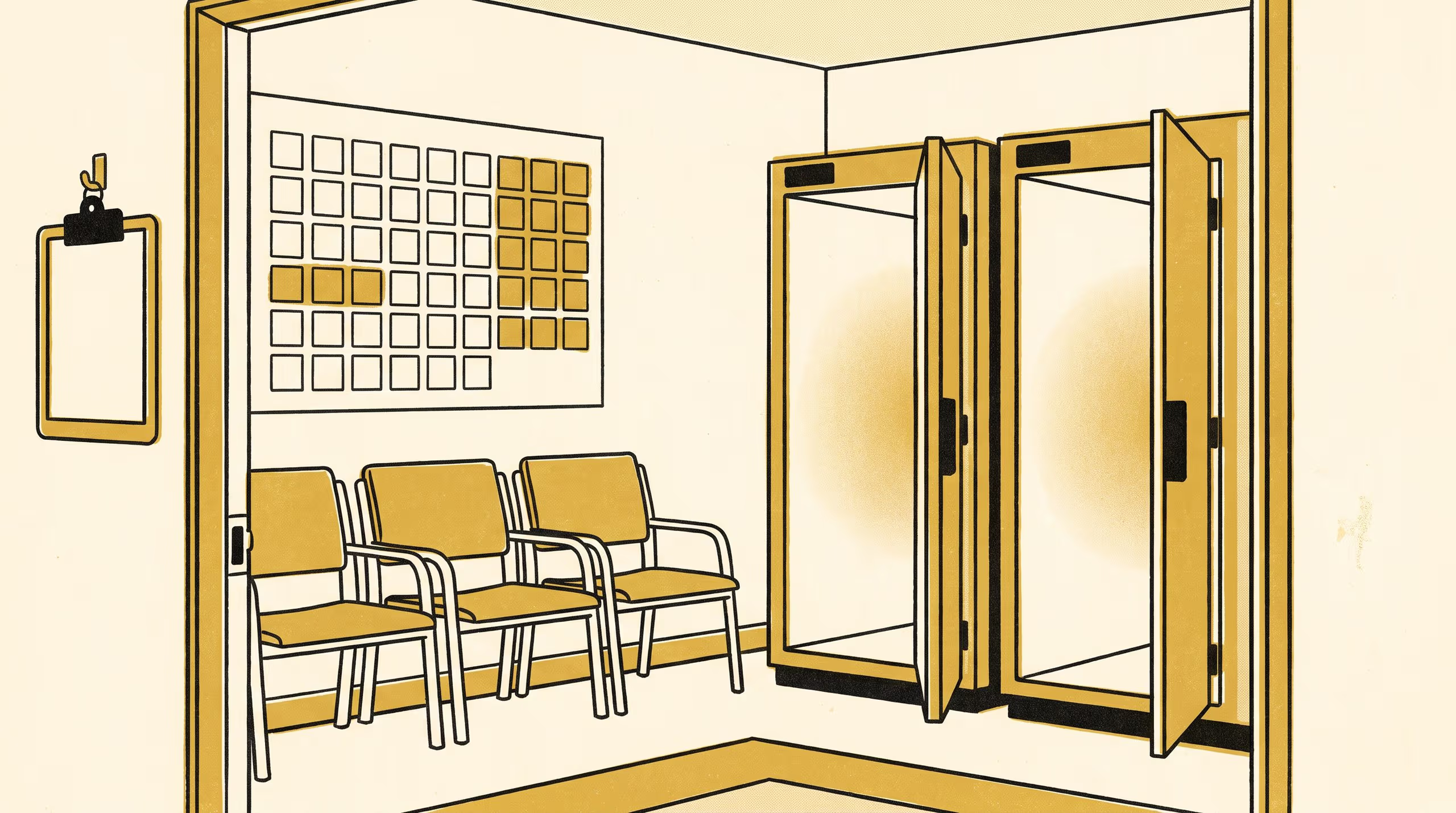
A new paper from the School of Underlying Conditions finds that booking a whole phototherapy course at intake lengthens the waiting list without closing the gaps it was meant to close.
An operations-research study of a two-cabinet hospital phototherapy unit compares three ways of booking a course of thrice-weekly sessions
Should a patient be given every appointment of a treatment course on the day they are referred, or a week at a time? Staff in one hospital phototherapy unit have been asking for several years, and Book the Course or Book the Week?, a new paper by Dr Vigdis Emenike, Senior Lecturer in the School of Underlying Conditions, and Dr Bram Ntuli, Lecturer and Convenor of Improvement Grand Rounds in the School of Continuous Improvement, sets out what each answer costs.
I spent ten years measuring bores that had outlived the reasons they were drilled, so a booking that outlives its course was always going to catch my eye. We hope the unit finds the model as useful to keep as we found its ledger to read.
— Dr Vigdis Emenike, Senior Lecturer, School of Underlying Conditions
The paper reframes the unit’s two cabinets as forty standing appointments and brings simulation, queueing theory and two years of booking records into a single view of the course-delivery pipeline. Its central result is that a standing booking does little for continuity, because 97 per cent of the gaps it was meant to prevent fall across a closure or a week the patient had already planned to be away. A small reserve of make-up appointments does better, at a price paid in the waiting list.
The study sits comfortably within the University’s steady commitment to the working arrangements on which every service quietly depends. Dr Ntuli said Improvement Grand Rounds had “always been at its best with a problem that arrives with its own calendar, and this one arrived with two.”
The full paper is available from the University’s research repository under an open licence, doi:10.5555/slop.rf731q.