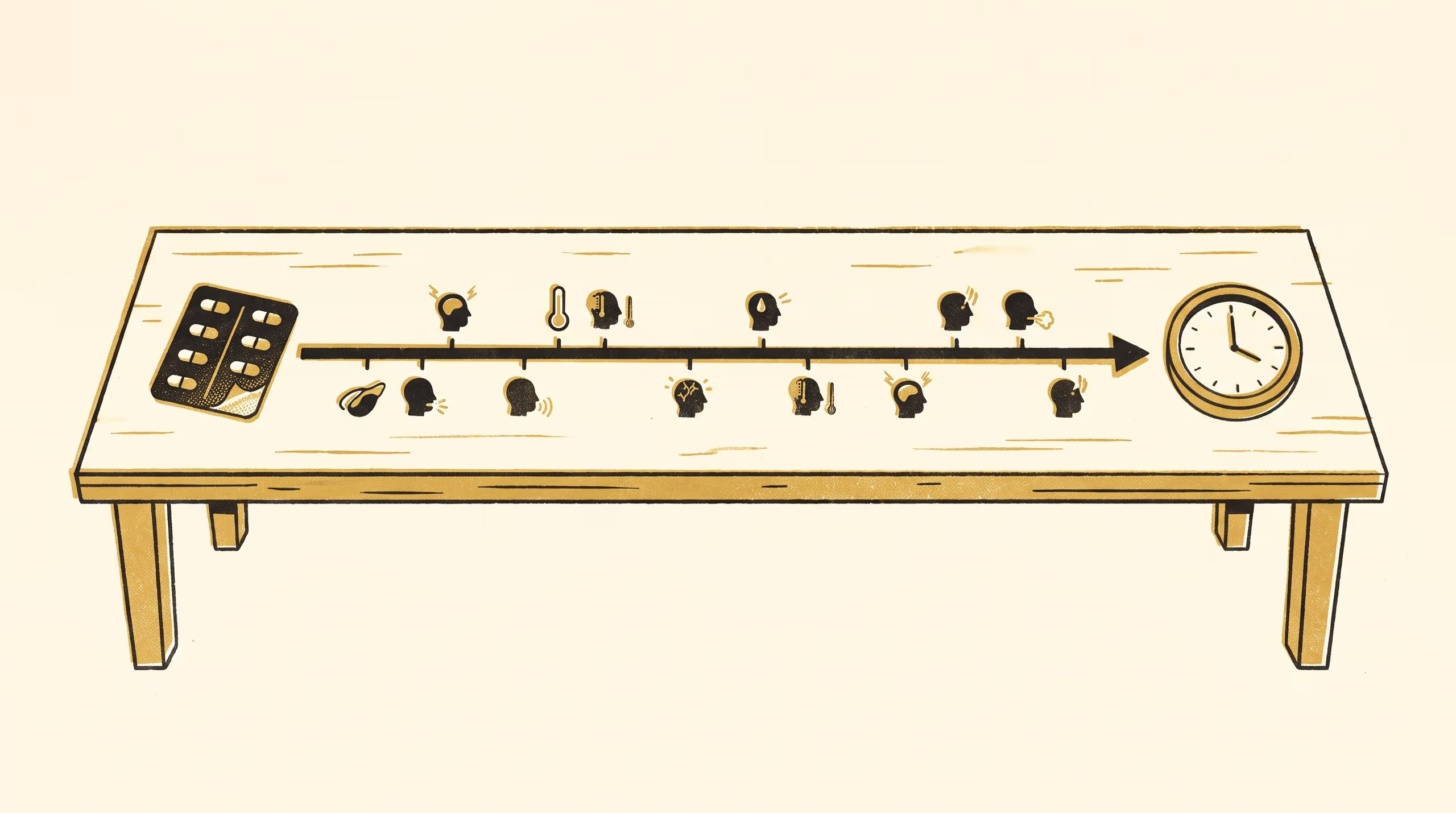
A new research poster from the School of Continuous Improvement asks 144 adults to read the diaries of a fictitious tablet, and finds the delay before a symptom shapes their decision to report it more than how reliably the symptom follows the dose.
Ms Edda Nwafor's diary experiment finds the hour of a symptom counts for more than how often it follows the dose
A tablet that does not exist, taken by a diarist who does not exist, has given the School of Continuous Improvement a fresh vantage on a decision most people make without noticing they have made it: whether something that happened after a dose was the dose.
Too Late to Be the Tablet, a new research poster led by doctoral candidate Ms Edda Nwafor with Dr Renke Sabel and Dr Thandiwe Solberg, invited 144 participants to work through twenty short diaries each and say which headaches they would report. Across 2,880 judgements, the time between tablet and symptom carried more weight than how often the one followed the other, even where participants had already concluded the tablet was involved.
A good indicator tells you what was counted. This study goes one step earlier, to the moment someone decides there is anything to count, and the School has found that a useful place to stand.
— Dr Renke Sabel, Senior Lecturer and Convenor, Indicator Commons
The study situates the School’s interest in records and their making within the experimental study of causal judgement, aligning a long-standing contingency paradigm with the everyday practice of keeping a diary and the institutional settings in which a report is filed. The poster joins a widening body of work at the University on the choices people make before any record exists.
Ms Nwafor said the next set of diaries was “already being written, slowly, which seems appropriate for a study about waiting.”
The full poster is available from the University’s research repository under an open licence, doi:10.5555/slop.gicvgn.