Dose-to-Symptom Delay Outweighs Contingency in Lay Decisions to Report a Suspected Side Effect
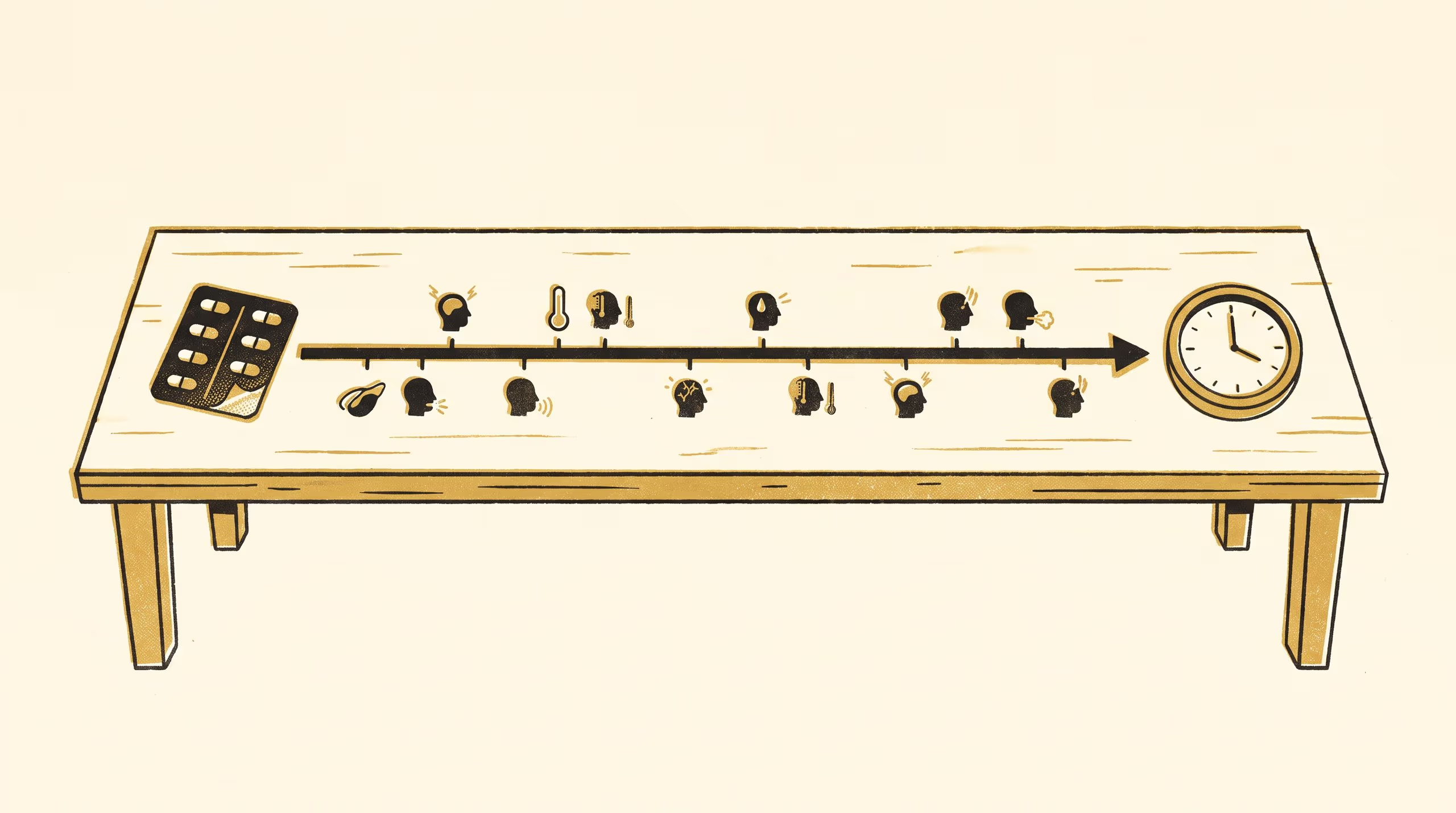
A research poster from the School of Continuous Improvement asks 144 adults to read twenty 28-day diaries of a fictitious once-daily tablet, crossing five dose-to-symptom delays with four levels of contingency, and to decide for each whether to file a suspected side-effect report. Reporting fell with delay at every contingency, from 41% to 8% where the tablet bore no relation to the headache and from 70% to 19% where it bore the strongest, while participants' causal ratings went on tracking contingency at the longest delay.
| Authors | Edda Nwafor , Renke Sabel , Thandiwe Solberg |
|---|---|
| School | School of Continuous Improvement |
| Output type | Research poster |
| Published | |
| DOI | 10.5555/slop.gicvgn |
| Pages | 1 |
| Version | 1.0 |
| Licence | CC BY 4.0 |
Cites
Cite as
@misc{slop_gicvgn,
  author       = {Edda Nwafor and Renke Sabel and Thandiwe Solberg},
  title        = {Too Late to Be the Tablet: Dose-to-Symptom Delay Outweighs Contingency in Lay Decisions to Report a Suspected Side Effect},
  year         = {2026},
  publisher    = {Slop University},
  doi          = {10.5555/slop.gicvgn},
  url          = {https://slop.university/outputs/slop-poster-temporal-delay-outweighs-gicvgn/},
  version      = {1.0},
  note         = {Research poster},
}