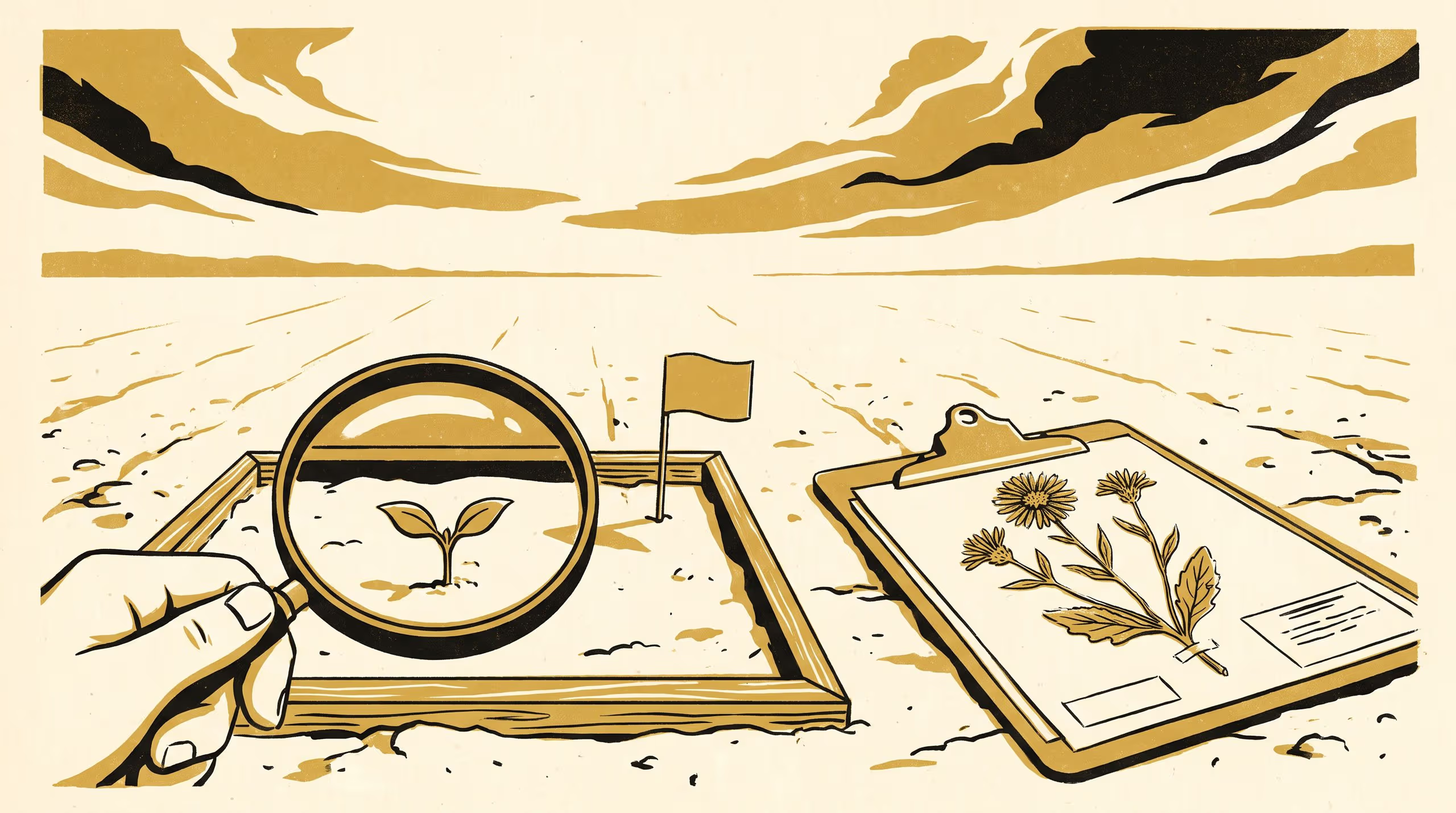
A new research poster from the School of Continuous Improvement compares three ways of teaching weed identification to agronomy students and tests each at the seedling stage, when control decisions are made.
Agronomy students taught from pressed sheets, live flats or photographs, then tested in a teaching paddock
Across one autumn sowing, 141 second-year agronomy students learned sixteen weeds from one of three kinds of teaching material and were then sent into a sown paddock to name them as seedlings. Recognised at the Wrong Stage is by Dr Sten Okwuosa, Senior Research Fellow and Convenor of the Impact Pathway Atlas in the School of Continuous Improvement, with Dr Brynjar Obiora, Senior Research Fellow in the School of Underlying Conditions, and Dr Torun Ezeigwe, Senior Lecturer and Director of the Master of Applied Measurement.
Our thanks go first to the students, who knelt at a great many quadrats on cold mornings and were generous with their uncertainty, and to the tutors who taught the same practical three different ways without complaint.
— Dr Sten Okwuosa, Senior Research Fellow and Convenor of the Impact Pathway Atlas
The study sets the University’s herbarium-style reference collections, its glasshouse seedling trays and a set of photographic plates side by side as pathways into identification practice, following each from the practical class to the paddock and, seven weeks on, back again. Its central observation is a reversal: the material that best prepares a student to recognise a plant in flower prepares them least well for the same plant at two leaves, and leaves them most sure of themselves there.
The University regards the poster as a welcome sign of its research schools taking a closer interest in the teaching farm, and of the teaching farm returning the favour.
“I learned my weeds from the soil up, more or less by accident,” said Dr Obiora. “It is pleasing to find that the accident has something to recommend it.”
The full poster is available from the University’s research repository under an open licence, doi:10.5555/slop.jbturg.