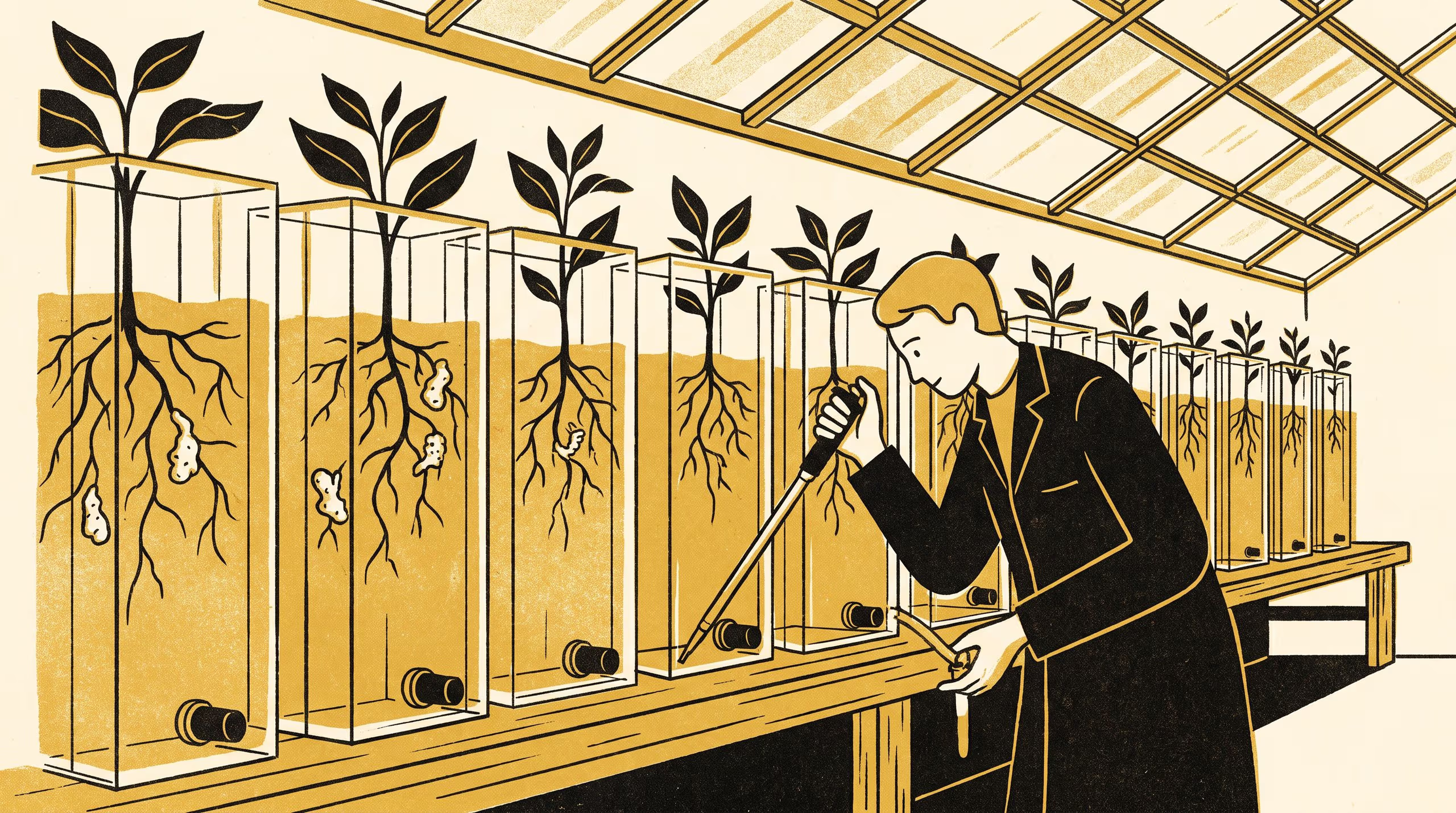
A new research-showcase brochure introduces the University's work on parasitic plants and host resistance, from the soil pit and the glasshouse root box to the trial plot and the committee room.
A research showcase from the School of Emergent Priorities gathers three Schools' work on the seed bank, the root and the hosts that hold out
Anyone who has stood at a paddock fence and wondered what was happening under the crop now has a guide to the University’s answer. The Quiet Root, a research-showcase brochure from the School of Emergent Priorities, sets out how three Schools study the plants that live from their neighbours’ roots, and the crops that learn to give them less to find.
The brochure is by Associate Professor Kwame Lindqvist, Director of the Master of Priority Studies, with Dr Vigdis Emenike, Senior Lecturer in the School of Underlying Conditions, and Dr Fenna Okoro, Senior Lecturer and Convenor of the Horizon Register.
It is not often that a School of foresight gets to write about something that has been waiting in the ground longer than any of our plans. We have tried to do it justice, and to leave the reader a little more curious about the soil under their own boots.
— Associate Professor Kwame Lindqvist, Director, Master of Priority Studies
Its four features move from the seed bank read layer by layer in a soil pit, through the glasshouse root boxes where a host’s chemical signal is followed through the water around it, to the field plots where resistance is scored as an absence, and finally to the committees and growers’ groups through which a district comes to name a problem it cannot yet see. Seven of the University’s published studies, on root symbioses, seed libraries, inoculant custody and host defence, anchor the showcase.
The publication extends the University’s habit of meeting new readers where its research is already standing, in this case knee-deep.
“The root zone rewards anyone prepared to be patient with it,” said Dr Emenike. “I hope a few readers finish the brochure wanting to be patient with it alongside us.”
The full brochure is available from the University’s research repository under an open licence, doi:10.5555/slop.6w1brb.