Dr Brynjar Obiora and Dr Ingeborg Nwachukwu report that students told a soil boundary is placed by agreement draw it closer to the criterion and bracket it more honestly, provided they are also told what the agreement answers to.
Two classroom experiments find that one sentence of framing moves where novice describers place a gradational boundary, and how sure they are of it
Ask a first-year student where one soil ends and the next begins, and the answer may depend on a sentence they read twenty minutes earlier. Drawn or Found is by Dr Brynjar Obiora, Senior Research Fellow in the School of Underlying Conditions, and Dr Ingeborg Nwachukwu, Lecturer and Convenor of Capability Sprints in the School of Continuous Improvement.
Our School writes a great many first pages for people starting something new, and this paper is a gentle reminder of how much is decided there. We will be reading our own again with fresh eyes.
— Dr Ingeborg Nwachukwu, Lecturer and Convenor, Capability Sprints
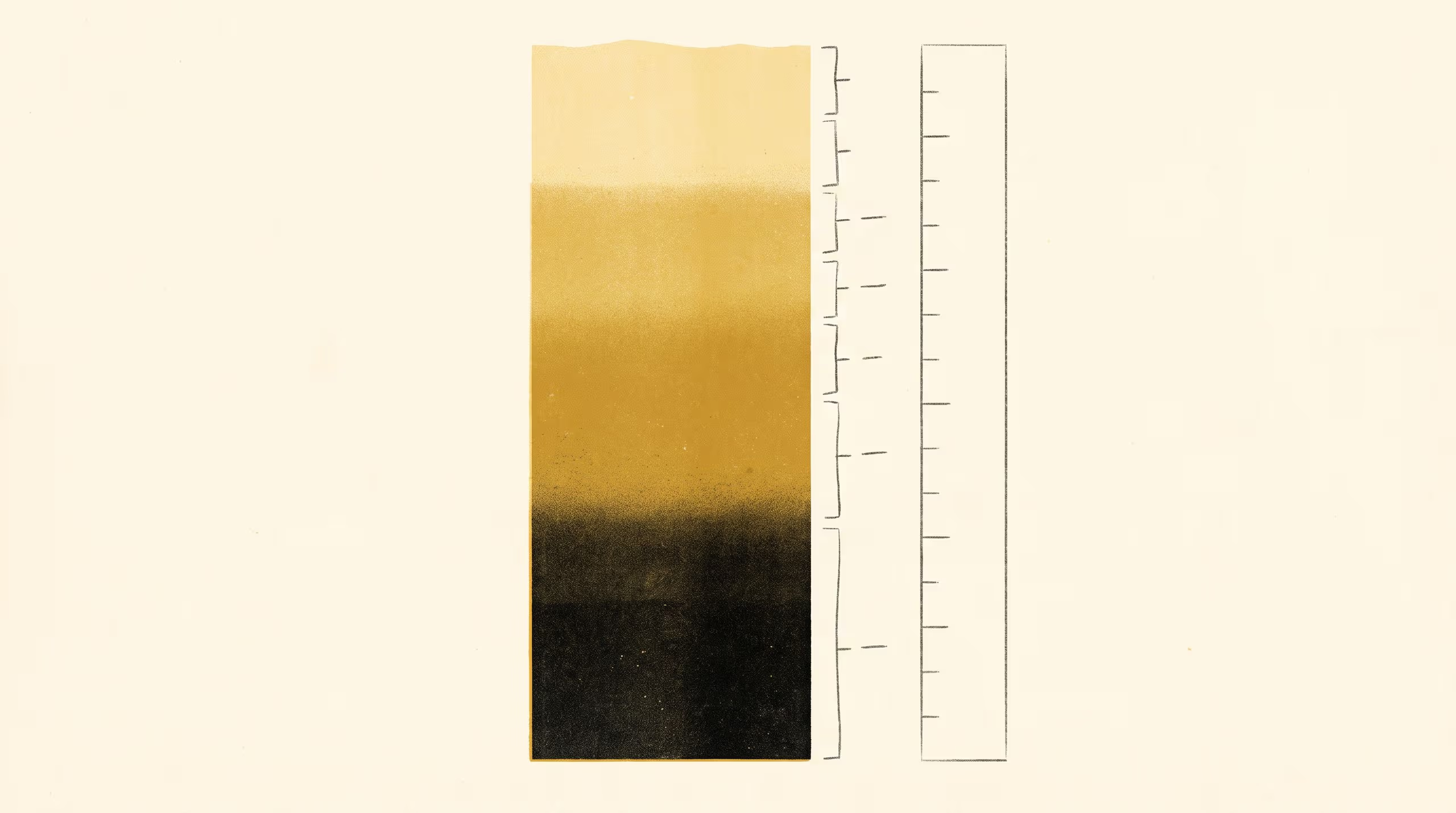
Across two experiments with 230 students in an introductory field unit, the paper brings the psychology of how learners think about knowledge into conversation with the everyday craft of soil description, positioning the humble pencilled boundary as a site where belief, judgement and confidence meet. Students who were told a boundary is placed by agreement placed it more consistently and bracketed it more honestly; those who were also told why the agreement holds kept that advantage a week later.
The work joins a widening seam of collaboration between the University’s field sciences and its teaching practice, and is supported by the Indicator Stewardship Seed Fund.
“Every surveyor remembers being shown their first boundary,” said Dr Obiora. “It is good to be able to offer the next ones a little more to go on.”
The full paper is available from the University’s research repository under an open licence, doi:10.5555/slop.o9wncq.