Ms Ylva Ogunbanjo, Dr Fenna Okoro and Associate Professor Kwame Lindqvist find that when a forecast is written matters as much as who writes it.
Ten years of weekly index forecasts show that entries written after a member had already traded lean towards the trade and add no skill
A forecast is worth most when it is written down before the decision it might inform. That is the plain lesson of Entered After the Trade, a new paper from the School of Emergent Priorities by Ms Ylva Ogunbanjo, Doctoral Candidate, with Dr Fenna Okoro, Senior Lecturer and Convenor of the Horizon Register, and Associate Professor Kwame Lindqvist, Director of the Master of Priority Studies.
The Horizon Register has always dated its rows. Reading this paper, I found myself wondering what else a register ought to date, and that is a question I expect to keep for some time.
— Dr Fenna Okoro, Senior Lecturer and Convenor, Horizon Register
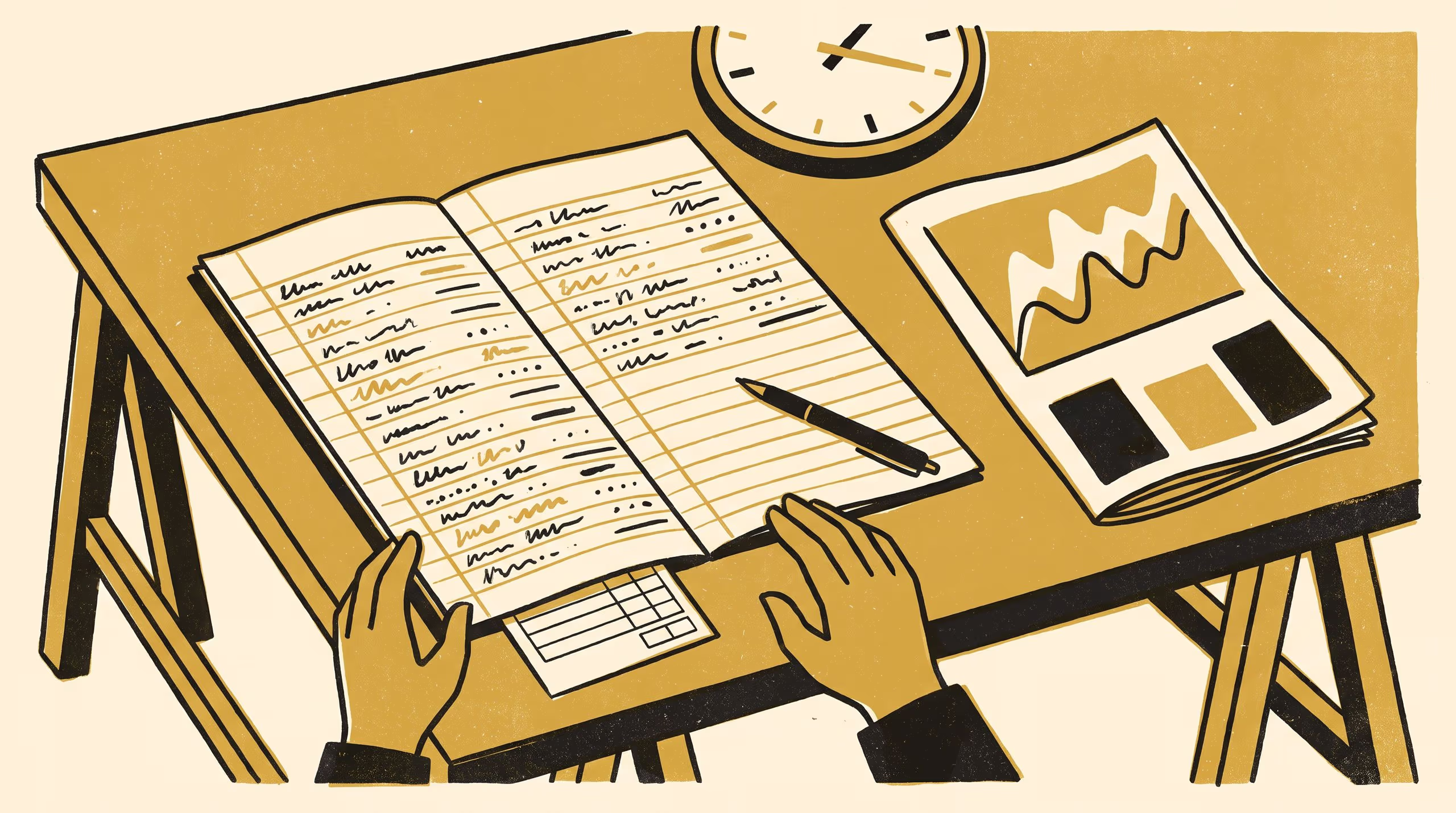
Working from a decade of a member-owned investment club’s shared forecasting sheet alongside its members’ own timestamped orders, the team set out a sequence-aware approach to forecast combination, one that asks of every input not only what it says but when, in the life of a decision, it was said. Entries made after a member had traded agreed with that trade 79.4 per cent of the time, against 61.7 per cent for entries made beforehand, and were no more accurate for their confidence.
The paper adds to the School’s widening body of work on the order in which institutions decide and then account for deciding.
“The members were very generous with their records,” said Ms Ogunbanjo. “Most of them were curious to learn when they had written their number, which is not quite the question any of them expected us to ask.”
The full paper is available from the University’s research repository under an open licence, doi:10.5555/slop.wyx1yv.