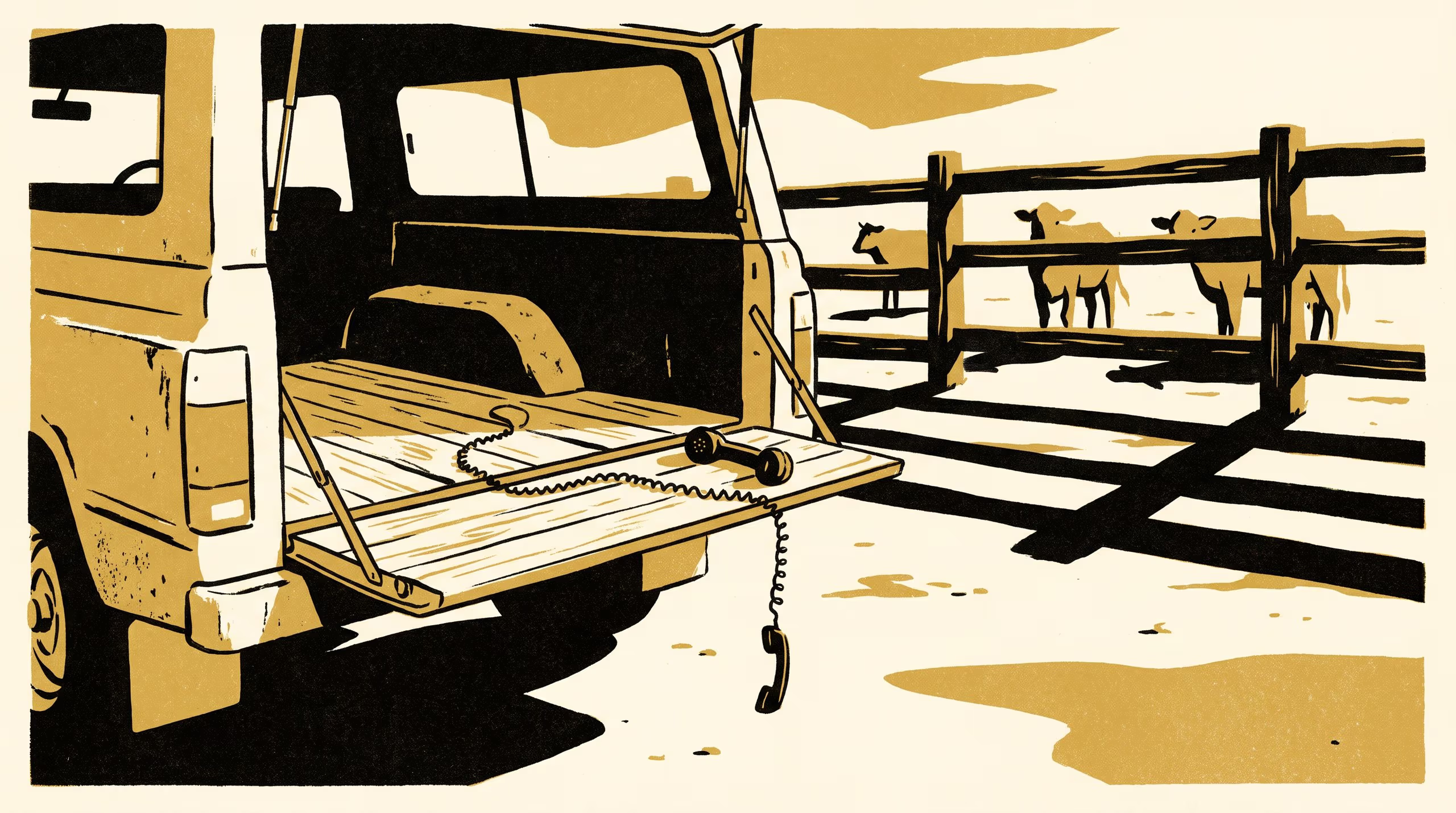
A new paper finds that nearly two in three outbreak files in one practice's archive were never closed, and asks how likely it was, on the day each stopped, that the outbreak was over.
A new paper reads sixteen years of a veterinary practice's respiratory disease files for the day each one stopped
When does an outbreak on a farm actually end? According to a new paper from the School of Emergent Priorities, the files kept by one mixed-animal veterinary practice rarely say. Of 212 files opened for respiratory disease in cattle, sheep and goats, nearly two in three were never closed at all. They simply stopped, often on a telephone note that the mob was going better.
Closed by Going Quiet is by Ylva Onyekwere, Doctoral Candidate in the School of Emergent Priorities, with Dr Brynjar Obiora, Senior Research Fellow in the School of Underlying Conditions, and Dr Solveig Adeyemi, Lecturer and Deputy Convenor of the Review Cadence Observatory in the School of Continuous Improvement.
The School has always been most at ease with the things it has formally concluded. A year among files that simply stopped has been a gentle lesson in how much of our own work ends the same way.
— Ylva Onyekwere, Doctoral Candidate, School of Emergent Priorities
The team brought an archive of donated case files into conversation with the established tools of outbreak epidemiology, aligning each file’s closing moment with a transmission-informed estimate of whether the outbreak was likely to be over, and situating the practice’s own records within a wider understanding of how surveillance depends on someone choosing to call.
Dr Obiora described the collaboration as “a natural next step on a path the University has been walking for some time, from the paddock to the record and back again.”
The paper sits within the University’s widening commitment to the records that working life leaves behind, and to the people who keep them.
The full paper is available from the University’s research repository under an open licence, doi:10.5555/slop.iad216.