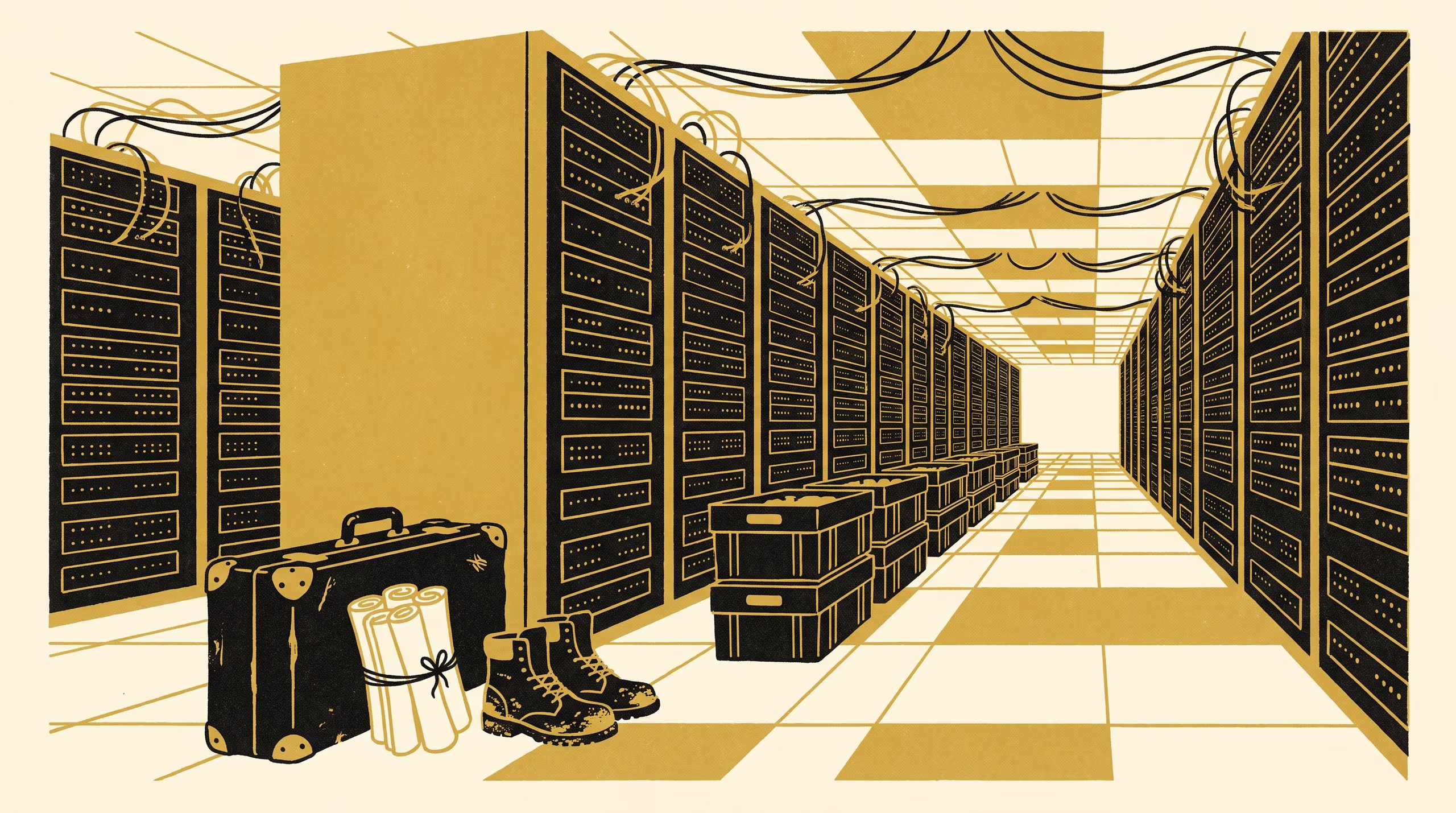
Dr Vigdis Emenike and Dr Mirela Hanke test how a single scheduler setting shares out the wait on the University's research cluster.
A replay of twenty-six months of jobs on the University's shared computer finds one scheduler setting moves waiting between fieldwork groups and steady users
When a research group comes home from the field and asks a great deal of the University’s shared computer at once, how long should the machine go on counting that against it? A new paper from the School of Underlying Conditions takes the question seriously, and finds the answer matters less for how long everyone waits than for who does the waiting.
Our School does its fieldwork in seasons, and we come back with our arms full. It has been good to learn that the cluster keeps its own record of that rhythm, and to have the chance to read it closely.
— Dr Vigdis Emenike, Senior Lecturer, School of Underlying Conditions
The Half-Life of Usage brings together Dr Emenike and Dr Mirela Hanke of the School of Continuous Improvement to replay the cluster’s working history under seven different settings of its fair-share memory. Across that range the overall wait barely shifts, while hours of it move between the eleven groups that work in bursts and the fifty that work steadily. The study pairs operational records, simulation and a compact piece of theory into a practical starting point for any shared facility serving researchers whose calendars follow the seasons.
“The right setting is a conversation for everyone who relies on the machine,” said Dr Hanke, “and the paper gives that conversation somewhere to stand.”
The paper adds to the University’s growing attention to the shared infrastructure on which so much of its research quietly depends.
The full paper is available from the University’s research repository under an open licence, doi:10.5555/slop.9k2upu.