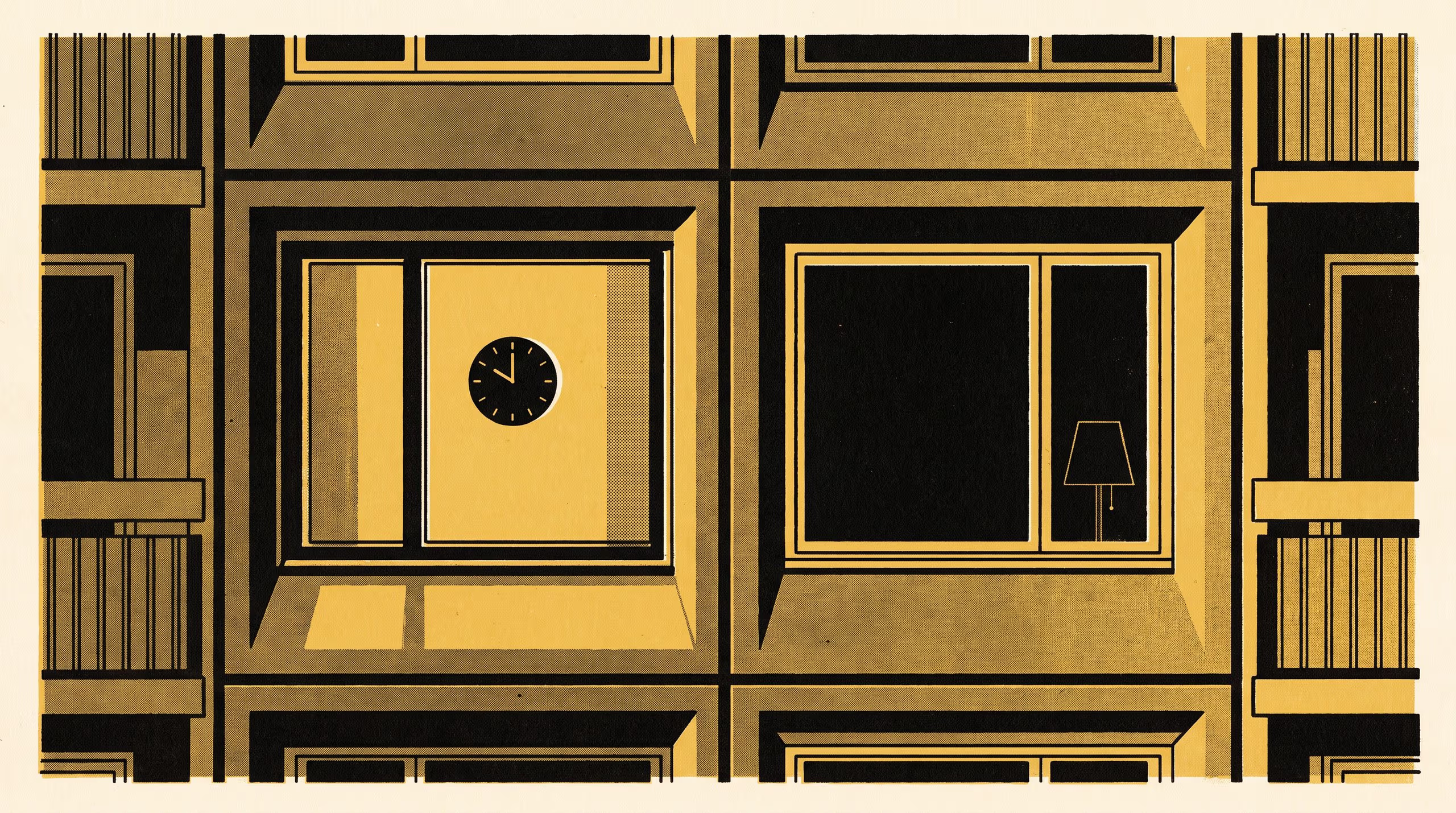
A new research poster from the School of Continuous Improvement finds that the evening body clocks of couples who have just moved in together draw closer over six months, and that the later partner is the one who moves.
A research poster from the School of Continuous Improvement follows two body clocks through a first shared lease
What happens to two body clocks when their owners sign a lease? A new research poster from the School of Continuous Improvement offers the University’s first answer, and it turns out to depend less on the couple than on the lamp they leave on longest.
One Lamp, Two Clocks is led by Eivind Onwuka, Doctoral Candidate, with Ylva Ogunbanjo, Doctoral Candidate, and Dr Thandiwe Solberg, Senior Lecturer and Convenor of the Demo Quarter. Following 34 couples from their second week under one roof to their sixth month, the team found the gap between partners’ evening melatonin onsets narrowing from a median of 79 minutes to 43, with the later partner doing nearly all of the adjusting.
I spend most of my time in rooms that households would rather nobody saw. It was a pleasure, for once, to study the room they all share, and to leave it exactly as we found it.
— Eivind Onwuka, Doctoral Candidate, School of Continuous Improvement
The study brings home-based sampling, everyday lighting and the shared rhythms of domestic life into a single account of how a household settles into its own evening. It extends the School’s growing interest in the arrangements people make with one another long before anyone writes them down.
Dr Solberg said the work had given the School “a new respect for the quiet negotiations of a hallway at night”, and that she expected the couples’ generosity with their evenings to shape the School’s thinking for some time.
The University regards the poster as a fine example of what patient, unobtrusive measurement can find in the most ordinary of places.
The full poster is available from the University’s research repository under an open licence, doi:10.5555/slop.3usjbu.