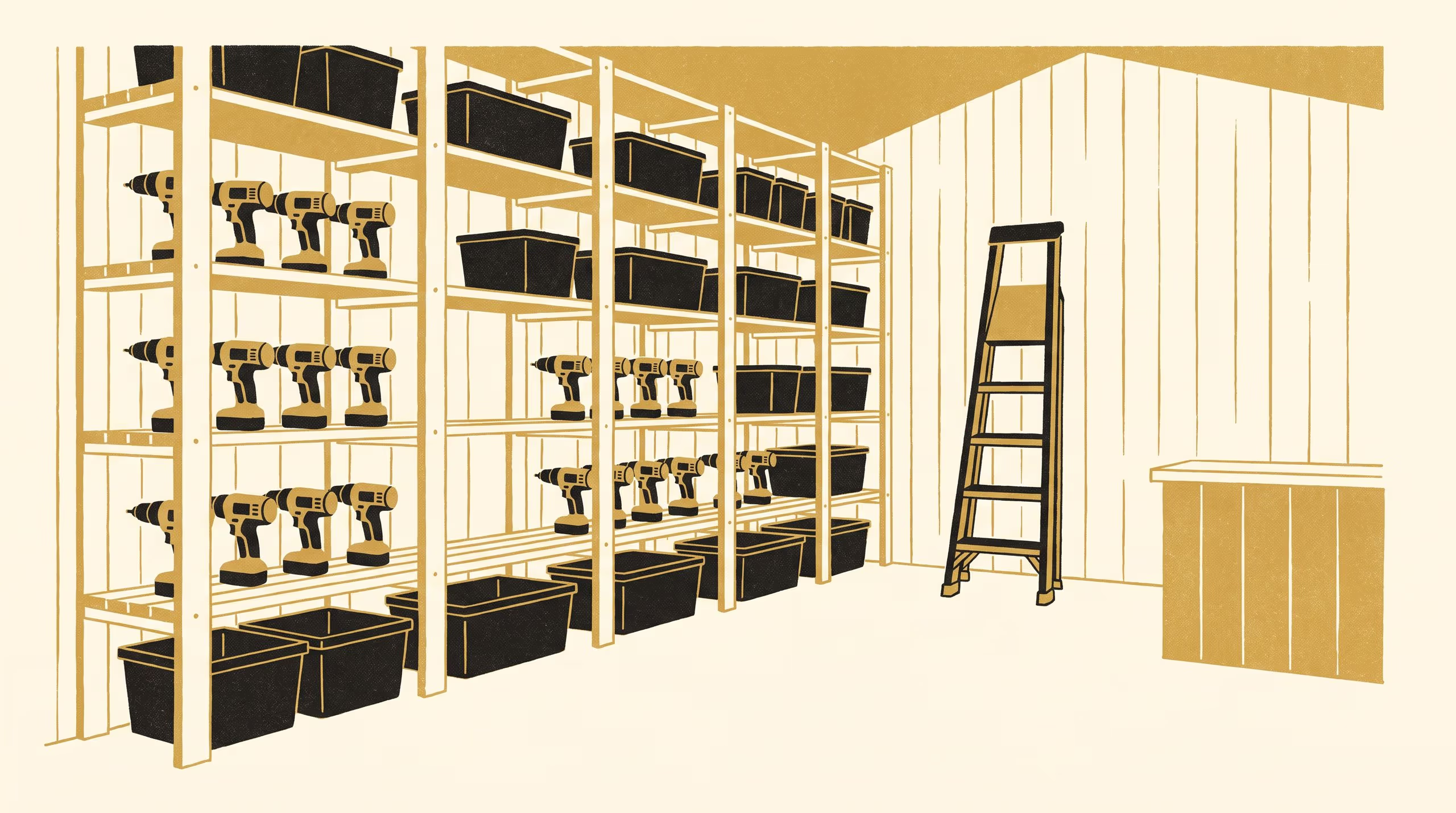
A new operations-research paper from the School of Emergent Priorities and the School of Continuous Improvement finds that a tool library sized for the planet keeps more spare copies on its shelves, not fewer.
A new paper models one suburban lending shed as a loss system and counts what members buy when every copy is out
On a busy Saturday morning, the last cordless drill leaves a suburban tool library’s shed not long after opening, and the next member to ask for one goes home without it. What that member does next is the subject of The Spare Drill, a new paper by Dr Anouk Mensah, Postdoctoral Fellow in the School of Emergent Priorities, and Dr Bram Ntuli, Lecturer and Convenor of Improvement Grand Rounds in the School of Continuous Improvement.
Somewhere next year a coordinator will stand in front of a shelf and wonder whether it needs one more of something. We hope this paper means they feel a little less alone while they decide.
— Dr Anouk Mensah, Postdoctoral Fellow, School of Emergent Priorities
The paper brings the mathematics of telephone exchanges to the everyday business of community lending, combining two years of booking records with a short follow-up survey of the members turned away. Its conclusion is a practical one: a library that wants to keep tools out of households should think less about how hard each copy is worked and more about the purchases an empty shelf sets in motion. For the library studied, that means more drills, sanders and ladders, and fewer second copies of the tools members are content to wait for.
The work sits within the University’s widening attention to the shared spaces where a neighbourhood keeps what it owns in common, and to the quiet decisions that sustain them.
“Every model leaves a few good arguments for the next meeting,” said Dr Ntuli. “This one has left several, and we are glad of each.”
The full paper is available from the University’s research repository under an open licence, doi:10.5555/slop.pgr8tz.