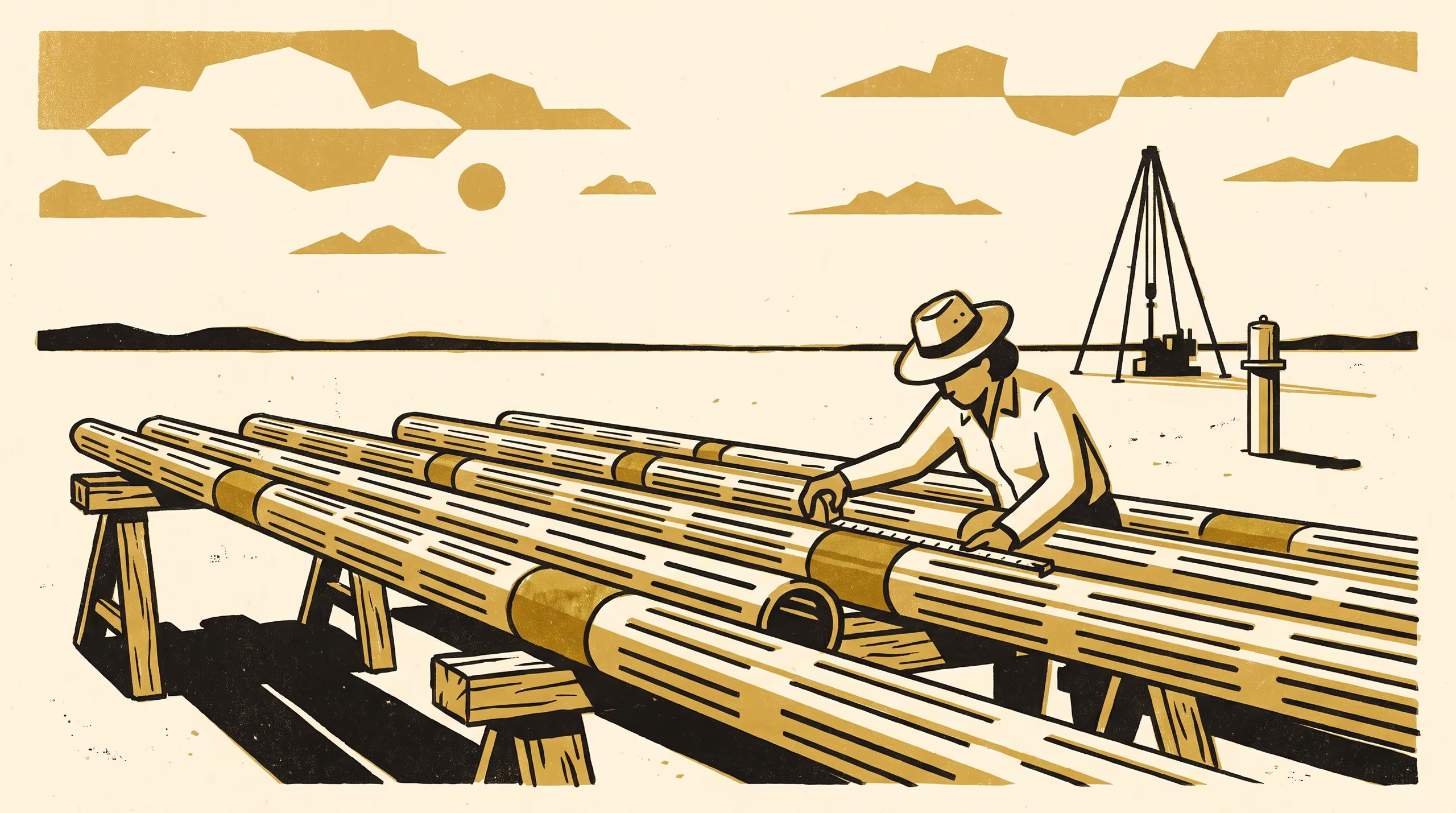
A new research poster from the School of Underlying Conditions finds that the steel screen of a monitoring bore can go on recording the water after the people dipping it have stopped.
Surface analysis of twelve decommissioned monitoring-bore screens finds a second, lower waterline in the outermost film
By turning one of materials science’s most exacting surface techniques on the plain steel screen at the bottom of a groundwater bore, the School of Underlying Conditions has found a record that no one knew was being kept. Below the Last Dip, a research poster released today, reads the thin film that forms on a bore screen and finds in it the level at which the water last stood.
The poster is the work of Dr Vigdis Emenike, Senior Lecturer in the School of Underlying Conditions, and Associate Professor Ragnhild Uzoma, Lead of the Basement Relations Group.
Every bore I have known has outlasted the reason it was drilled. It is heartening to think the University can now keep faith with them a little longer.
— Dr Vigdis Emenike, Senior Lecturer, School of Underlying Conditions
Setting high-vacuum surface chemistry alongside the long archive of field readings, the team examined twelve screen sections recovered at decommissioning, reading each at two depths into its surface film and placing the results beside the bore’s own record. On every screen the deeper layer agrees with the log. On the four screens whose bores went unvisited in their final years, the outermost layer places the water well below anything the log records.
Associate Professor Uzoma said the project had “given the core shed a new kind of neighbour”, and that the Basement Relations Group would keep room for whatever the screens have to say next.
The poster adds to the University’s patient attention to what remains in the ground once the paperwork has ended.
The full poster is available from the University’s research repository under an open licence, doi:10.5555/slop.rsjbzq.