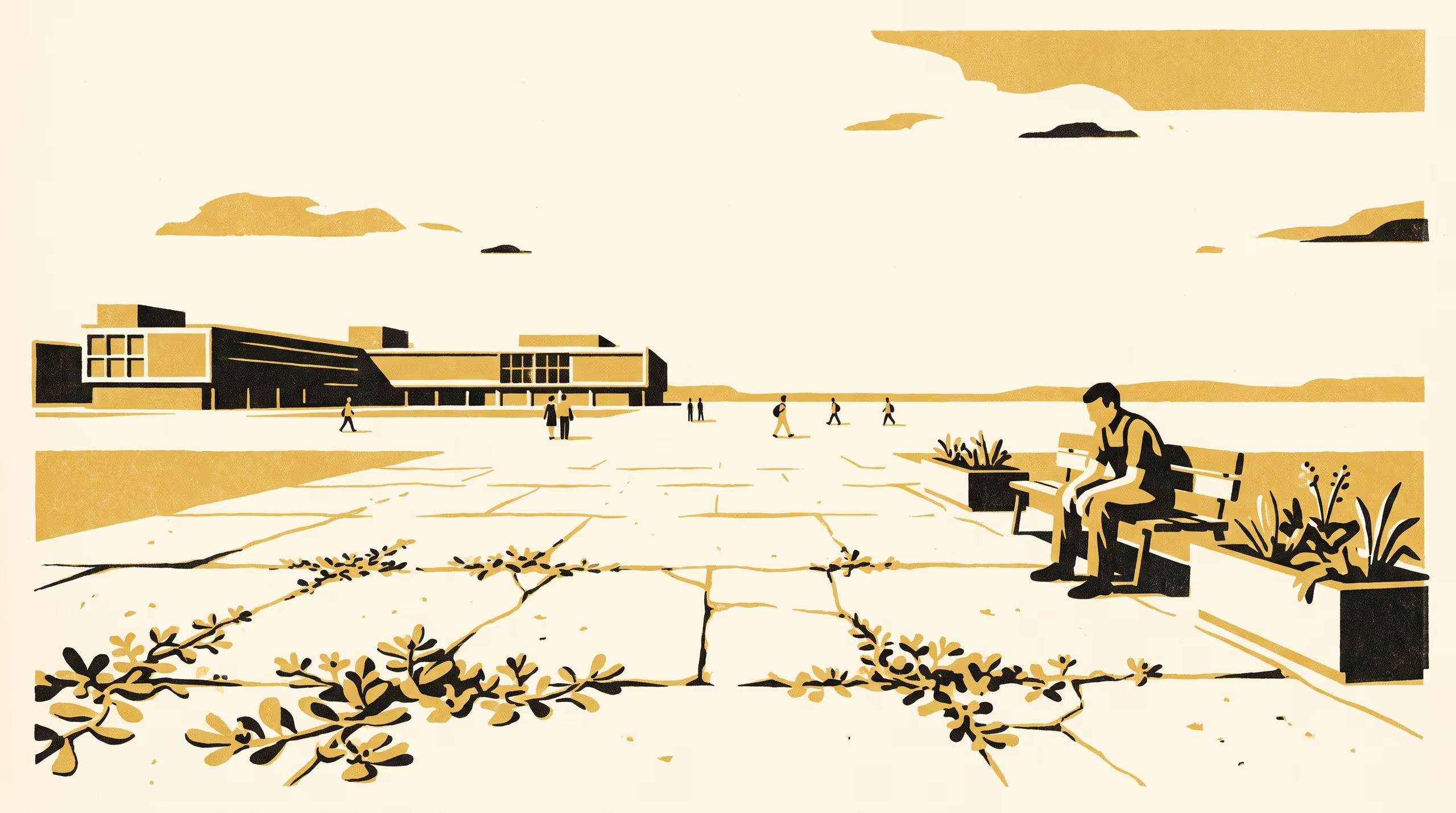
The University's new Strategic Plan treats ageing as a field of research, a condition of its campus and a feature of its community, and plans for all three together.
The 2026-2031 Strategic Plan joins ageing research, an ageing estate and the purslane in the forecourt joints
Ageing research, the upkeep of the campus and the long careers of the University’s staff will answer to a single set of commitments under Growing Old Well, the Strategic Plan for 2026–2031 released today.
The Plan was led by Associate Professor Ragnhild Uzoma, Lead of the Basement Relations Group in the School of Underlying Conditions, with Dr Brynjar Obiora, Senior Research Fellow in the same School, and Dr Marit Osayande, Lecturer and Convenor of the Living Dashboard in the School of Continuous Improvement.
The School spends most of its time asking what lies under a core tray. It has been a quiet pleasure to put the same question to our own forecourt, and to find that the answer had been growing there for some years.
— Associate Professor Ragnhild Uzoma, Lead, Basement Relations Group
Bringing the assay bench, the paving survey and the later-career pathway into one line of sight, the Plan organises its ambitions under three focus areas. A living collection of purslane, gathered from the opened joints of the central paving, will anchor a coordinated agenda on oxidative ageing; a condition survey will read the estate from beneath; and the knowledge of grounds staff and retired colleagues will inform both.
Dr Osayande said the Plan had left the University “with better questions about its paving than it has ever had to answer”, and that the Living Dashboard would now carry them in public.
The Plan reflects the University’s growing confidence in the evidence that lies within its own boundaries, much of it underfoot.
The full Strategic Plan is available from the University’s research repository under an open licence, doi:10.5555/slop.6cbcku.