A research poster from the School of Emergent Priorities places nine lab groups' voltammetry from one semester on a common footing, and finds the shared reference electrode moved in three steps, each in the week of a logged intervention on the cell.
In a shared molten-salt teaching cell, the reference drifted in steps that the cell's own logbook can date
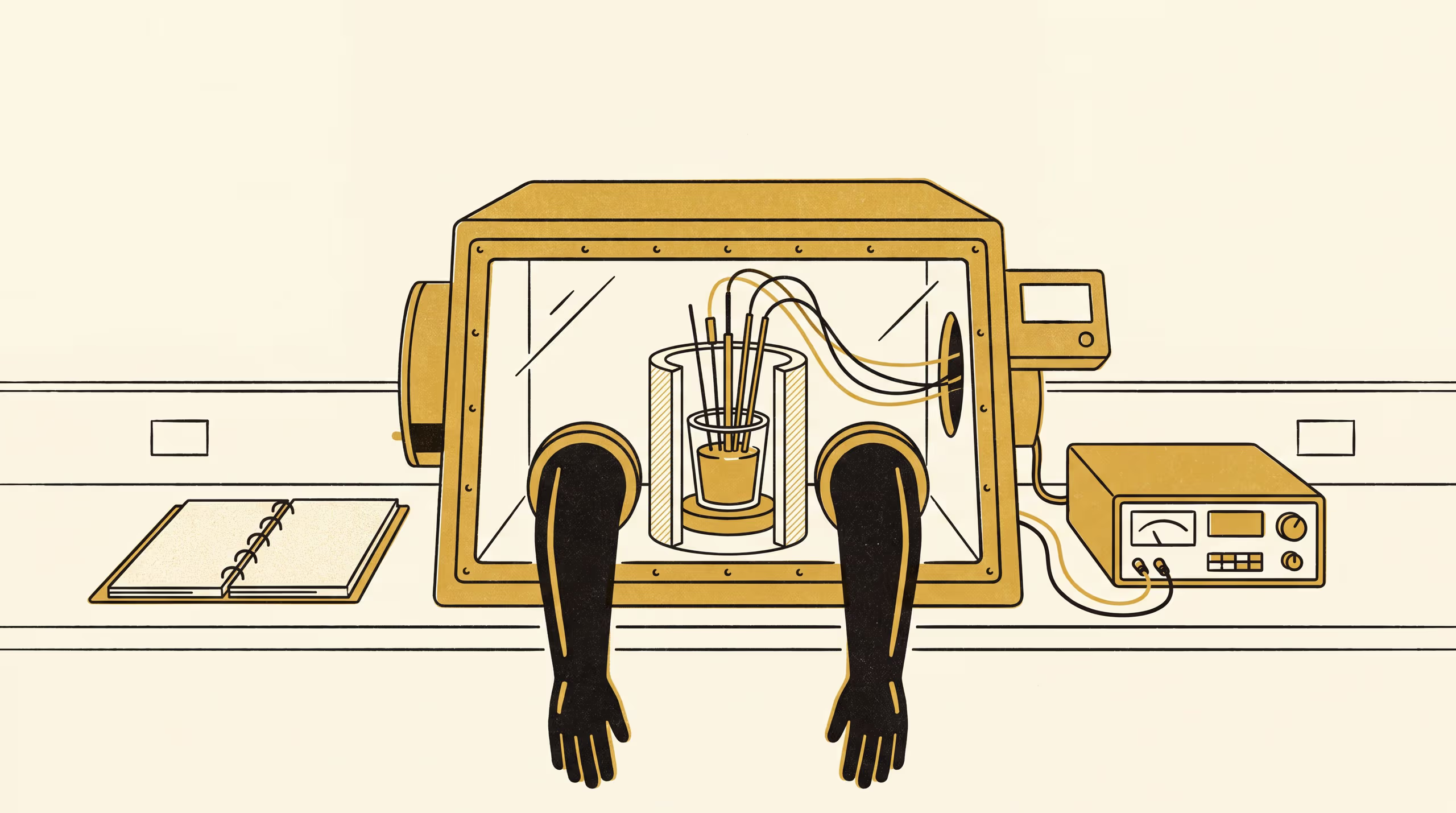
The University’s teaching laboratories keep more than anyone asks of them, and a new research poster from the School of Emergent Priorities shows how much can be recovered from records already on file. In A Zero That Wandered, Ms Ylva Onyekwere, Associate Professor Ragnhild Uzoma and Dr Marit Osayande return to a semester of voltammetry from a shared molten-salt cell and ask whether the reference every group measured against stayed where everyone assumed it was.
Working back through 186 archived scans, the team realigned each measurement to a marker already carried inside the scan itself, establishing a common footing for nine groups’ results and situating the reference’s movement within the cell’s documented maintenance history. The reference, they report, moved in three distinct steps over fourteen weeks, each in the week of a logged intervention on the cell. Once every scan stands on the common footing, much of the apparent disagreement between groups falls away.
The poster is a fine instance of the care the University extends to the things it holds in common.
A reference electrode asks for very little. It sits in the salt all term and quietly agrees with everyone, and I wanted to give it the same attention it had given us.
— Ms Ylva Onyekwere, Doctoral Candidate, School of Emergent Priorities
Associate Professor Uzoma saw the work as part of a longer exchange between the University and its benches. “Each cohort inherits the bench from the one before it. We are pleased to be handing this one on in rather better order than we found it.”
The full poster is available from the University’s research repository under an open licence, doi:10.5555/slop.oejahk.