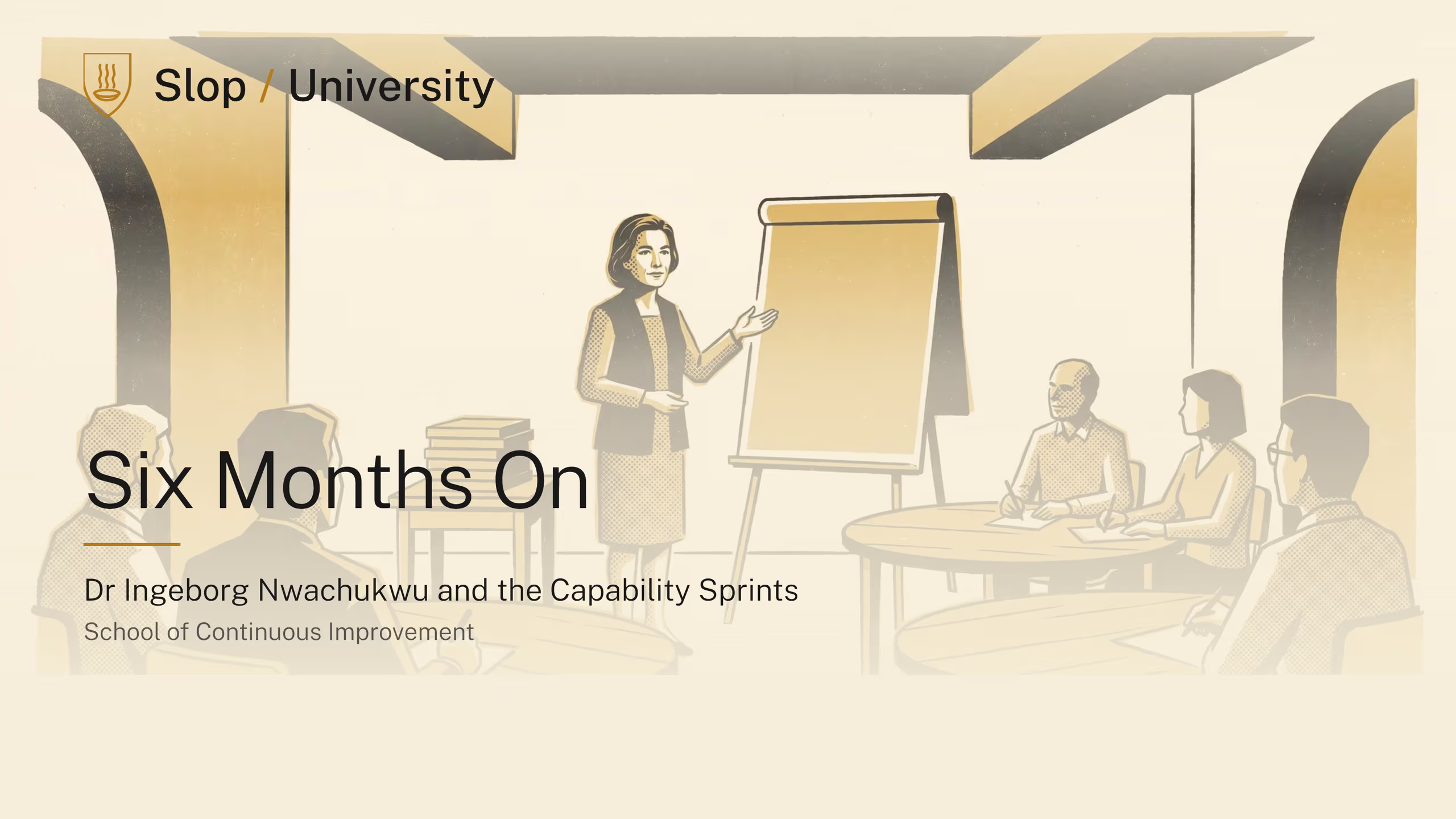
Dr Ingeborg Nwachukwu, Lecturer and Convenor of the Capability Sprints, explains in a short film why she returns to a course's graduates long after the certificate has been filed.
The convenor of the University's short-course line explains, on film, why her research begins where a course's certificate ends
Some of what a short course teaches is still in use a year later, and some of it quietly slips back, according to the convenor who has spent five years checking. Dr Ingeborg Nwachukwu, Lecturer and Convenor of the Capability Sprints, is the subject of Six Months On, the School of Continuous Improvement’s latest film, in which she describes how a habit of returning to a course after it ends became a research program.
Most of what a university teaches leaves the building on the last day of term. It has been a privilege to follow some of it out the door and see where it settles.
— Dr Ingeborg Nwachukwu, Lecturer and Convenor, Capability Sprints
Told largely in Dr Nwachukwu’s own words, the profile carries a single evaluative habit from a leadership course’s assessment rubric to the sign-in sheets of eleven community sheds, a warehouse’s food-safety checkbox and a five-year survey of clubs whose members have paid up but stayed away, before turning to the University’s own graduates in The Certificate and the Desk. In each setting, the distance between completing something and keeping it is foregrounded as a site of continuing institutional learning, and as work that colleagues across the University have been quick to take up.
The University has long held that a course is best judged by what outlasts it, and counts itself fortunate that the convenor of its short courses is prepared to go back and look.
The full video is available from the University’s research repository under an open licence, doi:10.5555/slop.lts6li.