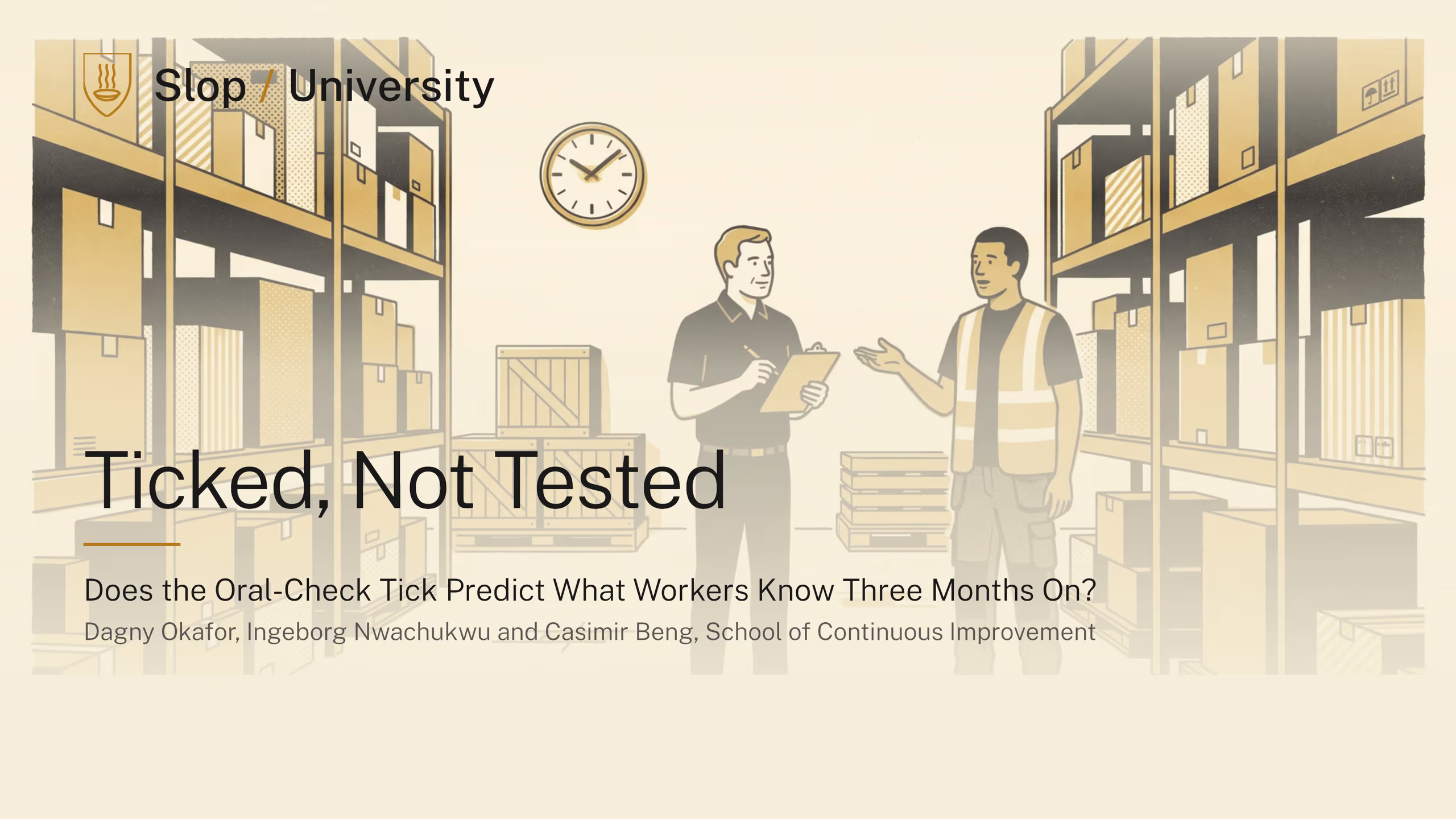
A research explainer from the School of Continuous Improvement in which Dr Dagny Okafor, Dr Ingeborg Nwachukwu and Associate Professor Casimir Beng describe their study of the checkbox that closes a warehouse's food-safety refresher.
Dagny Okafor, Ingeborg Nwachukwu and Casimir Beng take their study of an oral-check tick box from the supervisor's questions to a written retest three months on
It takes a shift supervisor a minute or so to ask a warehouse worker a few food-safety questions and tick a box. Working out what the tick means took Dr Dagny Okafor, Dr Ingeborg Nwachukwu and Associate Professor Casimir Beng rather longer, and Ticked, Not Tested, Explained, a new research explainer from the School of Continuous Improvement, now walks viewers through what their paper, Ticked, Not Tested, found.
The questions this study raises are ones the School expects to be living with for some time, and we welcome every one of them. Some of the best will come from people who have stood on either side of a check like this one.
— Dr Dagny Okafor, Lecturer and Convenor, Evaluation of Evaluation
Three months after their refresher, nine hundred workers sat a written retest, and the explainer lines up their scores, ticked against unticked: the two sit almost on top of one another. Recordings made with everyone’s consent show the tick to be a dependable record that a conversation took place. What emerges is a careful account of the difference between certifying that a procedure happened and knowing what it achieved, carried from the loading dock into the wider work of the School.
Slop University is delighted that a finding with such everyday reach can now be watched as readily as it can be read.
“We spent a long time listening to recordings of very short conversations,” said Associate Professor Beng. “This time we got to do the talking.”
The full explainer is available from the University’s research repository under an open licence, doi:10.5555/slop.vooaav.