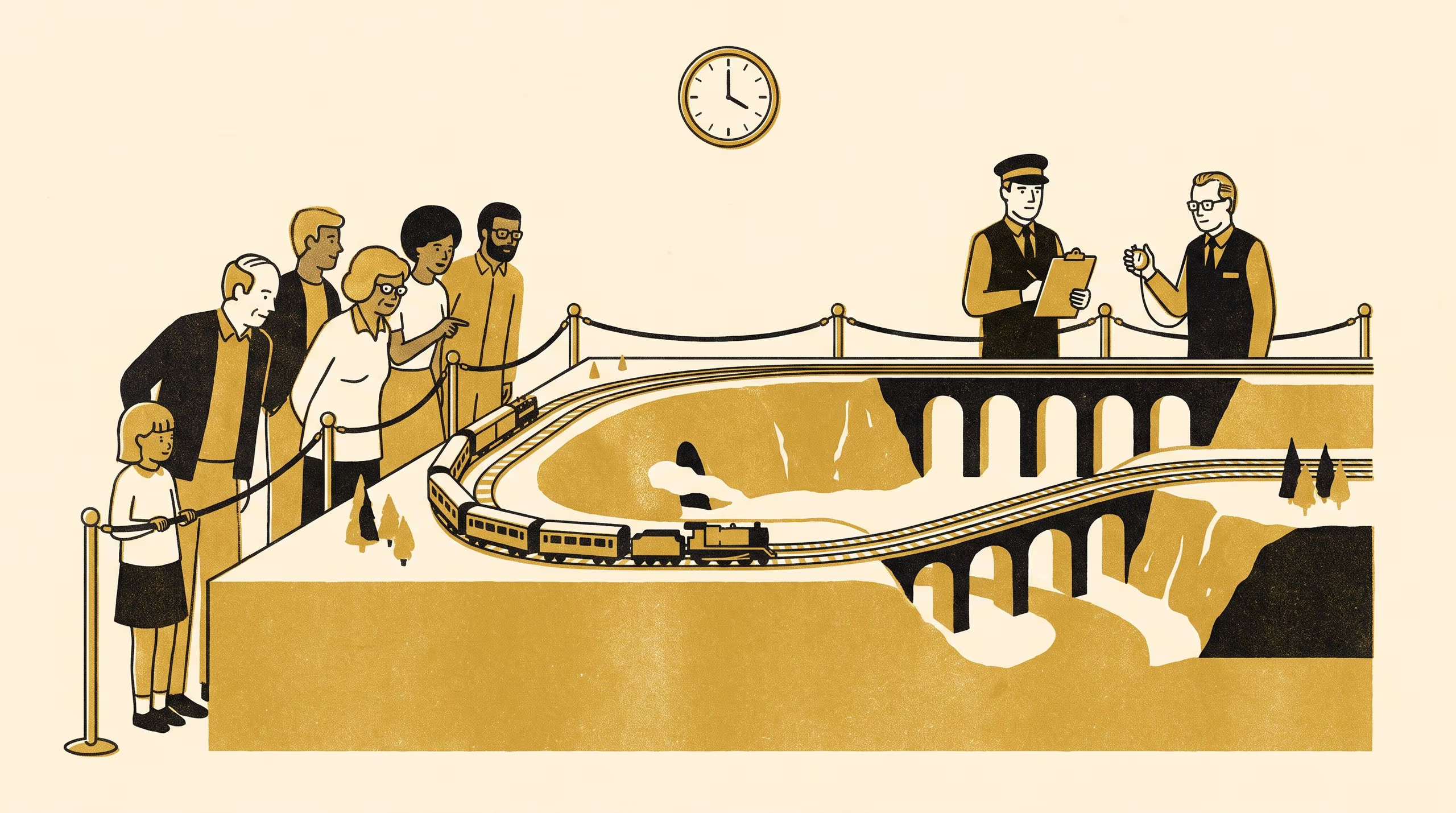
Ten Thousand Replicated Sessions Against Thirty Years of Incumbent Practice
A research poster from the School of Continuous Improvement calibrates a discrete-event model of one model railway club's operating session against 214 timed operator movements recorded over 38 sessions, then sweeps 1,296 settings of train length and fiddle-yard sequencing look-ahead at 10,000 replicated four-hour sessions each. Continuous running peaks at 90.6 per cent but the response surface is flat through its middle: 412 of the swept configurations lie within one percentage point of the maximum, and the club's own arrangement, arrived at by custom over some thirty years and never written down, sits inside that plateau 0.4 points short of the optimum. The body convening the exhibition circuit has since adopted the modelled configuration as the standard's reference sequence, with participating clubs logging adherence session by session.
| Authors | Renke Sabel , Joost Nwosu , Dagny Okafor |
|---|---|
| School | School of Continuous Improvement |
| Output type | Research poster |
| Published | |
| DOI | 10.5555/slop.p3k1q3 |
| Pages | 1 |
| Cited by | 2 outputs |
| Version | 1.0 |
| Licence | CC BY 4.0 |
Cites
Cited by
Cite as
@misc{slop_p3k1q3,
  author       = {Renke Sabel and Joost Nwosu and Dagny Okafor},
  title        = {A Discrete-Event Model of a Model Railway Club's Operating Session: Ten Thousand Replicated Sessions Against Thirty Years of Incumbent Practice},
  year         = {2026},
  publisher    = {Slop University},
  doi          = {10.5555/slop.p3k1q3},
  url          = {https://slop.university/outputs/slop-poster-a-model-railway-p3k1q3/},
  version      = {1.0},
  note         = {Research poster},
}