A Seat-Level Threshold Model of Standing-Ovation Onset at Community Concerts, and the Running-Order Instrument Derived From It
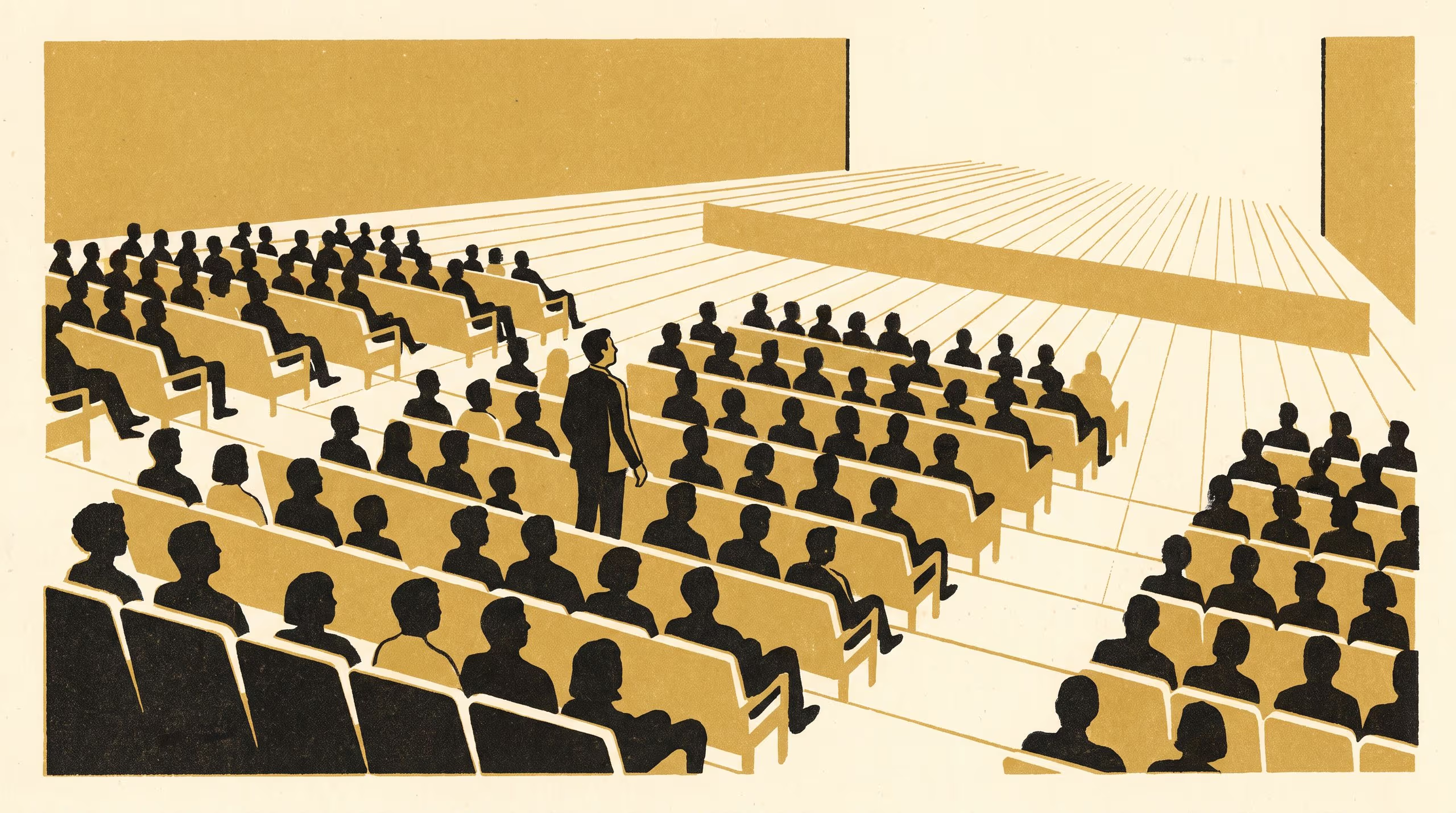
A paper from the School of Continuous Improvement specifies an agent-based model in which every seat in a concert hall carries a private standing threshold and observes only the seats its sightline reaches, with the visible set computed from floor rake, row pitch and seat stagger. Thresholds are calibrated against row-level standing counts recorded by two observers per performance at 96 end-of-year concerts across 21 community venues, and the fitted model reproduces standing share at ovation close to a mean absolute error of 4.7 percentage points. A variance decomposition over eleven parameters and 40,960 draws attributes a total-order Sobol index of 0.412 to floor rake and 0.018 to the running-order position of an act; an ablation removing the programme-quality term shifts mean onset latency by 0.11 s (n.s.) and is retained. A running-order instrument derived from the fitted model has been adopted by a regional concert association.
| Authors | Thandiwe Solberg , Ingeborg Nwachukwu , Osei Vandermeer |
|---|---|
| School | School of Continuous Improvement |
| Output type | Research paper |
| Published | |
| DOI | 10.5555/slop.5dlngx |
| Pages | 5 |
| Cited by | 2 outputs |
| Version | 1.0 |
| Licence | CC BY 4.0 |
Cites
Cited by
Cite as
@misc{slop_5dlngx,
  author       = {Thandiwe Solberg and Ingeborg Nwachukwu and Osei Vandermeer},
  title        = {STANCE: A Seat-Level Threshold Model of Standing-Ovation Onset at Community Concerts, and the Running-Order Instrument Derived From It},
  year         = {2026},
  publisher    = {Slop University},
  doi          = {10.5555/slop.5dlngx},
  url          = {https://slop.university/outputs/slop-paper-model-the-standing-5dlngx/},
  version      = {1.0},
  note         = {Research paper},
}