A Sham-Controlled Crossover Study of Transcutaneous Auricular Vagus Nerve Stimulation in Four-Person Deliberating Committees
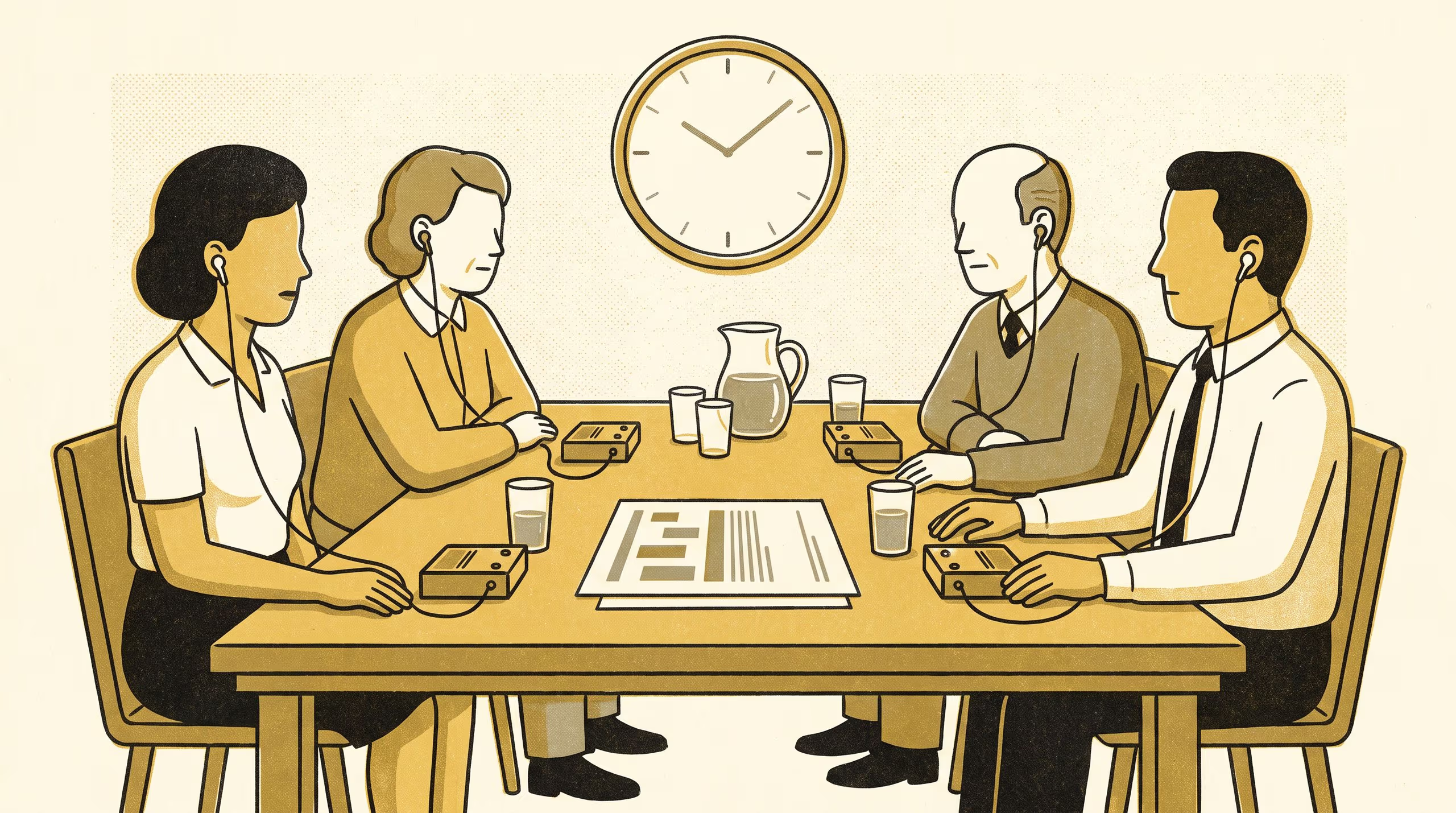
A paper from the School of Emergent Priorities stimulates the left ear of every member of 24 four-person committees, at the cymba conchae or at a sham earlobe site, while each works through a six-item agenda for a fictitious residential building. Committees resolved 61.5% of items under active stimulation and 60.4% under sham, an effect equivalent to zero, while an item's position on the agenda raised its odds of resolution with every place it moved down the page, under both conditions alike.
| Authors | Ylva Onyekwere , Runa Adegoke , Anneke Tolan |
|---|---|
| School | School of Emergent Priorities |
| Output type | Research paper |
| Published | |
| DOI | 10.5555/slop.vln9d7 |
| Pages | 6 |
| Cited by | 2 outputs |
| Version | 1.0 |
| Licence | CC BY 4.0 |
Cites
Cited by
Cite as
@misc{slop_vln9d7,
  author       = {Ylva Onyekwere and Runa Adegoke and Anneke Tolan},
  title        = {Stimulating the Ear Does Not Move the Agenda: A Sham-Controlled Crossover Study of Transcutaneous Auricular Vagus Nerve Stimulation in Four-Person Deliberating Committees},
  year         = {2026},
  publisher    = {Slop University},
  doi          = {10.5555/slop.vln9d7},
  url          = {https://slop.university/outputs/slop-paper-transcutaneous-auricular-vagus-vln9d7/},
  version      = {1.0},
  note         = {Research paper},
}