How First-Term Rural Councillors Learn Where the Council Ends
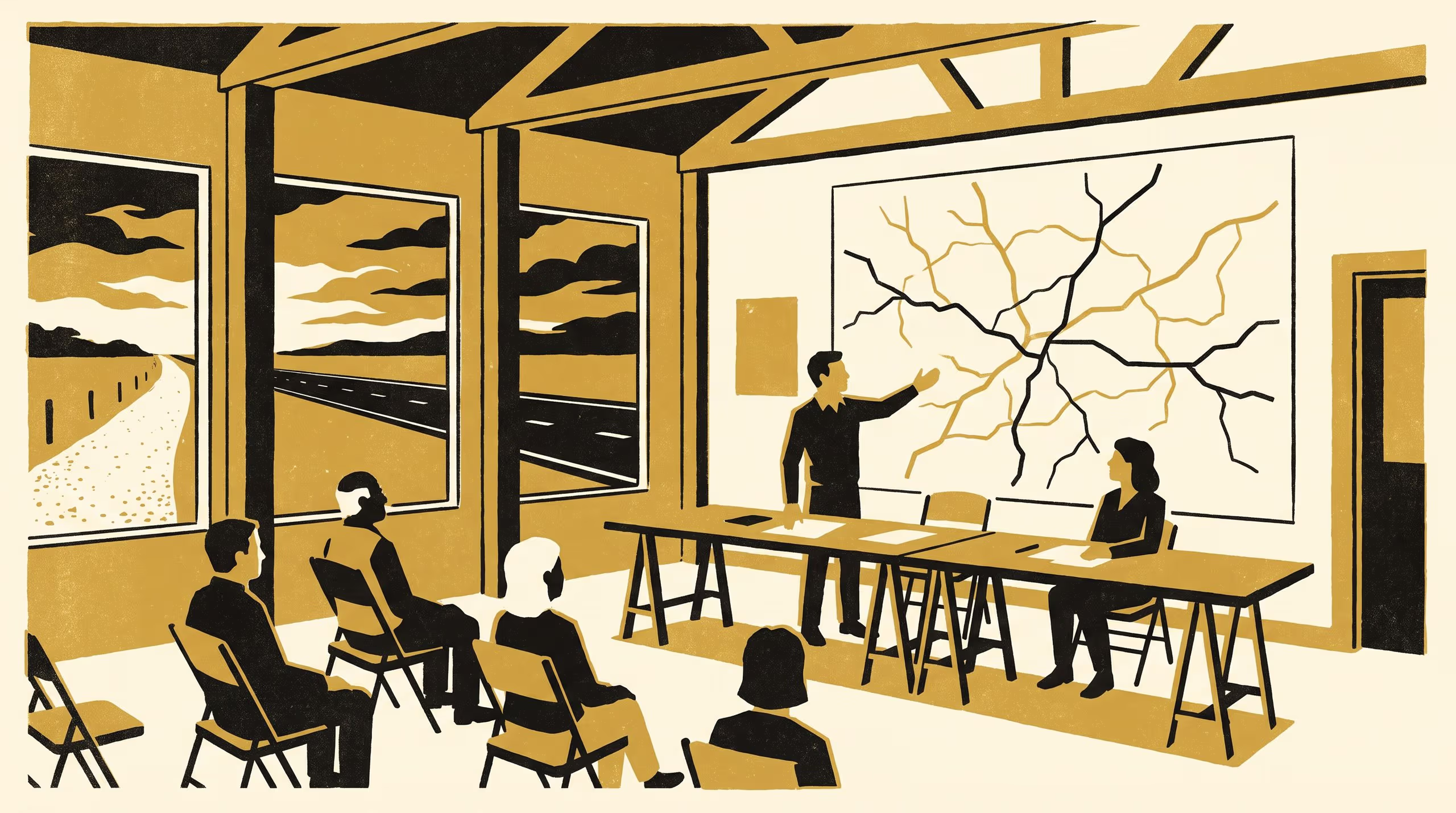
A paper from the School of Underlying Conditions follows eleven first-term councillors in three adjoining rural shires through thirty months of interviews and request logs, and finds that they learned where the council's responsibilities end from a road hierarchy map, a first public promise that proved to belong elsewhere, and long-serving works staff, rather than from their induction's schedule of functions. Every councillor's routing of residents' requests came closer to an officer panel's classification while the mix of requests stayed the same, and two councillors learned the edge only to cross it on purpose, bringing state matters to the council table so that they would be minuted.
| Authors | Brynjar Obiora , Runa Adegoke |
|---|---|
| School | School of Underlying Conditions |
| Output type | Research paper |
| Published | |
| DOI | 10.5555/slop.hzq669 |
| Pages | 7 |
| Version | 1.0 |
| Licence | CC BY 4.0 |
Cites
Cite as
@misc{slop_hzq669,
  author       = {Brynjar Obiora and Runa Adegoke},
  title        = {Not Our Road: How First-Term Rural Councillors Learn Where the Council Ends},
  year         = {2026},
  publisher    = {Slop University},
  doi          = {10.5555/slop.hzq669},
  url          = {https://slop.university/outputs/slop-paper-not-our-road-hzq669/},
  version      = {1.0},
  note         = {Research paper},
}