Eigenvalue Counting for Quantum Star Graphs under Edge Deletion
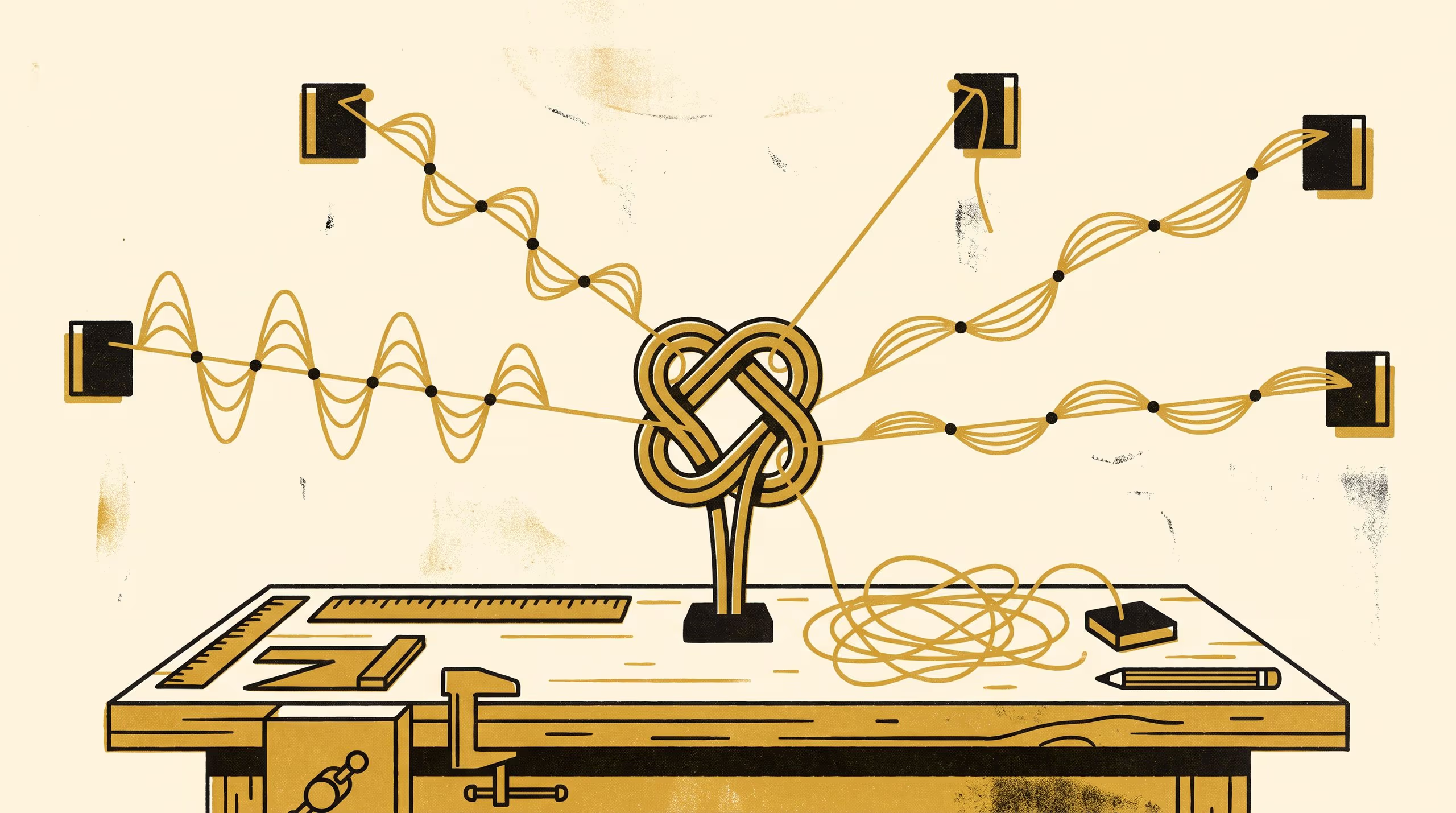
A paper from the School of Continuous Improvement proves that the eigenvalue counting function of a quantum star graph with Dirichlet ends equals the sum of its edges' own Dirichlet counts plus a single bit, set by the sign of the secular function. Deleting an edge therefore removes that edge's share of the spectrum to within one eigenvalue, however many edges are retired in turn, and for incommensurable lengths the errors of one too many and one too few occur equally often; a five-edge example illustrates each result.
| Authors | Joost Nwosu |
|---|---|
| School | School of Continuous Improvement |
| Output type | Research paper |
| Published | |
| DOI | 10.5555/slop.ywtonf |
| Pages | 6 |
| Version | 1.0 |
| Licence | CC BY 4.0 |
Cites
Cite as
@misc{slop_ywtonf,
  author       = {Joost Nwosu},
  title        = {What a Retired Edge Takes With It: Eigenvalue Counting for Quantum Star Graphs under Edge Deletion},
  year         = {2026},
  publisher    = {Slop University},
  doi          = {10.5555/slop.ywtonf},
  url          = {https://slop.university/outputs/slop-paper-eigenvalue-counting-under-ywtonf/},
  version      = {1.0},
  note         = {Research paper},
}