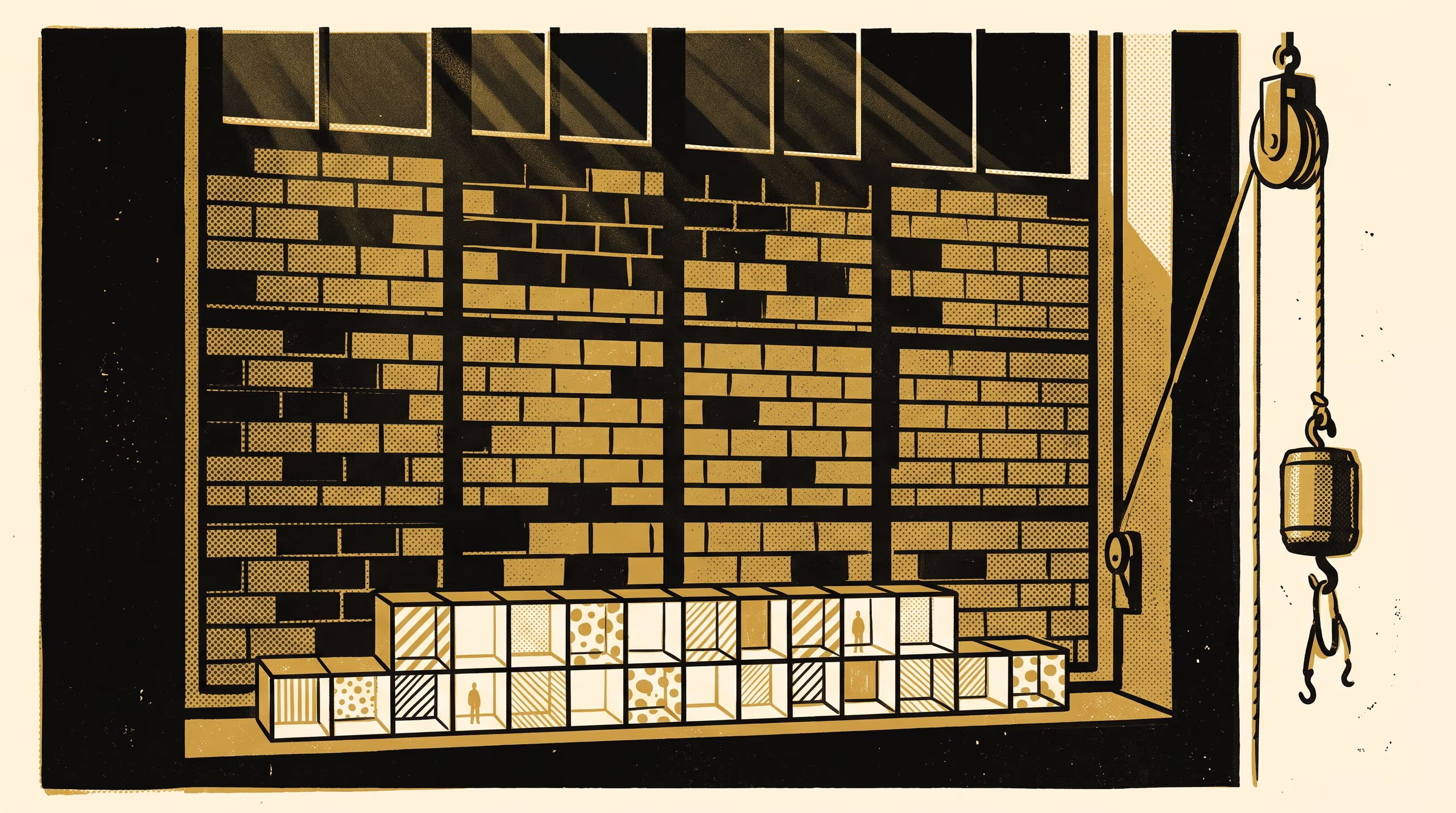
A new paper builds a computational model of the hallucinations that can follow a loss of sight, and finds that in the model they clear fastest when the input is gone entirely and linger longest when part of it remains.
A paper from the Schools of Settled Matters and Underlying Conditions finds a simulated cortex slowest to settle when some of its input remains
In a simulated visual cortex that has lost most of its input, the self-generated activity that stands in for hallucination clears soonest when nothing at all gets through, and lingers longest when a little still does. That is the central result of The Set Point Outlives the Input, a new paper by Dr Clemency Tredinnick of the School of Settled Matters and Dr Brynjar Obiora of the School of Underlying Conditions.
The pair ran 920 simulated courses of input loss, each lasting 180 model days. In their model, a remnant of input that occasionally matches what the cortex expects keeps an old setting in force, and at 80% loss the median run took 112 days to clear.
Our two Schools turned out to share a question about arrangements that stay in force after their reason has gone. I am grateful to the colleagues who let a lawyer sit in on their equations, and to the ones who explained them twice.
— Dr Clemency Tredinnick, Lecturer, School of Settled Matters
The paper brings homeostatic regulation, predictive processing and long-horizon simulation into a single account of recalibration, positioning the University’s modelling capability alongside its established strengths in reading what persists.
Dr Obiora said the collaboration had given “the soil survey’s long habit of watching a boundary outlast the reason anyone drew it somewhere new to stand”.
Work of this kind, carried across the corridor from one School to the next, is what the University’s structure was arranged to make possible, and it is pleased to see it done.
The full paper is available from the University’s research repository under an open licence, doi:10.5555/slop.r1mf7y.