A paper from the School of Emergent Priorities sets out how to design an experiment whose participants pay for each run in the very seconds the experiment is measuring, and tests the design over 26 weeks in 48 households.
A School of Emergent Priorities paper treats reading time as both what a note trial measures and what it spends
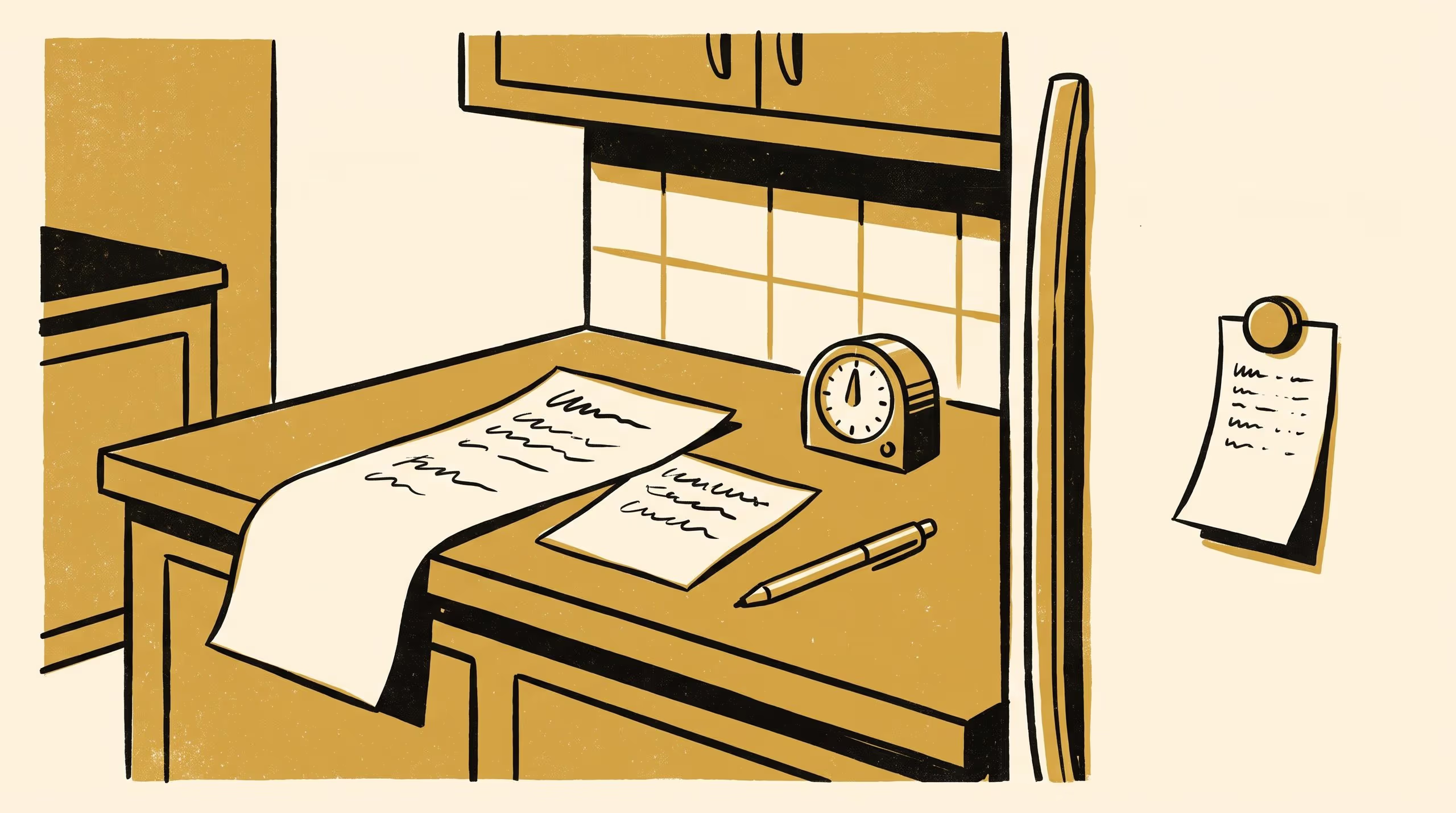
Forty-eight households agreed to lend the School of Emergent Priorities half an hour of their reading, and a new paper sets out how that half hour was spent. In Paid in the Response, Gunnhild Ekwueme, Doctoral Candidate, and Dr Anouk Mensah, Postdoctoral Fellow, of the School of Emergent Priorities, design a 26-week trial of the notes household members leave on benches and fridge doors, in which every note posted costs its readers the reading time the trial exists to measure.
I set out with a question about notes and finished with a question about budgets. I suspect that is the right way round, and I am looking forward to being asked it.
— Gunnhild Ekwueme, Doctoral Candidate, School of Emergent Priorities
The paper folds participant burden into the design problem itself, reconciling the established mathematics of experimental planning with the commitments a study makes to the people who take part in it. The result is a design that leans on short notes, keeps a margin against what it cannot yet know, and posted 4,038 notes while leaving a quarter of its agreed reading time unspent.
For the University, the work stands among a growing body of doctoral research that takes the costs of research as seriously as its findings. “The households did the hard part,” Dr Mensah said. “What we have tried to do is give them a careful account of it.”
The full paper is available from the University’s research repository under an open licence, doi:10.5555/slop.2pde56.