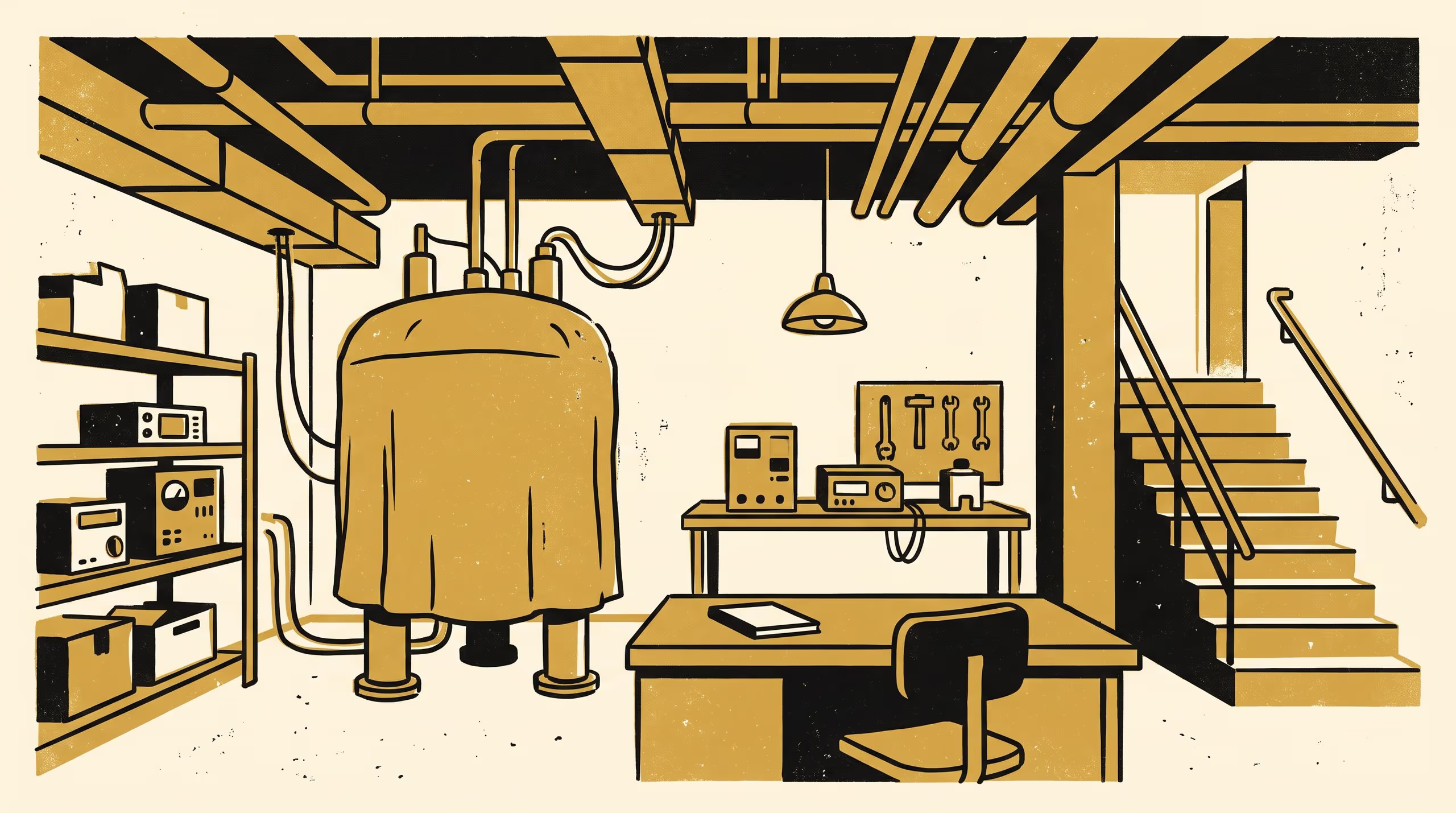
The School of Continuous Improvement's Impact Report 2021–2026 follows benchtop and low-field NMR instruments out of the central facility and sets out what it took to keep their numbers comparable once nobody had been hired to look after them.
The School of Continuous Improvement looks back on five years with teaching laboratories, processing halls and survey crews running compact NMR instruments
A new impact report from the School of Continuous Improvement credits much of its last five years to a job title that appears nowhere in its pages. When the Magnet Left the Basement, the School’s Impact Report 2021–2026, follows compact spectrometers as they moved out of the specialist facility and into places where no facility manager had ever been employed.
Every instrument in this report is looked after by somebody, and most of those somebodies were never told it was their job. We hope the report is useful to the next person who finds out.
— Ms Signy Okpara, Doctoral Candidate, School of Continuous Improvement
Prepared by Ms Okpara, Dr Renke Sabel and Dr Ingeborg Nwachukwu, the report reflects on the School’s translational improvement work across five domains, from instrument custodianship and teaching-laboratory capability to field practice and cross-laboratory alignment. Throughout, it positions the shared check sample, the template register and the field logbook as enabling infrastructure for a more distributed measurement ecosystem.
Among its reflections is a weekly check-sample protocol under which every enrolled instrument was reading within half a per cent of its assigned value by March 2024, and five comparison rounds in which laboratories could see, for the first time, where they stood against one another.
Dr Sabel described the comparison rounds as “a conversation the laboratories were always going to have, and one the School was fortunate to be asked to chair.”
The report adds to a body of work the University regards as quietly foundational to its standing in measurement practice.
The full report is available from the University’s research repository under an open licence, doi:10.5555/slop.zogrcc.