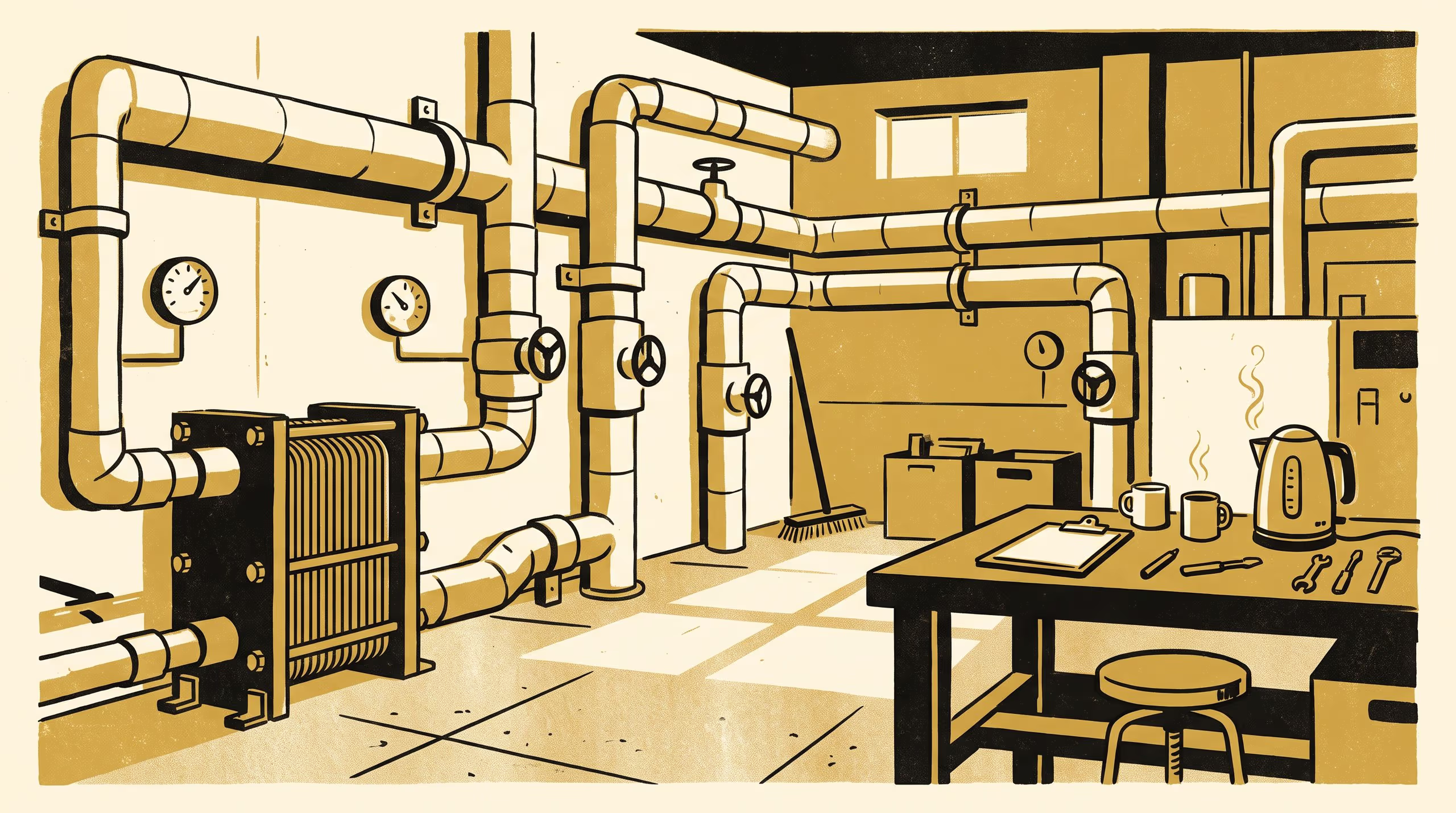
A new brochure from the School of Underlying Conditions sets out the University's work on calcium carbonate scale, from the bores where its water is measured to the reference collection where the ground keeps its own carbonate, and invites partners to support it.
A case-for-support brochure follows hard water from the monitoring bore to the plant room and asks partners to help keep it moving
The School of Underlying Conditions has spent its first weeks studying what lies beneath the University. It is now looking at what that ground sends back up, and at where it settles once it arrives. What Builds Up, a new case-for-support brochure by Dr Brynjar Obiora of the School of Underlying Conditions and Dr Marit Osayande of the School of Continuous Improvement, invites partners to help sustain the University’s research on the scale its hard water lays down in pipes, kettles and cooling towers.
We would like this to be the beginning of a longer conversation, conducted at roughly the pace that scale itself forms. Nobody involved is in a hurry, and we think that is the right way to approach a partnership.
— Dr Brynjar Obiora, Senior Research Fellow, School of Underlying Conditions
Across three feature sections, the brochure traces a through-line from the University’s groundwater monitoring network, through the heat-exchange infrastructure of its plant rooms, to the soil reference collection in which the School conserves the ground’s own carbonate record. It presents seven recently published outputs from across the University’s schools as the evidence base that continued support would underpin.
“A plant room goes on doing its job whether anyone visits it or not,” said Dr Osayande, Lecturer and Convenor of the Living Dashboard. “We think it has earned the occasional visitor.”
The publication extends the University’s standing interest in looking after the infrastructure it already has, and in the research that makes such care possible.
The full brochure is available from the University’s research repository under an open licence, doi:10.5555/slop.mwf41z.